
Free AI summary of this YouTube video by SumTube
The Only 17 Minutes You Need To Master Your Mind | Shi Heng Yi Motivation
TL;DR
Shaolin Monk Shi Heng Yi explores the mechanics of the human mind, explaining that individuals are distinct from their transient thoughts and mental conditioning. He emphasizes that inner peace comes from non-reactivity, letting go of attachment to social expectations, and facing internal darkness rather than running from it. True self-mastery requires self-inquiry, self-discipline, and separating one's pure identity from external roles, appearances, and media influences.

Key takeaways
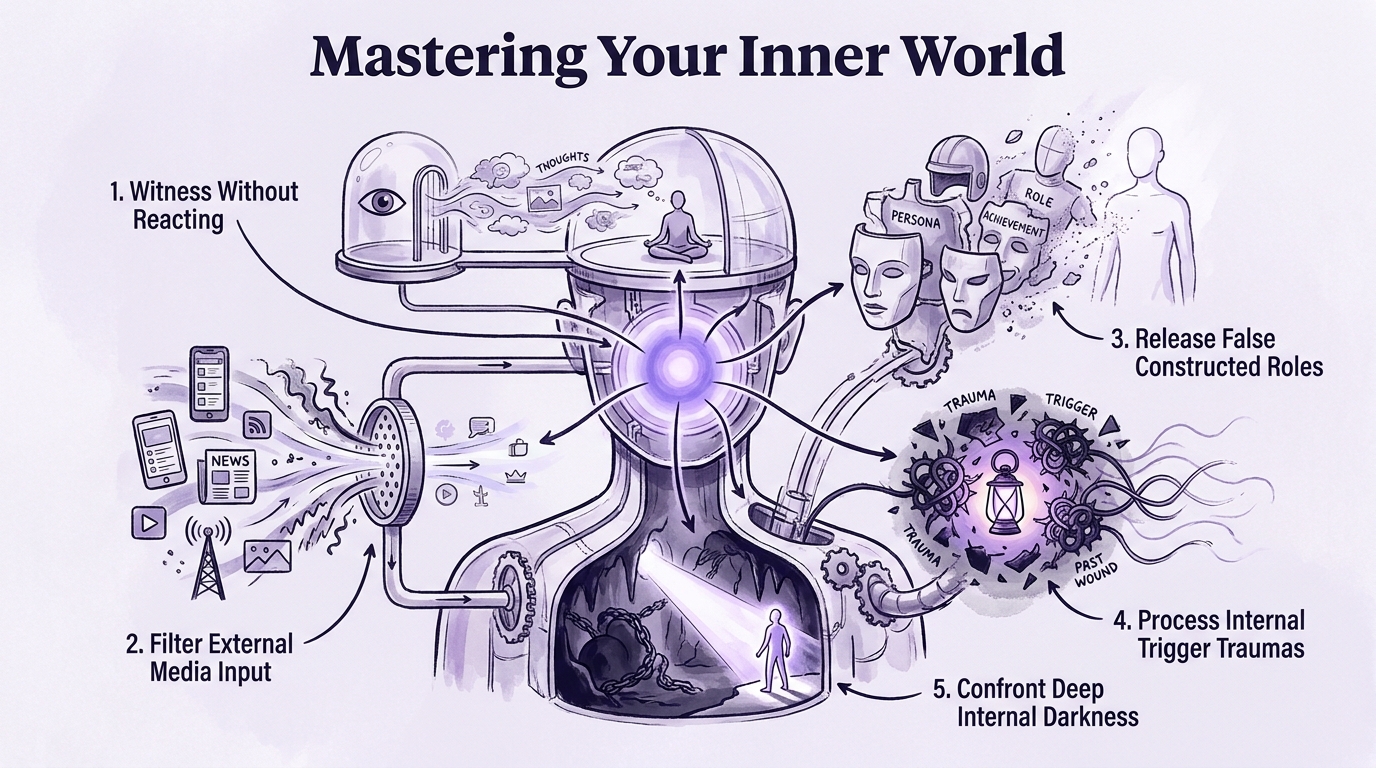
- 1:15You are not your thoughts; true peace comes from witnessing mental activity without clinging to or reacting to it
- 2:01Social media and external comparisons fill the mind with content that creates a sense of inadequacy
- 6:21Attaching your self-worth to external roles, personas, or physical appearance inevitably leads to suffering as those things naturally fade
- 14:17Self-mastery involves eliminating internal triggers and traumas rather than attempting to change or fix the outside world
Tap to enlarge
Most valuable section
For whom
Anyone struggling with anxiety, overthinking, social media fatigue, or seeking a practical philosophical approach to inner strength.
The Nature of Mind and Thoughts0:17
It offers an insightful mental experiment demonstrating how little control people have over incoming thoughts, providing a clear foundation for detaching identity from mental clutter.
Detailed summary
1. The Nature of Mind and Thoughts
0:00Shi Heng Yi opens with the concept that light enters only when one gazes directly into darkness. He challenges the listener to predict their upcoming thoughts over the next 20 to 30 seconds to illustrate how little direct control the conscious mind has over what pops into reflection.
Because thoughts arise spontaneously, blindly following every mental impulse makes little sense. Ancient wisdom emphasizes that an individual is not their thoughts, presenting a clear choice: master the mind or become enslaved by it.
2. The Impact of Media and Mind Content
2:21Comparing the human being to a physical and mental container, Shi Heng Yi questions what content people choose to fill their minds with daily. Modern social media and digital content exert a profound influence on daily thoughts, shaping subconscious patterns.
Without mindful awareness, people become consumed by the information they consume, leaving little room for independent thought. Maintaining peace requires recognizing when the mind is simply reflecting external noise rather than resting in stillness.
3. Escaping the Trap of Mental Attachment
4:04Inner peace exists naturally when the mind is not actively grasping at thoughts or external hooks. However, when a thought appears and the individual attaches to it, a cycle of mental friction begins, ultimately leading toward emotional misery.
Thoughts naturally appear and vanish like sounds into silence. Suffering occurs only when people attempt to hold onto transient mental phenomena instead of allowing them to follow their natural, passing course.
4. Identity vs. Constructed Roles
6:21While hard work and discipline allow individuals to achieve impressive goals, those achievements merely construct a role or persona, not their fundamental self. Tying self-worth strictly to physical appearance, social standing, or career leads directly to suffering when those conditions inevitably shift.
The harder one pulls on an artificial standard, the stronger the eventual recoil. Sustainable well-being comes from quiet consistency and self-awareness rather than chasing quick, superficial validations.
5. Cultivating Non-Reactivity and Inner Strength
8:06When faced with unexpected external challenges or provocations, most people instinctively react with anger, rage, or aggression. Shi Heng Yi notes that reacting out of hostility has never guided anyone toward a truly positive resolution.
Real strength lies in non-reactivity—processing situations internally without immediate emotional outbursts, taking clear decisions, and acting with precision. This disciplined internal approach prevents unnecessary conflict and fosters genuine resilience.
6. Discovering the True Self and Facing Darkness
10:02Examining possessive language like 'my body' or 'my thoughts' raises the core question of who the actual owner behind those experiences is. Most people live out conditioned patterns shaped by past environments rather than conscious choice.
Achieving true self-mastery requires confronting internal darkness—such as guilt, shame, and resentment—rather than running away or blaming the outside world. By acknowledging and integrating these suppressed aspects, one transcends them, realizing their creative potential without becoming lost in their creations.
Questions this video answers
How can one stop being controlled by negative thoughts?
Shi Heng Yi explains that thoughts arise and fall naturally like sounds, coming from nowhere and returning to nowhere. Suffering occurs only when a person 'hooks' onto a thought and allows a mental chain reaction to build. By observing thoughts as a neutral witness rather than identifying with or clinging to them, one can maintain inner peace.
What is the primary danger of tying self-worth to physical appearance or social status?
Tying self-worth to external factors creates inevitable suffering because physical appearance, roles, and status are temporary and impossible to maintain long-term. The harder one pushes to hold onto a temporary persona, the more severe the eventual psychological backlash when it changes or fades.
How does Shi Heng Yi suggest dealing with personal triggers and emotional dark spots?
Instead of trying to fix the external world or run away from uncomfortable feelings, Shi Heng Yi advises looking directly into the internal 'darkness.' Identifying where shame, guilt, resentment, or anger stem from allows individuals to process and transcend these 'demons,' resulting in long-term emotional freedom.
Ask a follow-up Premium
About this summary
SumTube AI wrote this recap from the video's words and chapters. Credit and the original belong to Aerondight.