
Free AI summary of this YouTube video by SumTube
How to Remove Calcium Plaque From Your Arteries (Backed by 2 Clinical Trials)
TL;DR
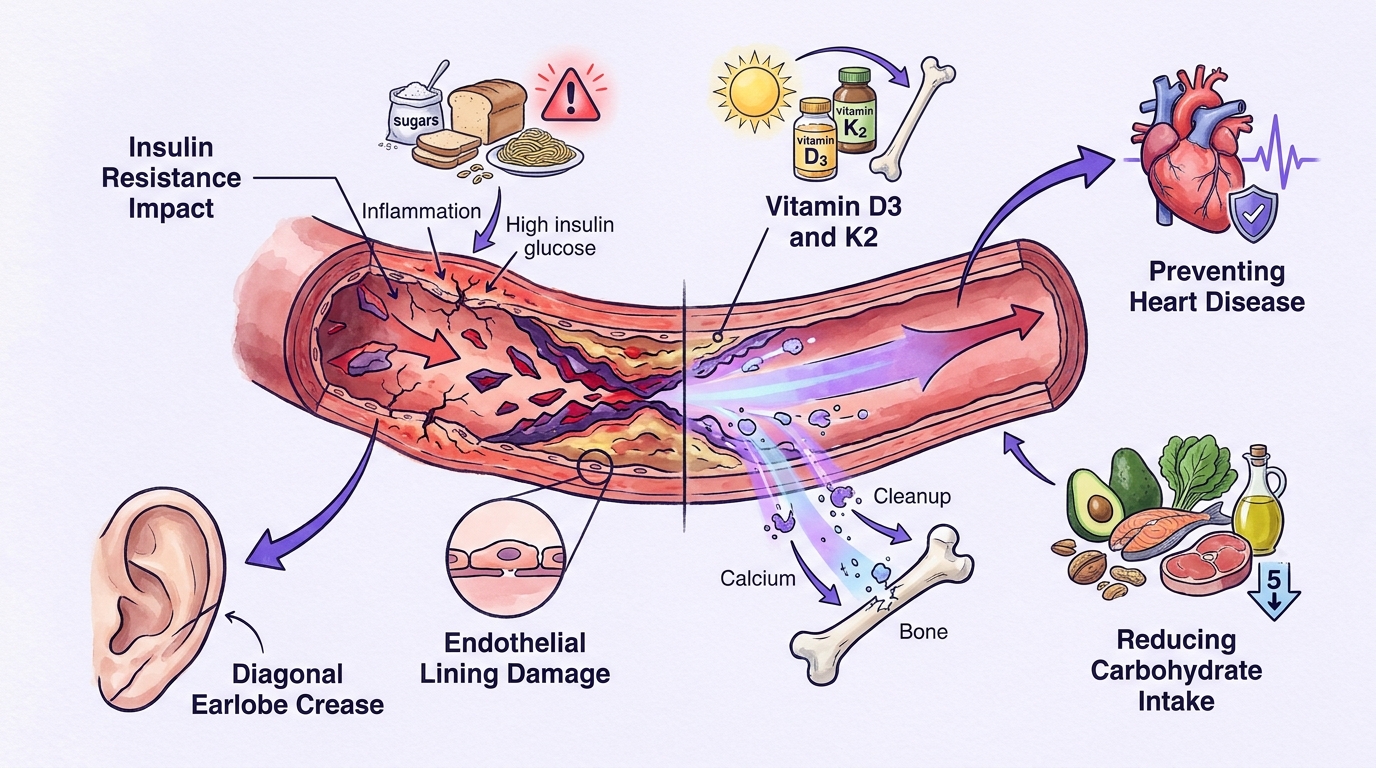
In this video, Dr. Eric Berg explains that high coronary artery calcium score can be mitigated and soft or hard arterial plaque can be reduced naturally. Paired with insights from cardiac surgeon Dr. Philip Ovadia, the discussion highlights how insulin resistance, high blood glucose, and inflammation damage the vascular endothelium, enabling plaque formation. By implementing a low-carb diet and supplementing with vitamin D3, vitamin K2 (MK-7), and magnesium, individuals can help direct calcium out of the soft tissues and improve cardiovascular health.

Key takeaways
- 2:01Damage to the single-cell endothelial lining must occur before small, dense LDL particles can enter and create oxidized arterial plaque
- 7:07Clinical trials demonstrate that combined supplementation of vitamin D3 and K2 can reduce hard plaque by up to 24.5% and decrease adverse cardiac events.
- 9:13Physical signs like a 45-degree diagonal earlobe crease or calf cramping during incline walking can indicate early microvascular calcification
- Insulin resistance is the primary driver of endothelial damage, making dietary carbohydrate reduction and insulin optimization under 5 uIU/mL critical for heart disease prevention
Tap to enlarge
Most valuable section
For whom
Individuals with high coronary artery calcium scores, elevated insulin levels, or those seeking dietary strategies to prevent cardiovascular disease.
Dr. Philip Ovadia on the Root Cause of Heart Disease13:50
Heart surgeon Dr. Philip Ovadia explains from direct surgical experience how insulin resistance—rather than cholesterol alone—is the underlying driver of endothelial damage and arterial blockages.
Detailed summary
1. Reversing Arterial Calcification and Plaque
0:00Dr. Berg addresses the common misconception that coronary artery calcification is permanent. Clinical trials show that activating the body's calcium clearing mechanisms can shrink hard arterial plaque by nearly a quarter and dramatically reduce cardiovascular events.
The progression of heart disease begins when the single-cell endothelial lining of the arteries develops gaps due to underlying inflammation. Small, dense LDL particles infiltrate these gaps, become oxidized, and trigger an immune response where macrophages engulf them to form foam cells, which are then patched over with protein and calcium.
2. The Role of Vitamin D3, K2, and Magnesium
3:26High blood glucose, low vitamin D, and elevated blood pressure damage the delicate endothelial wall. Vitamin D3 stimulates nitric oxide production to dilate blood vessels and preserve endothelial integrity, while vitamin K2 activates proteins that transport calcium away from soft tissues and into the bones.
Two-year randomized controlled trials demonstrate that combining vitamin D3 and K2 can lower hard plaque volume by up to 24.5% and cut adverse cardiovascular events by 71.6%. Supplemental magnesium glycinate further supports vascular health by relaxing the smooth muscles surrounding arteries to lower blood pressure.
3. Physical Signs of Vascular Calcification and 4-Step Protocol
9:07Early signs of vascular stiffness and calcification include a 45-degree diagonal crease across the earlobe, tight or cramping calves when walking uphill, and cold feet at night. Recognizing these signs early allows for proactive interventions before major blockages develop.
The four-step protocol to remove calcium from arteries begins with reducing carbohydrate intake and intermittent fasting to drop fasting insulin levels below 5. This is paired with 10,000 IU of vitamin D3, 100 mcg of natural vitamin K2 (MK-7), and absorbable magnesium glycinate.
4. Dr. Philip Ovadia on the Root Cause of Heart Disease
13:47Cardiac surgeon Dr. Philip Ovadia discusses his experience performing coronary artery bypass surgeries, emphasizing that atherosclerotic heart disease develops silently over decades. Cholesterol cannot enter the arterial wall unless the protective endothelial barrier is compromised first.
Insulin resistance is the primary driver of endothelial breakdown in modern populations. It raises blood sugar, reduces beneficial nitric oxide production, and releases inflammatory cytokines, causing chronic stress on the arterial lining long before symptoms appear.
5. Medical Training Limitations and Dr. Ovadia's Personal Journey
22:21Traditional medical education focuses on insulin strictly in the context of advanced diabetes and treats heart disease as a simple plumbing issue caused by dietary cholesterol. Dr. Ovadia explains that busy surgeons rarely question these models until confronted with broader health insights.
After struggling with morbid obesity and prediabetes using standard low-fat dietary advice, Dr. Ovadia shifted his perspective after learning about low-carbohydrate nutrition and the metabolic research of Gary Taubes, Dr. Joseph Kraft, and Dr. Gerald Reaven.
6. Creating Health through Diet and Prevention
32:21Dr. Ovadia outlines concepts from his book, 'Stay Off My Kitchen Table,' focusing on how nutrient-dense, low-carbohydrate foods improve metabolic health and protect against chronic conditions like heart disease, cancer, and cognitive decline. Removing dietary triggers of insulin resistance treats the root cause rather than just treating late-stage symptoms.
By identifying metabolic dysfunction decades before a major cardiac event occurs, individuals can reverse early endothelial damage and avoid surgical intervention entirely. Dr. Berg stresses that building health through diet is far more effective than simply avoiding bad habits.
Questions this video answers
Can arterial calcium deposits and hard plaque actually be reduced?
Yes, human randomized controlled trials show that targeted nutrient protocols can reverse arterial calcification. Combining vitamin D3 and vitamin K2 has been shown to reduce hard plaque volume by nearly 25% over two years while significantly lowering major cardiovascular events.
How do vitamin K2 and vitamin D3 work together to clear arterial plaque?
Vitamin D3 stimulates nitric oxide to dilate blood vessels and keeps the endothelial layer tightly sealed. Vitamin K2 activates specific proteins that mobilize calcium out of soft tissue like blood vessels and direct it back into the bones.
What is the primary root cause of endothelial damage in blood vessels?
Insulin resistance caused by excessive intake of refined carbohydrates and sugar is the primary root cause. High blood glucose directly damages the endothelial lining, impairs nitric oxide production, and triggers chronic systemic inflammation that allows cholesterol to infiltrate the vascular wall.
What supplements and dosages are recommended to support artery health?
A daily protocol includes 10,000 IU of vitamin D3 paired with 100 mcg of vitamin K2 in the natural MK-7 form, along with highly absorbable magnesium glycinate to help relax smooth arterial muscles.
Ask a follow-up Premium
About this summary
SumTube AI wrote this recap from the video's words and chapters. Credit and the original belong to Dr. Eric Berg DC.