
Free AI summary of this YouTube video by SumTube
La transexualidad, ¿una cuestión de identidad? | Natalia Aventín | TEDxZaragoza
TL;DR
This talk explores the foundational distinctions between sexual identity, gender expression, and sexual orientation, highlighting how societal expectations often misalign with an individual's self-perception. The speaker emphasizes that identity is a deeply personal, intimate feeling that cannot be determined by physical characteristics like genitalia or chromosomes. By sharing personal experiences as a parent, the speaker advocates for understanding, respect, and fundamental rights for transgender children, reframing their existence as an inspiring force that challenges harmful gender stereotypes.

Key takeaways
- 4:52Sexual identity, gender expression, and sexual orientation are independent aspects of a person and do not dictate one another
- 5:09Genital assignment at birth is merely a statistical prediction, and failing to acknowledge a child's true gender identity causes profound distress
- 10:03Anatomy and chromosomes do not define identity, making forcing someone to conform to an assigned gender as absurd as forcing a left-handed person to write right-handed
- 15:07Transgender children challenge rigid social norms, offering society an opportunity to move past restrictive gender stereotypes
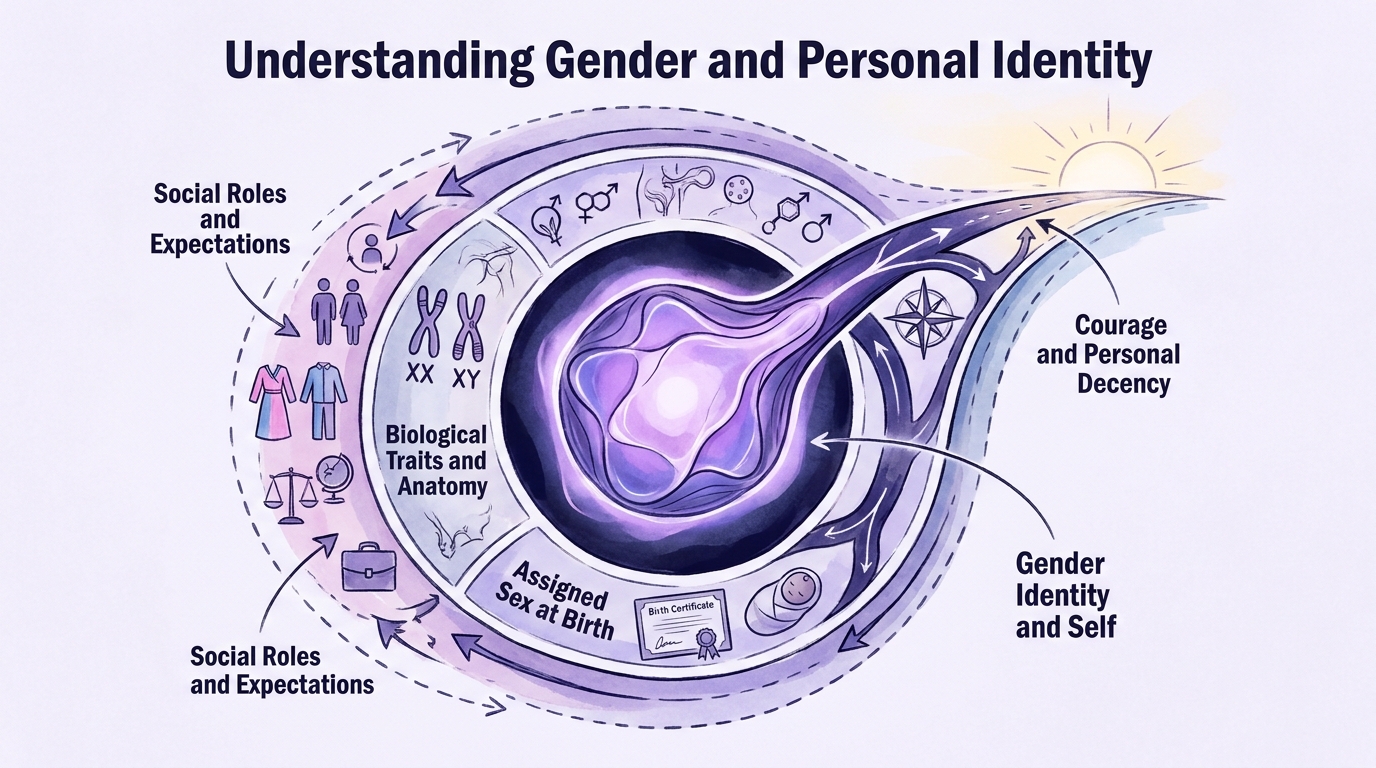
Tap to enlarge
Most valuable section
For whom
Parents, educators, and individuals seeking to understand the core differences between gender identity, expression, and physical body traits.
Understanding Identity and Biological Traits8:29
This chapter delivers the central message of the talk, using powerful analogies to explain why physical characteristics do not dictate human identity.
Detailed summary
1. Defining Identity, Expression, and Orientation
0:34The speaker opens by examining the early origins of self-awareness and how children begin identifying as boys or girls. Identity is described as a deeply intimate feeling of self that triggers conflict when questioned by others. The presentation establishes clear distinctions between three distinct concepts: sexual identity (who you feel you are), gender expression (how you present socially), and sexual orientation (who you are attracted to).
It is emphasized that these three aspects function independently of one another. For instance, how a person presents publicly does not define who they are attracted to, nor does their internal identity restrict how they express themselves socially. Recognizing these boundaries is essential to understanding human diversity and respecting personal autonomy.
2. Assigned Sex at Birth and Gender Socialization
5:09At birth, individuals are sexed based on physical genitalia, which functions as a social prediction of who they will become. While this prediction is accurate for the majority, it fails for some, leading to profound internal conflict when forced to live up to unchosen social expectations. From early childhood, societal norms enforce rigid paths through gendered marketing, clothing, toys, and media tropes like princesses and superheroes.
When young children attempt to express their self-identified gender, adults often deny their reality based on physical traits. Being denied identity by loving parents creates immense emotional distress for a child, forcing them to navigate a world that reinforces binary norms from an early age.
3. Understanding Identity and Biological Traits
8:28The speaker highlights how biological measures fail to provide absolute classifications for gender, pointing out that even international sports governing bodies struggle to define objective criteria. Biological traits like chromosomes, breasts, or genitalia do not define human identity. For example, a cisgender man who loses his genitals or develops breasts does not lose his internal sense of being a man.
Transgender individuals represent a natural variation where assigned identity at birth does not match internal selfhood. Forcing a transgender person to act out an assigned gender role is as absurd and harmful as forcing a left-handed child to write with their right hand, compelling them to live behind a daily disguise.
4. Social Representation and Moral Responsibility
11:44Transgender children face constant hardship because they are routinely erased from storybooks, school curricula, and media. When families, doctors, or educators confront a child's transition, they frequently freeze or prioritize their own social reputation, worrying about what colleagues or relatives will think. This fear shifts attention away from the child who is actually suffering.
The speaker argues that ethics and basic decency demand that the transgender individual remain the priority. Social institutions and families must uphold the individual's fundamental rights to dignity, personal privacy, and the free development of their personality, rather than prioritizing social standing.
5. Reframing Transgender Experiences as a Gift
14:10Despite facing institutional and social barriers, transgender children display immense courage and resilience by demanding to be heard and living with pride. Rather than viewing transgender existence as a burden, society should recognize it as a gift that encourages everyone to question rigid, unattainable gender standards that cause widespread harm.
Closing on a personal note, the speaker shares gratitude for having a transgender son. Raising him transformed a previously rigid, binary worldview into a richer, more vibrant understanding of humanity.
Questions this video answers
What is the difference between gender identity, gender expression, and sexual orientation?
Gender identity is an individual's deep, internal sense of being a man, a woman, both, or neither. Gender expression refers to how one presents that identity socially through appearance or behavior, while sexual orientation determines who someone is romantically or sexually attracted to. These three dimensions operate independently from one another.
Do physical body traits determine gender identity?
No, physical traits such as genitalia, breast tissue, or sex chromosomes (like XX or XY) do not dictate a person's inner identity. A person's sense of self remains unchanged even if physical traits are altered or do not align with typical expectations. Assigned sex at birth is simply a initial prediction, not an absolute definition.
How should families and professionals support transgender children?
Families and educators should focus on protecting the child's fundamental rights to dignity, privacy, and free personality development rather than worrying about social stigma or public perception. Listening to, believing, and respecting a child's self-identification relieves immense distress and allows them to live authentically.
Ask a follow-up Premium
About this summary
SumTube AI wrote this recap from the video's words and chapters. Credit and the original belong to TEDx Talks.