
Free AI summary of this YouTube video by SumTube
What Happened to the Land Humans Once Lived Under the Sea?
TL;DR
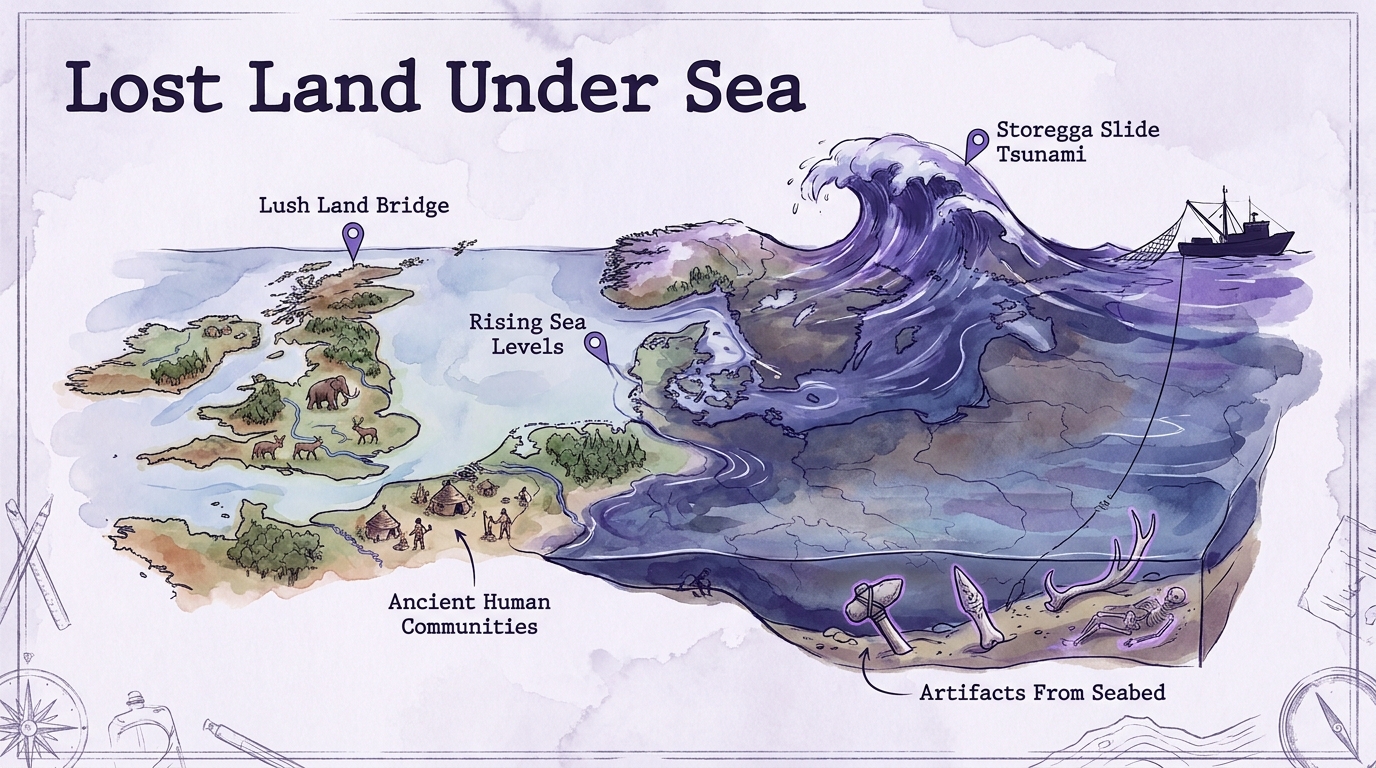
Doggerland was a thriving landmass connecting Great Britain to mainland Europe during the Mesolithic era, home to rich wildlife and hunter-gatherer communities. As glaciers melted after the last Ice Age, rising sea levels gradually submerged the region, culminating in a catastrophic tsunami caused by the Storegga Slide around 6200 BC that flooded the last remaining areas. Today, artifacts and human remains pulled from the North Sea floor help archaeologists piece together the history of this lost landscape often called Britain's Atlantis.

Key takeaways
- Doggerland once connected Britain to continental Europe, supporting vibrant Mesolithic human communities and megafauna
- 0:42Rising post-Ice Age sea levels and the massive Storegga Slide tsunami permanently submerged Doggerland into the North Sea
- 1:50Modern fishermen frequently retrieve prehistoric tools and bones from the seabed, aiding archaeological discovery
Tap to enlarge
Most valuable section
For whom
History enthusiasts and archaeology buffs interested in ancient geography and lost human settlements.
The Cataclysmic End of Doggerland0:42
This section explains the dramatic combination of rising sea levels and the Storegga Slide tsunami that drowned Doggerland underwater.
Detailed summary
1. The World of Doggerland
0:00Doggerland was a lush, expansive territory connecting Great Britain to mainland Europe, rich with rivers, forests, and diverse wildlife. During the Mesolithic period, thousands of hunter-gatherers lived in this thriving heartland, hunting species like mammoths and deer while establishing vibrant communities across the region.
This land bridge served as a vital cultural connection across ancient Europe before climate shifts altered the geography. It provided rich natural resources that sustained prehistoric human life for thousands of years.
2. The Cataclysmic End of Doggerland
0:42As the last Ice Age drew to a close, melting glaciers caused sea levels to steadily rise, slowly inundating Doggerland's plains and transforming the landmass into isolated islands. The final destruction occurred around 6200 BC when a massive underwater landslide off the coast of Norway, known as the Storegga Slide, triggered a catastrophic tsunami.
The giant wave engulfed the remaining high ground of Doggerland, submerging its final vestiges beneath the North Sea. This sudden aquatic tragedy wiped the region from human geography and collective memory for thousands of years.
3. Rediscovering Britain's Atlantis
1:50In modern times, fishermen trawling the North Sea frequently bring up prehistoric tools, animal fossils, and human remains from the submerged seabed. These accidental discoveries provide tangible evidence of the lost world lying beneath the ocean floor.
Archaeologists analyze these recovered artifacts to piece together the history of Doggerland, often dubbed Britain's Atlantis. The region stands as a compelling testament to the dynamic, shifting relationship between climate, sea levels, and human settlement throughout history.
Questions this video answers
What was Doggerland?
Doggerland was a vast, fertile landmass that connected Great Britain to mainland Europe. It featured rivers, forests, and rich wildlife, supporting thousands of Mesolithic hunter-gatherers.
How did Doggerland sink beneath the sea?
As the last Ice Age ended, melting glaciers caused sea levels to rise gradually, turning Doggerland into islands. Around 6200 BC, a giant underwater landslide called the Storegga Slide triggered a tsunami that completely submerged the remaining land.
How do scientists know Doggerland existed?
Fishermen trawling the North Sea regularly uncover ancient stone tools, animal bones, and human remains. Archaeologists study these recovered artifacts alongside seafloor mapping to reconstruct Doggerland's history.
Ask a follow-up Premium
About this summary
SumTube AI wrote this recap from the video's words and chapters. Credit and the original belong to Civilization Evolution.