
Free AI summary of this YouTube video by SumTube
VIDEO BANCO DE SANGRE VER 2012.mov
TL;DR
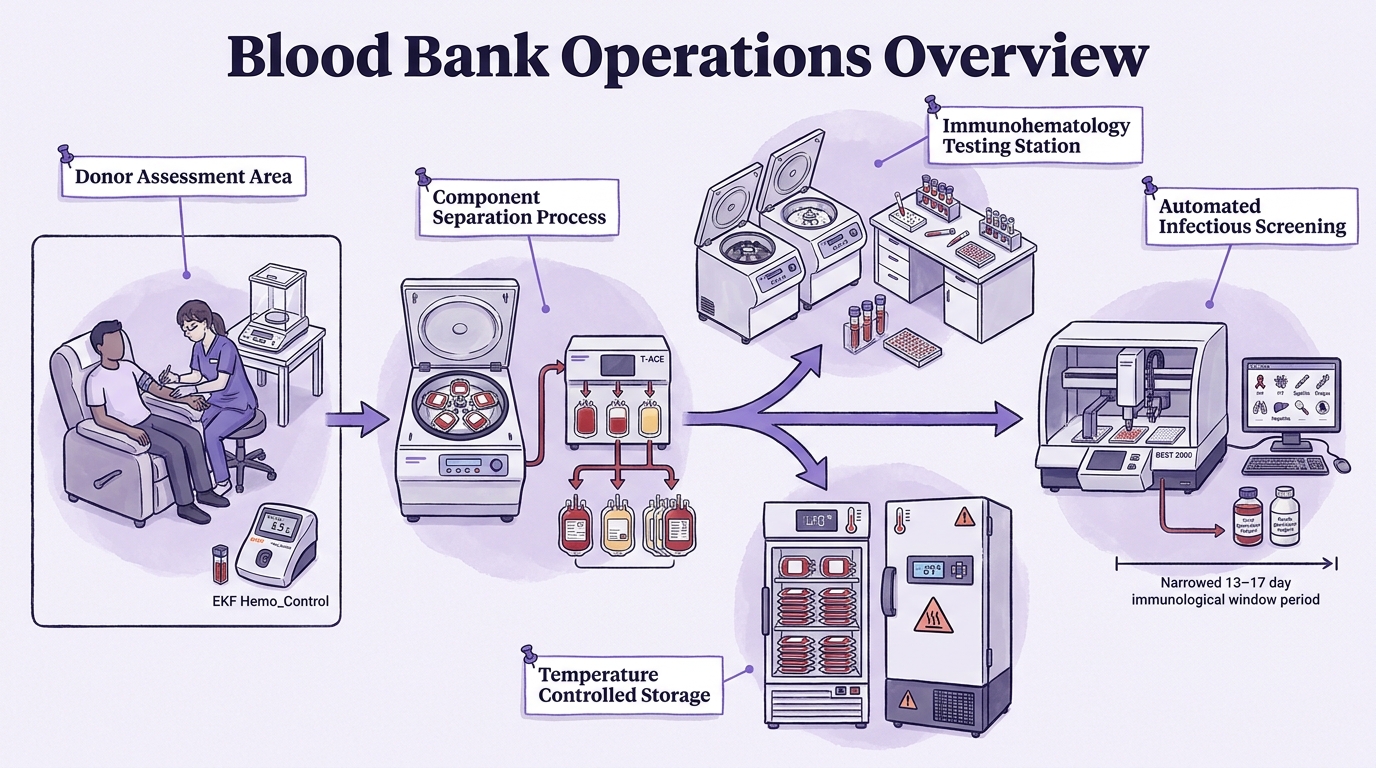
This video presents an informative tour of the Blood Bank at the Hospital de Yopal in Colombia, certified as a Category A facility by INVIMA. It details the four specialized operational areas—Donors, Component Separation, Immunohematology, and Infectious Diseases—and highlights the advanced equipment used to process, test, and safely store donated blood components.

Key takeaways
- 0:05Hospital de Yopal houses the region's only INVIMA-certified Category Type A blood bank, operating within Colombia's national blood bank network
- 1:55The facility relies on automated technologies for hemoglobin analysis, blood component extraction, infectious disease screening, and regulated storage
- 8:23Advanced ELISA automated screening reduces the immunological window to 13–17 days, improving transfusion safety against infectious agents like HIV, Hepatitis, Syphilis, and Chagas
Tap to enlarge
Most valuable section
For whom
Healthcare professionals, laboratory technicians, and community members interested in medical blood banking procedures and quality standards
It showcases advanced automated ELISA testing technology (BEST 2000) that reduces the immunological window to ensure blood transfusion safety.
Detailed summary
1. Introduction to Hospital de Yopal Blood Bank
0:00The Hospital de Yopal operates a Category Type A blood bank certified by INVIMA, forming part of a national network of 92 institutions across Colombia. The blood bank collects and processes blood donations to ensure a safe, reliable supply of vital blood components for the local community and the broader region.
To maximize donor participation and maintain high inventory levels, mobile teams conduct regular blood donation drives across various institutions, businesses, and municipalities throughout the Casanare department.
2. Donor Assessment and Phlebotomy Area
1:55In the Donor Area, potential donors undergo pre-donation testing using an EKF Hemo_Control device. This device provides quantitative hemoglobin and hematocrit results within 45 seconds using micro-cuvettes, aiding in the rapid diagnosis of conditions like anemia.
The phlebotomy section is equipped with automated balances and tube sealers. The automated collection scale calculates exact draw volumes (typically 450 mL) while monitoring fluid flow rate and extraction time to ensure consistent blood unit collection.
3. Component Separation Area
3:47Collected whole blood is processed in the Component Separation Area using refrigerated centrifuges and automated component extractors like the T-ACE system. The centrifuge processes multiple units under precise temperature control to extract plasma, red cell concentrates, and cryoprecipitates.
The T-ACE automated separator divides blood components efficiently into specialized multi-pack blood bags (double, triple, or quadruple). This streamlined process allows high throughput while meeting specific blood product requirements.
4. Immunohematology and Storage Area
5:38The Immunohematology Area utilizes high-speed centrifuges for essential serological tests, including antibody screening, blood typing, and cross-matching. Platelet concentrates are kept viable using dedicated platelet agitators and incubators with capacity for up to 48 units.
Plasma and red blood cell units are stored in monitored freezers and medical refrigerators. Freezers hold up to 240 plasma units, while red cell fridges store up to 260 units. Both feature automated temperature monitoring and audible alarms to preserve component viability.
5. Infectious Diseases Screening Area
8:23The Infectious Diseases Area features the BEST 2000 automated microplate system for immunoassay testing. The computer-controlled system screens blood samples for infectious markers, including HIV-1/2, Hepatitis B, Hepatitis C, Syphilis, and Chagas disease.
Utilizing third- and fourth-generation reagents, this system narrows the immunological window period to 13–17 days. This advanced screening ensures maximum safety for transfusion recipients, reflecting the hospital's 16-year commitment to saving lives in the region.
Questions this video answers
What certification does the Hospital de Yopal Blood Bank hold?
The Hospital de Yopal Blood Bank is certified by INVIMA as a Category Type A facility. It is part of Colombia's National Blood Bank Network, which comprises 92 institutions across the country.
What are the primary operational areas within the blood bank?
The facility is divided into four main sections: the Donor Area (including Phlebotomy), the Component Separation Area, the Immunohematology Area, and the Infectious Diseases Area. Each section utilizes specialized automated equipment to handle donor screening, blood processing, antibody testing, and infectious marker screening.
How are blood safety and component quality ensured during storage?
Blood components are stored in specialized refrigeration units and freezers equipped with continuous temperature monitoring systems and audible alarms. Furthermore, infectious disease screening uses third- and fourth-generation reagents to significantly narrow the window period for detecting pathogens such as HIV, Hepatitis B and C, Syphilis, and Chagas disease.
Ask a follow-up Premium
About this summary
SumTube AI wrote this recap from the video's words and chapters. Credit and the original belong to HOSPITAL REGIONAL DE LA ORINOQUÍA E.S.E.