
Free AI summary of this YouTube video by SumTube
Uruguay: Montevideo familylife during WW2
TL;DR
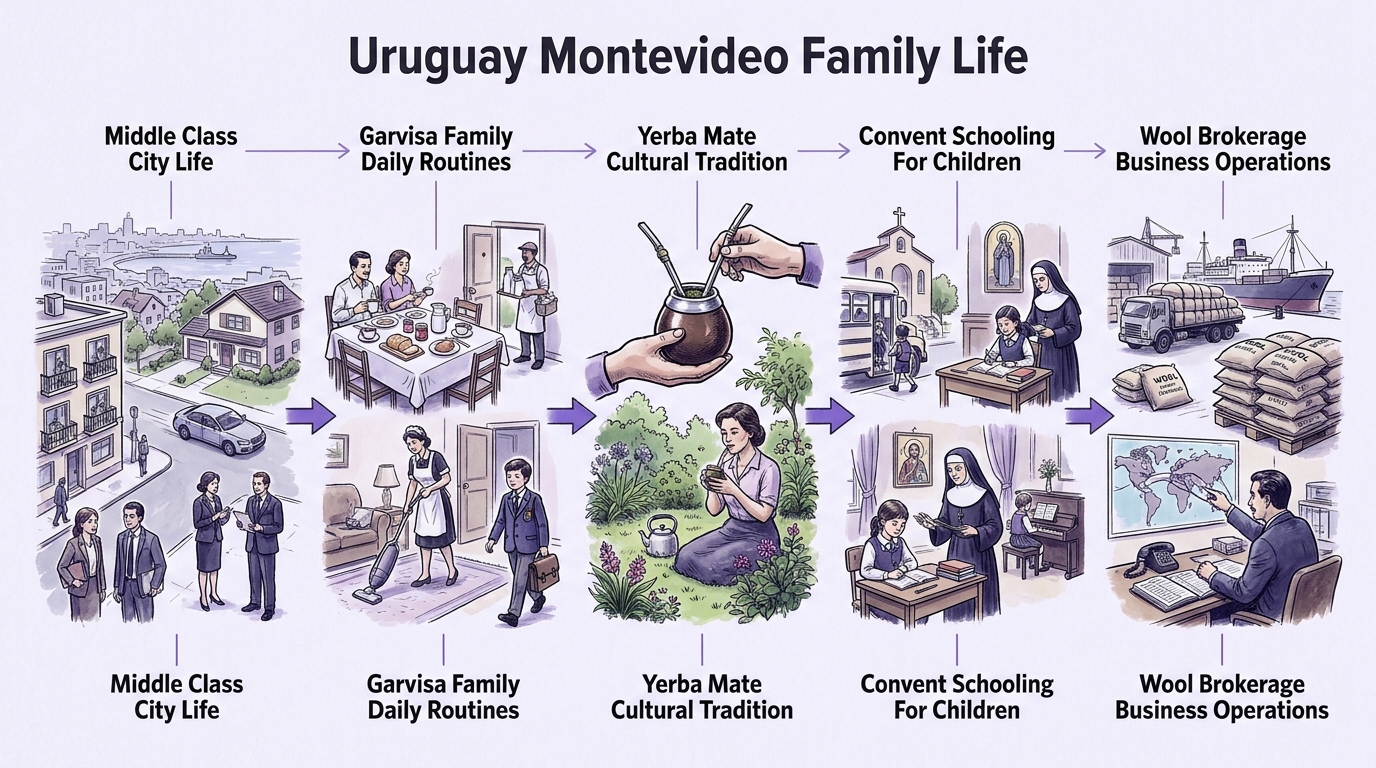
This archival documentary explores the daily life, culture, and social structure of a middle-class family in Montevideo, Uruguay, during the mid-20th century. Through the story of the Garvisa family, the film highlights their routines, educational choices, domestic practices, and work life, contrasting them with middle-class norms in the United States.

Key takeaways
- 3:20Traditional customs like drinking yerba mate and hosting asados remain central to Uruguayan family identity
- 9:11In middle-class Montevideo, having a full-time live-in domestic servant was often prioritized over owning a car
Tap to enlarge
Most valuable section
For whom
History enthusiasts, cultural anthropologists, and students of Latin American societal history.
Family Introduction and Traditional Customs2:10
It offers an intimate look into the daily family dynamics, clothing traditions, and domestic customs of mid-century Uruguay.
Detailed summary
1. Montevideo and the Uruguayan Middle Class
0:00The film introduces Montevideo as a modern, sophisticated capital city with a prominent middle class, drawing comparisons to urban life in the United States.
Various architectural styles, residential neighborhoods, and working-class housing near the harbor are explored to contextualize where middle-class families reside.
2. Introducing the Garvisa Family
2:10The narrator introduces Gabriel and Maria Garvisa and their two children, Raquel and Pepi, residing in a quiet residential street in Montevideo.
Key cultural practices are discussed, including sipping yerba mate, wearing traditional gaucho-inspired attire during special events, and local family values.
3. Morning Routines and Departure for School
5:15The family wakes early, receiving fresh milk from a street vendor and sharing a breakfast of coffee, hot milk, bread, and jam.
Young Pepi departs for his Catholic day school via bus, while domestic chores around the house begin for the household staff and family.
4. Domestic Duties and Education
9:05Maria prunes her garden while drinking mate, and the live-in maid, Bella, manages heavy household duties with modern appliances like vacuum cleaners.
Raquel works diligently on her morning school lessons before attending convent school in the afternoon, illustrating educational standards for young women.
5. Shopping, Music, and Entertainment
12:20Maria shops for fresh vegetables from a local vendor before dressing up in tailored attire to attend a movie theater in downtown Montevideo.
Meanwhile, Raquel practices piano lessons at home, surrounded by friends in a traditional parlor setting.
6. Gabriel's Business and Montevideo's Economy
17:12Gabriel Garvisa works at his wool brokerage firm, managing wool shipments from Uruguayan ranches to international textile mills.
The film explains Gabriel's economic standing within the broader community of trade, government clerks, and white-collar workers.
7. Evening Supper and Family Leisure
19:04The family gathers in the kitchen and dining room for a formal evening meal featuring soup, salad, and a cheese souffle.
The night concludes with family time, showcasing the warm, structured home atmosphere typical of European-influenced South American households.
8. The Weekend Asado Celebration
22:27On the weekend, the Garvisa family hosts an outdoor asado (barbecue) with friends, roasting whole lamb and sausages over an open pit.
The film concludes by reflecting on the universality of family values and hospitality across different cultures.
Questions this video answers
What is the background of the Garvisa family?
The father, Gabriel Garvisa, is a wool broker of Basque descent, while the mother, Maria, was born in Montevideo to Italian parents. They have two children, Raquel and Pepi, and reside in a modest modern home in Montevideo.
How do domestic life and household amenities compare to North America in this era?
While middle-class Montevideo families enjoyed modern appliances like electric refrigerators and vacuum cleaners, they relied on live-in help rather than personal automobiles. Daily routines included early morning house cleaning, airing mattresses, and buying milk directly from street vendors.
What are the key cultural traditions showcased in the film?
The film highlights traditional customs such as drinking yerba mate throughout the day, participating in weekend outdoor asados (barbecues) with roasted lamb and sausages, and attending Catholic day or convent schools.
Ask a follow-up Premium
About this summary
SumTube AI wrote this recap from the video's words and chapters. Credit and the original belong to MichaelRogge.