
Free AI summary of this YouTube video by SumTube
This Slug Should Be Impossible
TL;DR
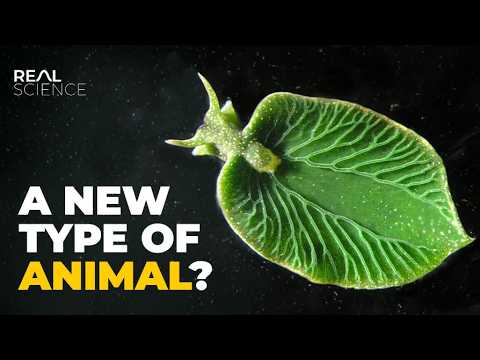
Sacoglossan sea slugs, such as the leaf sheep, blur the line between plants and animals by stealing functioning chloroplasts from algae through a process called kleptoplasty. These retained chloroplasts allow the slugs to generate energy via photosynthesis, sustaining them for weeks to months without additional food. This photosynthetic ability even enables certain species to voluntarily decapitate themselves and completely regenerate a full body from just their detached head.
Key takeaways
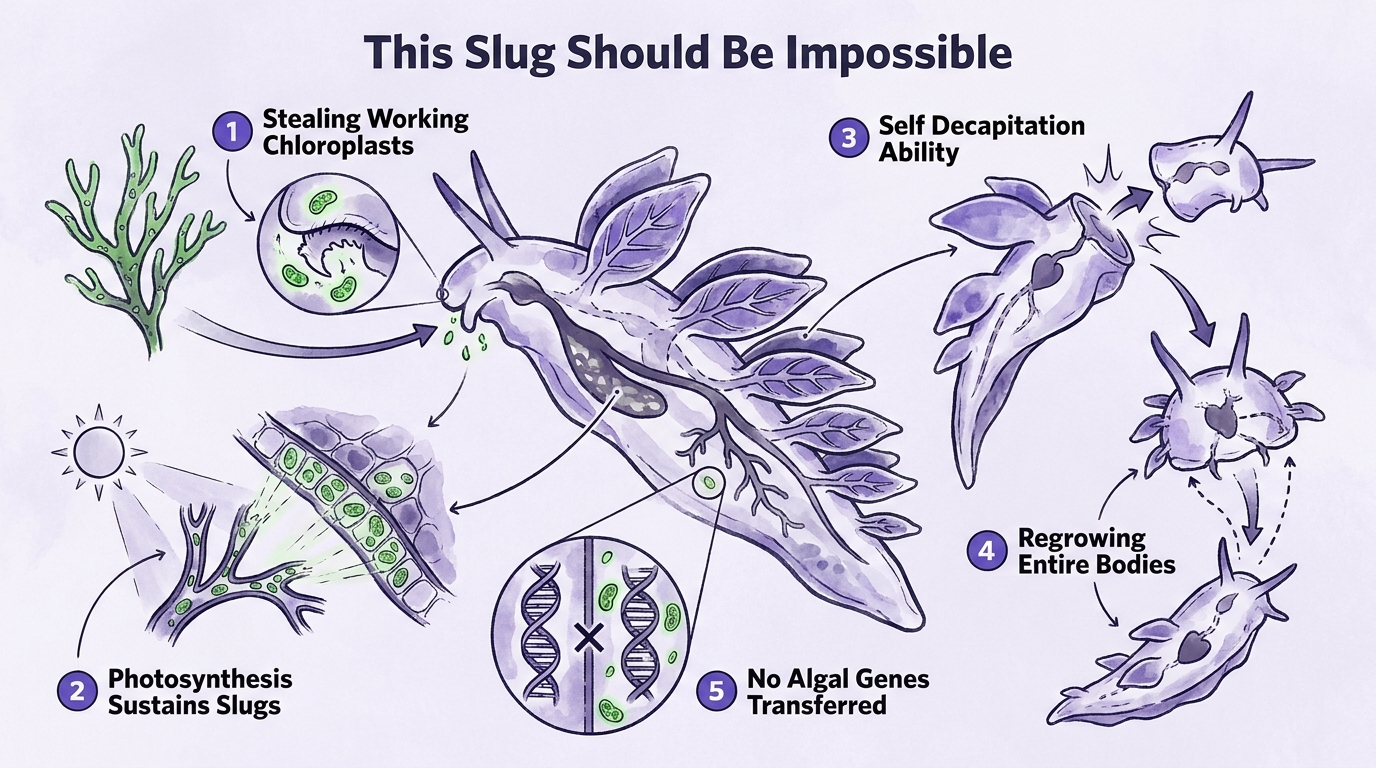
- 10:09Sacoglossan sea slugs perform kleptoplasty by extracting chloroplasts from algae and storing them in their digestive diverticula to photosynthesize
- 13:35Slugs survive without algal nuclear DNA by employing behavioral and structural photoprotection to avoid damage from reactive oxygen species
- 18:19Some sacoglossan species can intentionally decapitate themselves along a pre-formed neck plane and fully regenerate a body within three weeks
- 21:56The energy generated by stolen chloroplasts housed in the head sustains the severed head while it regrows vital organs like its heart
Tap to enlarge
Most valuable section
For whom
Biology enthusiasts interested in extreme animal adaptations and cellular phenomena
Self-Decapitation and Body Regeneration16:39
It shows fascinating scientific footage of a sea slug initiating extreme autotomy to sever its own head and detailed steps of how it fully regrows its body.
Detailed summary
1. Introduction to the Leaf Sheep and Kleptoplasty
0:00The leaf sheep sea slug (*Costasiella kuroshimae*) is a marine gastropod that exhibits an extraordinary mode of existence by functioning similarly to a plant. Sacoglossan sea slugs engage in kleptoplasty, a process where they ingest algae, steal its chloroplasts, and harbor those organelles within their own body cells to harness solar energy.
Unlike traditional coral symbiosis, which houses whole algae organisms, sacoglossans isolate only the photosynthetic machinery. This biological feature grants some species the ability to survive solely on light and carbon dioxide for months and even provides the energy necessary to regrow entire bodies from a detached head.
2. Profiles of Solar-Powered Sea Slugs
4:05Sacoglossans, commonly known as sap-sucking sea slugs, are small gastropods found in shallow coastal tropical and subtropical environments like seagrass beds and coral reefs. Species range in size from tiny 7 mm specimens like the leaf sheep to larger 5 cm species that mimic frilly seaweed leaves for camouflage.
Key species include *Elysia chlorotica*, a bright green leaf-like slug from the North American eastern coast, and *Elysia crispata*, the ruffled lettuce sea slug of the Caribbean. The Indo-Pacific leaf sheep (*Costasiella kuroshimae*) earns its name from its distinctive ear-like rhinophores and cute facial structure.
3. Scientific Discovery of Photosynthetic Slugs
6:44Researchers initially noticed sacoglossans eating algae, but microscopic evidence from 1965 first confirmed that their green coloration came from retained algal chloroplasts. By the 1970s, laboratory experiments verified that these kleptoplasts remained actively photosynthetic within animal tissues.
Scientists proved reliance on light by testing slug weight loss under varying conditions of light and food deprivation. Depriving slugs of both food and light caused drastic weight loss compared to light-only environments, with *Elysia chlorotica* demonstrated to survive up to nine months exclusively on light and carbon dioxide.
4. Chloroplast Harvesting Mechanics
9:16To harvest chloroplasts, sacoglossans use specialized radula mouthparts to pierce algal cell walls and extract the internal cellular contents. The slug selectively avoids digesting the chloroplasts, shunting them into specialized digestive tubules called diverticula.
These diverticula branch throughout the slug's body and into frilly appendages like cerata or parapodia. This structural layout exposes maximum surface area to sunlight, allowing optimal photosynthetic activity across the animal's outer tissues.
5. Managing Photosynthetic Stress and Solar Damage
10:27Photosynthesis carries inherent risks of photodamage when light intake exceeds processing capacity, creating harmful reactive oxygen species (ROS) like superoxide and hydrogen peroxide. Plants manage this oxidative stress using nuclear-encoded enzymes and repair proteins, which sea slugs lack since they do not digest the algal nucleus.
To survive without plant repair genes, sacoglossans employ unique protective behaviors. They move into shade, adjust water depth, fold their parapodia over their backs like sunscreens, cluster chloroplasts in dense layers, and preferentially feed on algae species that possess unusually stable chloroplasts.
6. Debunking Horizontal Gene Transfer
15:08For decades, scientists hypothesized that sacoglossans maintained functional chloroplasts over long periods via horizontal gene transfer, incorporating algal nuclear genes into their own DNA. This theory suggested a rare cross-kingdom transfer of genetic material between plants and animals.
Recent comprehensive genomic sequencing of sacoglossan species disproved this hypothesis, finding no structural evidence of algal nuclear genes in the slug genome. Instead, long-term chloroplast survival relies purely on the inherent stability of chosen chloroplasts and the slug's physical photoprotective strategies.
7. Self-Decapitation and Body Regeneration
16:42Certain sacoglossans exhibit extreme autotomy by intentionally severing their own heads from their bodies, discarding major organs like the heart and main digestive system. A pre-formed neck groove called a breakage plane acts as a perforated seam, allowing the head to detach cleanly over approximately 22 hours.
After detachment, the wound closes within days, and the head continues to crawl and feed independently. Remarkably, the severed head regenerates a completely new body—including a functional heart and parapodia—within 17 to 20 days, a process some individuals repeat multiple times.
8. The Purpose and Power Behind Autotomy
20:38Researchers determined that self-decapitation is not a primary defensive reaction against predators because the detachment process is too slow to escape an immediate attack. Instead, it serves to purge severe internal parasite infestations, eliminate damaged body tissue, or free the slug when tangled in seaweed.
The severed head survives without a heart or primary digestive tract during initial regeneration by utilizing its stolen chloroplasts. Photosynthesis within the head's tissues generates the vital energy required to sustain metabolism until complex body organs can fully regrow.
Questions this video answers
How do sea slugs perform photosynthesis without being plants?
Sacoglossan sea slugs pierce algal cells with specialized mouthparts, suck out the contents, and selectively store intact chloroplasts in their digestive tubules instead of digesting them. These stolen chloroplasts, known as kleptoplasts, continue to convert sunlight into energy inside the slug's tissues for extended periods.
Why don't the stolen chloroplasts poison the sea slug with oxidative stress?
Because slugs lack the algal nucleus to provide protective enzymes, they rely on physical and behavioral adaptations to regulate sunlight exposure. They adjust their water depth, retreat to shade, aggregate chloroplasts, fold body flaps over themselves, and select algae species with naturally resilient chloroplasts.
Why do some sea slugs voluntarily chop off their own heads?
Researchers believe this extreme autotomy is not a quick escape from predators, as the process takes nearly a day to complete. Instead, self-decapitation allows the slugs to shed severe internal parasite infections, discard damaged body tissues, or free themselves if entangled.
Ask a follow-up Premium
About this summary
SumTube AI wrote this recap from the video's words and chapters. Credit and the original belong to Real Science.