
Free AI summary of this YouTube video by SumTube
The Island Where Money Weighs 4 Tons | MoneyLore
TL;DR
This video explains the history of Yapese stone money (Rai stones) to demonstrate that currency is ultimately based on social consensus rather than physical items. It draws parallels between how Yap islanders tracked ownership of stationary or submerged stone disks through shared memory and how modern banking ledgers function today.
Key takeaways
- 2:15Economists value the story of Yap's stone money because it highlights the fundamental nature of currency as a social contract rather than a physical object
- 2:15Throughout history, forms of money like gold and paper currency only worked because society agreed on their value, a concept that remained true even after governments uncoupled paper currency from the gold standard in 19
- 2:15Today, the sunken stone off the coast of Yap remains unseen at the bottom of the ocean, yet local memory still accounts for its owner
Most valuable section
This legacy serves as a reminder that all financial systems, past and present, depend entirely on mutual trust and shared consensus.
Detailed summary
1. The Stone Money of Yap Island
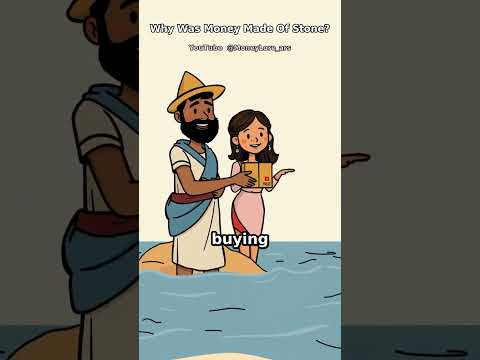
0:00In 1903, American anthropologist William Furness visited the Pacific island of Yap and discovered giant stone disks used as currency, some weighing up to four tons. Rather than physically moving these massive stones during transactions, the islanders simply transferred ownership by social agreement, keeping track of who owned which stone through collective memory and oral history.
Even when a stone sank to the ocean floor during transport generations earlier, the community agreed it still retained its value and could be bought or sold. This system illustrates how money relies on collective belief rather than physical possession, directly mirroring how modern digital banking ledgers record wealth today without moving physical assets.
2. What Money Really Is
2:15Economists value the story of Yap's stone money because it highlights the fundamental nature of currency as a social contract rather than a physical object. Throughout history, forms of money like gold and paper currency only worked because society agreed on their value, a concept that remained true even after governments uncoupled paper currency from the gold standard in 1971.
Today, the sunken stone off the coast of Yap remains unseen at the bottom of the ocean, yet local memory still accounts for its owner. This legacy serves as a reminder that all financial systems, past and present, depend entirely on mutual trust and shared consensus.
Questions this video answers
What does this video say about The Stone Money of Yap Island?
In 1903, American anthropologist William Furness visited the Pacific island of Yap and discovered giant stone disks used as currency, some weighing up to four tons. Rather than physically moving these massive stones during transactions, the islanders simply transferred ownership by social agreement, keeping track of who owned which stone through collective memory and oral history. Even when a ston
What does this video say about What Money Really Is?
Economists value the story of Yap's stone money because it highlights the fundamental nature of currency as a social contract rather than a physical object. Throughout history, forms of money like gold and paper currency only worked because society agreed on their value, a concept that remained true even after governments uncoupled paper currency from the gold standard in 1971. Today, the sunken s
Ask a follow-up Premium
About this summary
SumTube AI wrote this recap from the video's words and chapters. Credit and the original belong to MoneyLore.