
Free AI summary of this YouTube video by SumTube
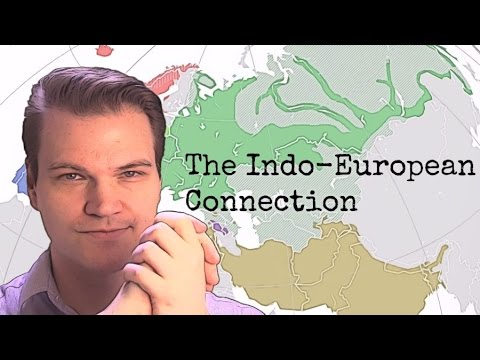
The Indo-European Connection
TL;DR
This video explores the origins, structure, and history of the Indo-European language family, which is spoken natively by nearly half of the world's population. It details the expansion of Proto-Indo-European (PIE) through migrations and discusses the key linguistic traits that connect its diverse subfamilies. By examining cognate vocabulary and shared grammatical inflections across ancient and modern languages, the video demonstrates how historical comparative linguistics reveals these hidden connections.
Key takeaways
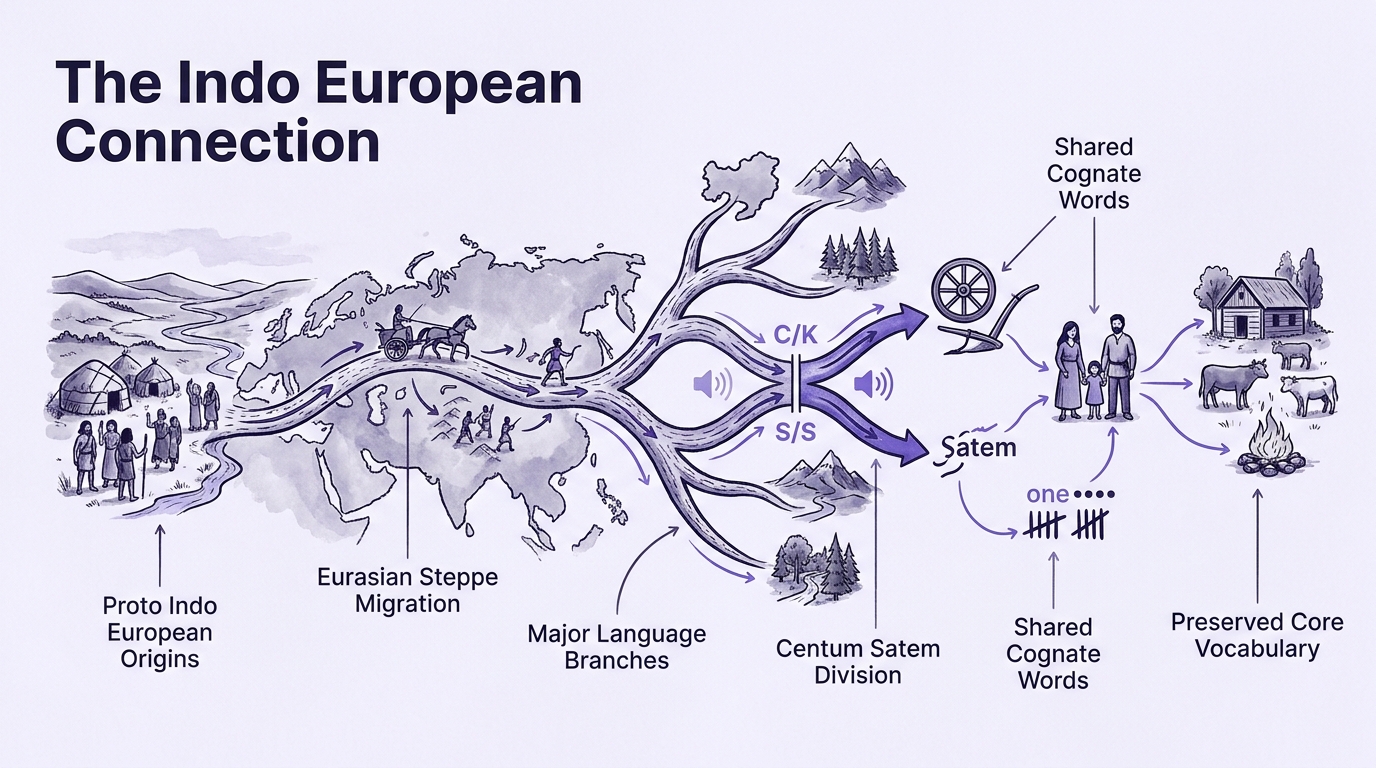
- 0:51All Indo-European languages developed from Proto-Indo-European (PIE), which was spoken around 6,500 years ago on the Eurasian steppe of eastern Ukraine, southern Russia, and the Caucasus
- 3:18As Indo-European speakers settled across different continents, PIE split into distinct major branches
- 4:11Comparative linguistics shows that Indo-European languages maintain a substantial core of cognate words derived from Latin "cognatus" or "born together."
- 6:46Indo-European languages are broadly divided into Centum and Satem branches, named after the word for "one hundred" in Latin and Avestan
- 9:16Many fundamental vocabulary terms have been preserved across nearly all Indo-European branches
Tap to enlarge
Most valuable section
Origins and Migration of PIE Speakers0:51
Over three millennia, migrating groups brought PIE across Europe and Asia, where the language branched into distinct regional subfamilies.
Detailed summary
1. Introduction to Indo-European Languages
0:00Around 46 percent of the world's population speaks an Indo-European language as their native language across Europe, South Asia, the Americas, and beyond. This diverse family includes modern and ancient languages such as English, Hindi, Persian, Russian, Armenian, and Greek. Despite appearing vastly different on the surface, all of these languages share a single ancestral origin.
2. Origins and Migration of PIE Speakers
0:51All Indo-European languages developed from Proto-Indo-European (PIE), which was spoken around 6,500 years ago on the Eurasian steppe of eastern Ukraine, southern Russia, and the Caucasus. Early speakers were among the first to domesticate horses, enabling rapid migration and expansion across broad geographical regions. Over three millennia, migrating groups brought PIE across Europe and Asia, where the language branched into distinct regional subfamilies.
3. Branches of the Indo-European Family
3:18As Indo-European speakers settled across different continents, PIE split into distinct major branches. These include Anatolian and Tocharian (both now extinct), Italic, Celtic, Armenian, Albanian, Hellenic, Germanic, Balto-Slavic, and Indo-Iranian. Over thousands of years, external influences and regional isolation shaped these branches into the unique modern languages spoken today.
4. Cognates and Shared Vocabulary
4:11Comparative linguistics shows that Indo-European languages maintain a substantial core of cognate words derived from Latin "cognatus" or "born together." Although sound shifts have obscured many similarities over time, comparative study allows linguists to trace root words, such as the PIE root "bher" (meaning to bear or carry) across Sanskrit, Ancient Greek, Latin, Gothic, and Old English.
5. Centum and Satem Language Division
6:46Indo-European languages are broadly divided into Centum and Satem branches, named after the word for "one hundred" in Latin and Avestan. This distinction stems from a major historical sound shift regarding the original PIE palatalized 'k' sound. In Satem languages, this sound transformed into sibilants like 's' or 'sh', whereas in Centum languages, it merged into a plain 'k' or shifted to 'h' in Germanic languages.
6. Preserved Core Vocabulary across Languages
9:16Many fundamental vocabulary terms have been preserved across nearly all Indo-European branches. Common cognates include words for basic numbers from 1 to 10, family relationships, agricultural tools, and natural phenomena like animals and trees. Identifying sound patterns, such as the relationship between voiceless and voiced consonants, reveals these deep ancestral connections.
7. Grammatical Inflections and Case Systems
12:00Proto-Indo-European was a highly inflected language that modified word endings to reflect grammatical roles like person, tense, and case. While modern languages like English have lost most of these inflections over time, ancient languages like Sanskrit, Latin, and Old English retained extensive verb conjugations and noun case systems. Modern Slavic, German, and Icelandic languages continue to preserve complex case systems today.
Questions this video answers
What does this video say about Introduction to Indo-European Languages?
Around 46 percent of the world's population speaks an Indo-European language as their native language across Europe, South Asia, the Americas, and beyond. This diverse family includes modern and ancient languages such as English, Hindi, Persian, Russian, Armenian, and Greek. Despite appearing vastly different on the surface, all of these languages share a single ancestral origin.
What does this video say about Origins and Migration of PIE Speakers?
All Indo-European languages developed from Proto-Indo-European (PIE), which was spoken around 6,500 years ago on the Eurasian steppe of eastern Ukraine, southern Russia, and the Caucasus. Early speakers were among the first to domesticate horses, enabling rapid migration and expansion across broad geographical regions. Over three millennia, migrating groups brought PIE across Europe and Asia, wher
What does this video say about Branches of the Indo-European Family?
As Indo-European speakers settled across different continents, PIE split into distinct major branches. These include Anatolian and Tocharian (both now extinct), Italic, Celtic, Armenian, Albanian, Hellenic, Germanic, Balto-Slavic, and Indo-Iranian. Over thousands of years, external influences and regional isolation shaped these branches into the unique modern languages spoken today.
What does this video say about Cognates and Shared Vocabulary?
Comparative linguistics shows that Indo-European languages maintain a substantial core of cognate words derived from Latin "cognatus" or "born together." Although sound shifts have obscured many similarities over time, comparative study allows linguists to trace root words, such as the PIE root "bher" (meaning to bear or carry) across Sanskrit, Ancient Greek, Latin, Gothic, and Old English.
What does this video say about Centum and Satem Language Division?
Indo-European languages are broadly divided into Centum and Satem branches, named after the word for "one hundred" in Latin and Avestan. This distinction stems from a major historical sound shift regarding the original PIE palatalized 'k' sound. In Satem languages, this sound transformed into sibilants like 's' or 'sh', whereas in Centum languages, it merged into a plain 'k' or shifted to 'h' in G
Ask a follow-up Premium
About this summary
SumTube AI wrote this recap from the video's words and chapters. Credit and the original belong to Langfocus.