
Free AI summary of this YouTube video by SumTube
Scintille di storia antica: 5 il Palazzo di Cnosso in 2 minuti flipped classroom
TL;DR
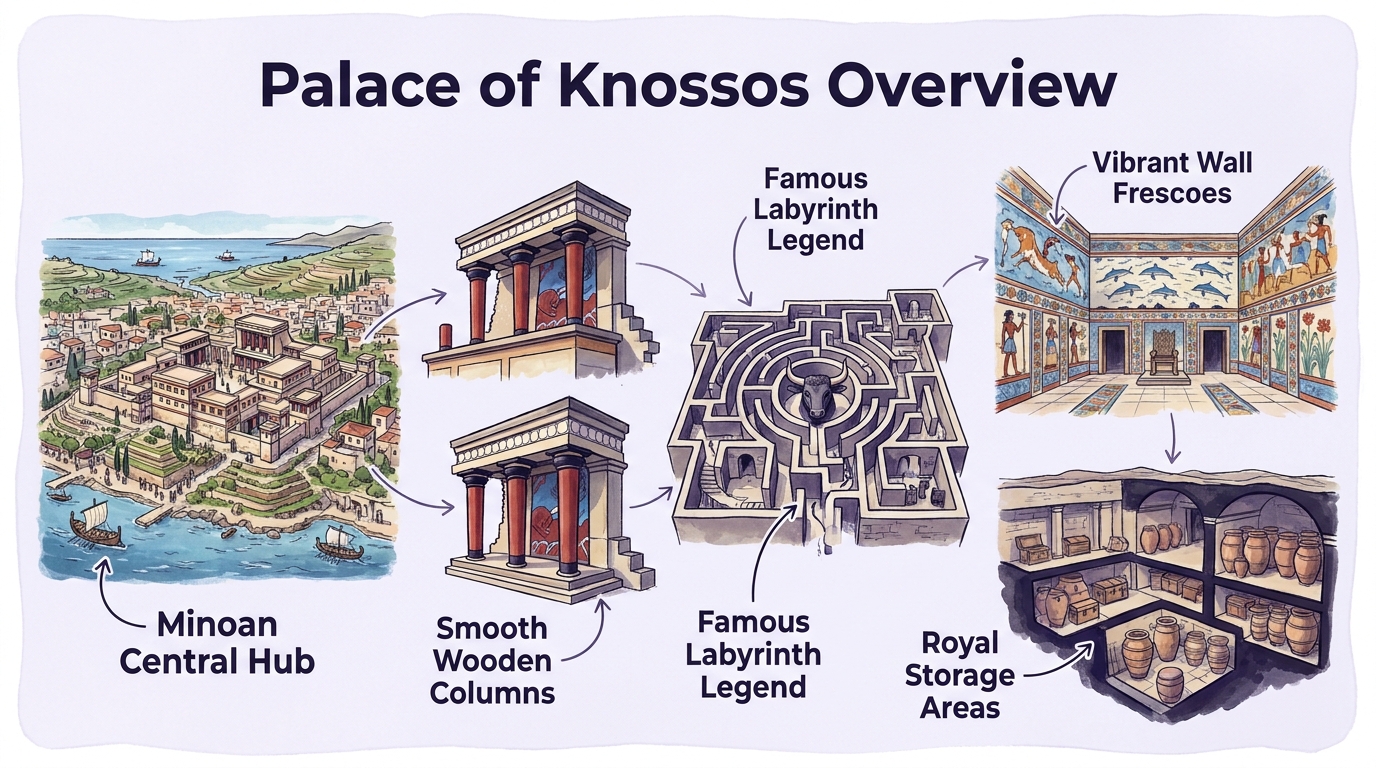
This video provides a detailed 3D reconstruction and historical overview of the Palace of Knossos, the central hub of Minoan civilization in Crete. It explores the complex architectural layout, distinctive smooth columns, functional zones, and iconic frescoes depicting daily life and religious rituals. Additionally, it highlights the historical connections to Greek mythology, its conquest by the Mycenaeans around 1450 BCE, and modern comparisons of the ruins with their original structures.

Key takeaways
- 0:55The complex layout of Knossos gave rise to the Greek myth of Theseus and the Minotaur's labyrinth
- 1:51Minoan frescoes showcased daily life activities like bull-leaping alongside sacred animal motifs like dolphins
- 0:41The palace served multifunctional roles, housing royal quarters, storage areas, artisan workshops, and religious spaces
Tap to enlarge
Most valuable section
For whom
History enthusiasts and students studying ancient Mediterranean civilizations and architecture.
Frescoes and Artistic Legacy1:51
It vividly showcases restored Minoan artwork, including the famous bull-leaping (taurocapsia) fresco and dolphin murals, bringing ancient Minoan culture to life.
Detailed summary
1. Architecture and Structure of Knossos
0:00The Palace of Knossos was an enormous complex serving as the central hub of the city of Knossos on Crete. The architecture featured smooth wooden columns without the traditional fluting found in classical Greek temples. These columns were brightly painted in various colors, as revealed by archaeological frescoes.
In addition to housing the Minoan sovereign and the royal family, the palace fulfilled several functional roles. It was divided into distinct sections, including massive storage areas, administrative reception spaces, residential quarters, and artisan workshops surrounding a central courtyard.
2. The Labyrinth Legend and Palatial Life
0:55Due to its intricate layout and complex interconnected passages, the palace inspired the famous Greek legend of Theseus, Ariadne, and the Minotaur's Labyrinth. The multi-story structure seamlessly integrated domestic areas with central open spaces and temples.
Scenes of daily life and religious practice were vibrant parts of palatial existence. The court and surrounding halls were designed to support large gatherings, rituals, and administrative activities essential to Minoan governance.
3. Frescoes and Artistic Legacy
1:51The interior walls of Knossos were decorated with elaborate frescoes depicting everyday Minoan life and sacred themes. Famous artworks include scenes of taurocapsia (bull-leaping), the Prince of the Lilies, and depictions of marine life such as dolphins, which held religious significance.
Around 1450 BCE, the palace and the city were conquered by the Mycenaeans. Shortly after, Minoan civilization declined and disappeared, likely due to a combination of foreign conquest and natural disasters like earthquakes.
4. Comparison with Modern Ruins and Religious Sites
2:24Reconstructions contrast the original North Entrance of the palace with its modern archaeological remains. The visual comparisons highlight how the multi-level structures and decorated porticos appeared during the height of Minoan power compared to today's ruins.
Specific areas of the palace were dedicated to religious ceremonies and rituals. Behind these ceremonial spaces stood impressive architectural features, including the palace's grand staircase.
Questions this video answers
What made the columns of the Palace of Knossos unique?
Unlike classical Greek columns, the columns at Knossos were primarily constructed from wood and lacked traditional fluting. They were painted in distinctive vibrant colors, as evidenced by surviving frescoes and architectural reconstructions.
Why is the Palace of Knossos associated with the Labyrinth myth?
The palace featured a highly intricate system of interconnected rooms, corridors, and levels across multiple functional zones. This complex layout led to the famous legend of the Labyrinth constructed to hold the Minotaur.
What led to the end of the Minoan civilization at Knossos?
Around 1450 BCE, Knossos and its palace were conquered by the Mycenaeans. Shortly thereafter, the Minoan civilization collapsed completely, likely exacerbated by severe natural disasters such as earthquakes.
Ask a follow-up Premium
About this summary
SumTube AI wrote this recap from the video's words and chapters. Credit and the original belong to flipped prof.