
Free AI summary of this YouTube video by SumTube
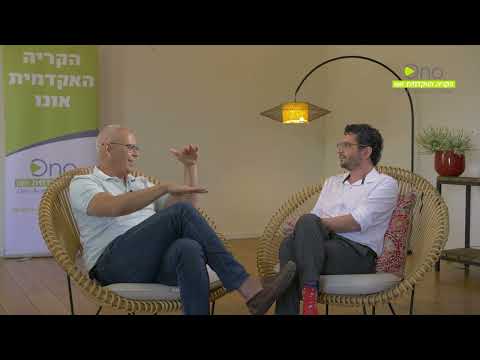
רנן הרטמן (מנכ"ל ומייסד הקריה האקדמית אונו) ויהודה שוחט מדברים על התפיסה החברתית של המקום
TL;DR
In this discussion, Renan Hartman, CEO and founder of Ono Academic College, speaks with lecturer Yehuda Shohat about the founding vision and social philosophy of Ono Academic College. They explore how higher education can serve as a shared public space for all sectors of Israeli society—secular, Haredi, Arab, and religious Zionist. Hartman emphasizes that educational leadership requires deep self-confidence, exposure to diverse identities, and the courage to engage with complex cultural perspectives.
Key takeaways
- 0:24Ono Academic College was founded as a social initiative to build an inclusive public space where all sectors of Israeli society feel equal ownership
- 4:58True multiculturalism requires groups to maintain strong self-identity and confidence so they can engage with others without feeling threatened
- 12:12Effective educational leaders must actively integrate diverse voices rather than remaining isolated within homogeneous communities
Tap to enlarge
Most valuable section
For whom
Educators, social entrepreneurs, and students interested in multicultural education and Israeli social dynamics.
Building a Shared Public Space0:24
Renan Hartman articulates his fundamental philosophy of higher education as a tool for bridge-building among diverse societal sectors.
Detailed summary
1. Introduction & Purpose of the Course
0:00Renan Hartman and Yehuda Shohat introduce the course 'Education and Society in the 21st Century' at Ono Academic College. They frame the discussion around the background, mission, and future direction of the institution.
They outline how higher education must adapt to contemporary social realities, laying the foundation for an exploration of educational philosophy and societal integration.
2. Building a Shared Public Space
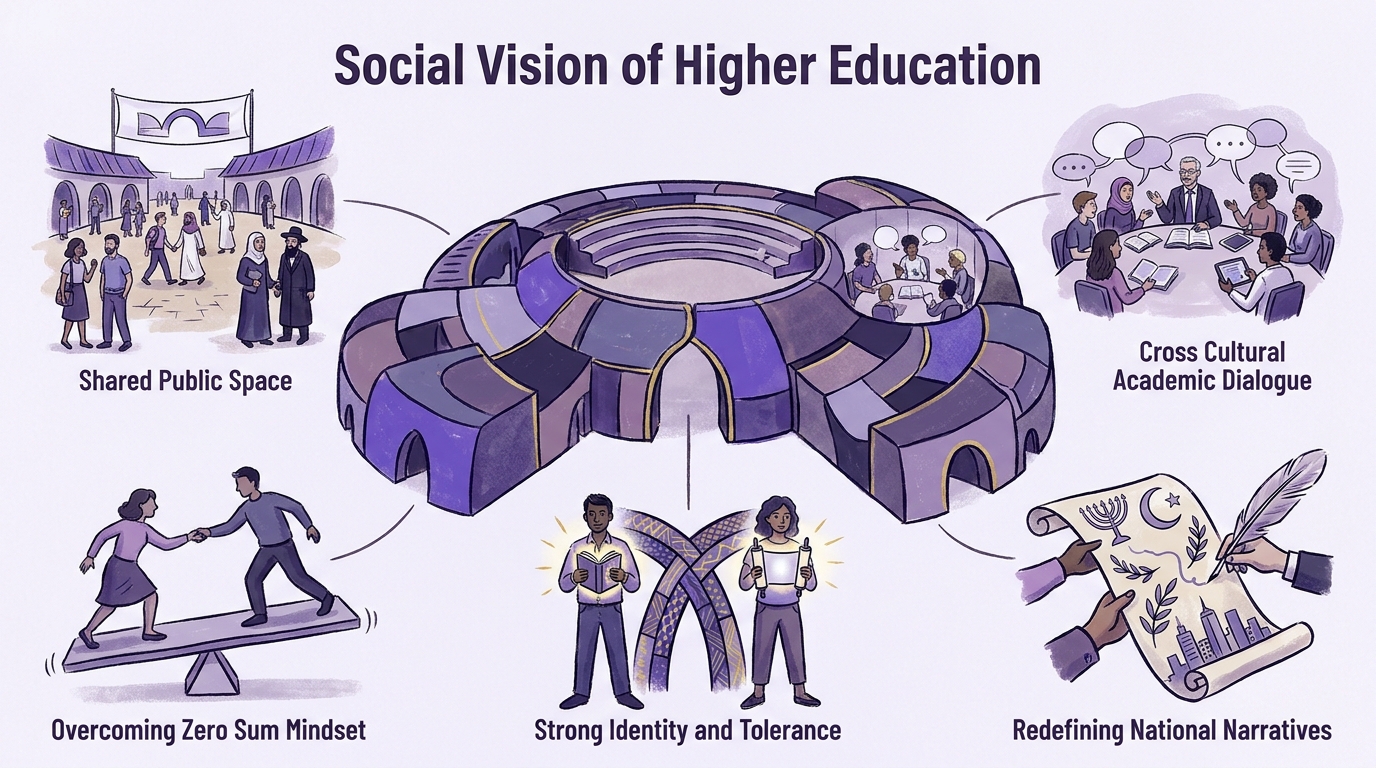
0:24Hartman explains that Ono Academic College was established as a social initiative to create a shared public space for all sectors of Israeli society. Rather than building another traditional ivory tower, the goal was to establish a common ground accessible to everyone.
He stresses that a true public domain must not be dictated or owned by a single dominant group. Instead, every community—whether secular, religious, Arab, or Haredi—should feel a sense of equal ownership and belonging.
3. Overcoming the Zero-Sum Mindset
3:33The conversation addresses the challenge of zero-sum thinking in public discourse, where groups view the inclusion of others as a personal loss. Hartman argues that society must move beyond this defensive posture to achieve genuine integration.
He calls for creating environments where accommodating different lifestyles does not undermine individual identity, allowing conflicting worldviews to coexist respectfully.
4. Identity, Self-Confidence, and Tolerance
4:58Hartman outlines the psychological prerequisite for tolerance: deep self-confidence in one's own heritage. When individuals feel secure in their primary identity, they no longer view exposure to alternative perspectives as a threat.
He notes that accommodating others does not make a person less committed to their own beliefs. True pluralism emerges when groups maintain their core identities while actively participating in a shared civic space.
5. Redefining 'Israeliness' in Higher Education
8:24Shohat and Hartman explore how the concept of 'Israeliness' is evolving beyond the narratives of the founding generations. They discuss how cultural shifts, such as the mainstreaming of Mediterranean music, demonstrate the broadening of the public sphere.
They emphasize that national strength depends on integrating peripheral and minority communities into the core societal narrative rather than maintaining an exclusive cultural hegemony.
6. Informal Education and Cultural Exchange
11:47Hartman addresses why Ono Academic College places strong emphasis on informal education and experiential learning. He points out that Israel's segmented primary education system often prevents young people from interacting across cultural divides until adulthood.
Higher education often serves as the very first meeting point for diverse Israeli populations. Consequently, academic programs must intentionally design spaces for meaningful cross-cultural dialogue and joint action.
7. Breaking Down Stereotypes Through Knowledge
13:48Hartman shares personal reflections on overcoming societal prejudices through direct learning and exposure. He highlights how understanding the traditions of other groups transforms fear and hostility into empathy and mutual appreciation.
By incorporating comprehensive study of various religious and cultural traditions into the curriculum, educators can dismantle long-standing social barriers.
8. The Role of Educational Leadership
20:25The discussion focuses on the responsibilities of school principals and educational administrators trained at Ono Academic College. Hartman asserts that a leader fails if their institution remains culturally homogeneous and isolated from the broader community.
Effective leadership requires actively recruiting diverse staff and teaching students to navigate a complex, multi-ethnic reality through daily practice rather than theoretical instruction.
9. Closing Message: Courage in Leadership
23:46In his concluding message to students, Hartman emphasizes that leading societal change requires courage and openness. He encourages future educators to confront uncomfortable questions and engage deeply with unfamiliar cultures.
He concludes that true leadership means stepping beyond familiar boundaries to help build a more cohesive, resilient, and inclusive society.
Questions this video answers
What was the core social vision behind founding Ono Academic College?
Renan Hartman founded Ono Academic College to create a shared public space for all segments of Israeli society, including Haredim, Arabs, secular Jews, and religious Zionists. He envisioned an academic institution that acts as a home where no single group dominates and every sector enjoys equal standing.
How does Ono Academic College approach multicultural education?
The college fosters self-confidence within each group's primary identity before introducing cross-cultural dialogue. By allowing students to feel secure in their own background, the institution enables open exchange without forcing individuals to compromise their core values.
What expectations does the college hold for future educational leaders?
Future educational leaders are expected to build diverse faculty and student environments that reflect the full mosaic of Israeli society. According to Hartman, a school administrator succeeds only when their institution actively represents and engages with all cultural backgrounds.
Ask a follow-up Premium
About this summary
SumTube AI wrote this recap from the video's words and chapters. Credit and the original belong to הקריה האקדמית אונו.