
Free AI summary of this YouTube video by SumTube
چند قدم ساده برای بازگشت تمرکز از دست رفته!
TL;DR
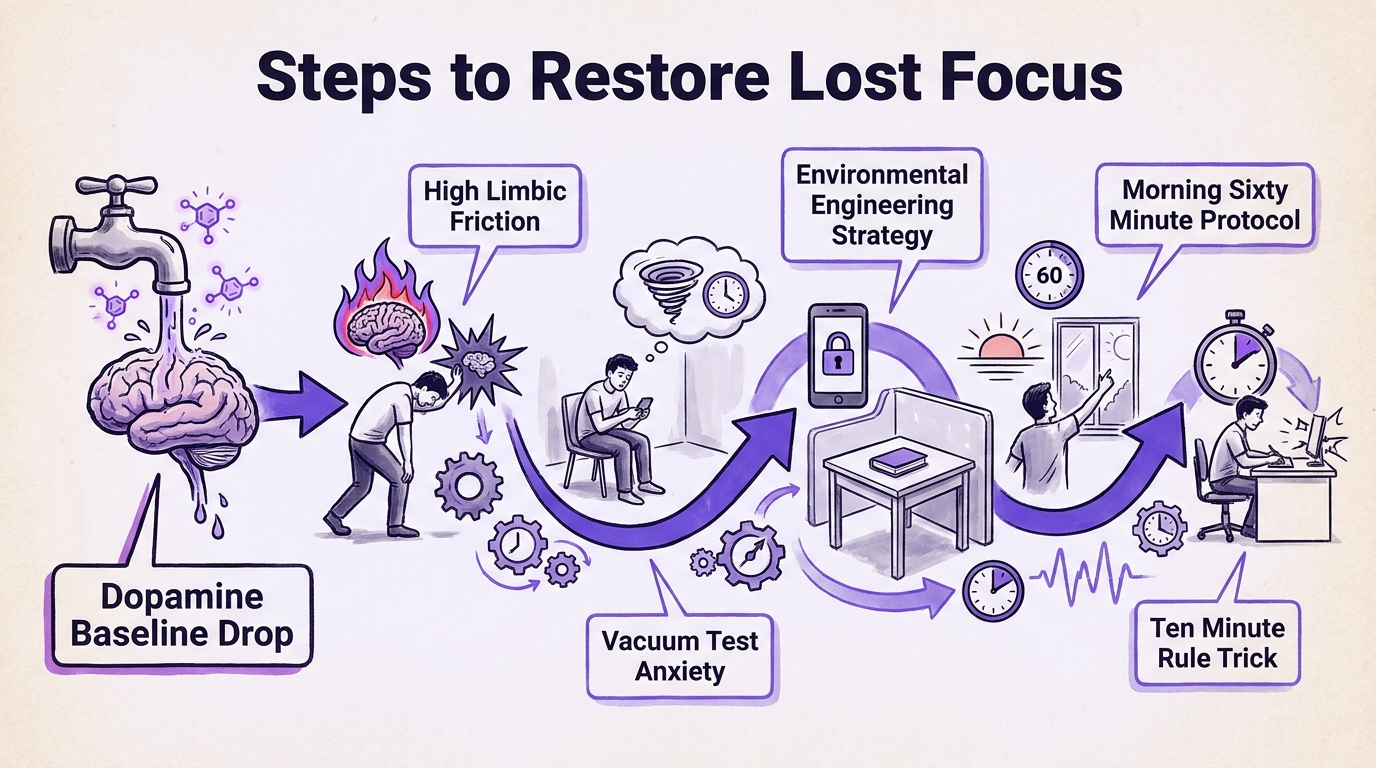
The video breaks down the concept of the 'laziness illusion,' explaining that lack of focus and procrastination are biological reactions triggered by dopamine overstimulation rather than moral failure. Modern apps and tech products exploit human neurochemistry, forcing baseline dopamine levels down and making normal tasks feel excruciatingly difficult due to limbic friction. By introducing practical environmental engineering and specific daily protocols, individuals can reset their reward systems and regain deep focus.

Key takeaways
- 2:15Laziness is often a biological illusion caused by tech algorithms overwhelming the brain's baseline reward system
- 5:00The reluctance felt before starting a task is 'limbic friction' driven by norepinephrine release, which modern users escape by grabbing smartphones
- 8:45Overcoming digital addiction requires increasing friction for bad habits rather than relying solely on willpower
- 10:45The '10-Minute Rule' tricks the brain's amygdala into overcoming initial task resistance without triggering defense mechanisms
Tap to enlarge
Most valuable section
For whom
Anyone struggling with constant smartphone distraction, chronic procrastination, or an inability to focus on long-term goals.
Practical Solutions and the 10-Minute Rule8:45
This segment transitions from theoretical neuroscience to three immediate, actionable habits that help reset your dopamine baseline and trick your brain past starting friction.
Detailed summary
1. The Laziness Illusion and Biological Hostage-Taking
0:00The speaker opens by challenging the traditional concept of laziness, especially within cultural contexts that view procrastination as a lack of willpower or a moral failing. Instead, human attention is being held hostage by sophisticated algorithms engineered by Silicon Valley tech experts and psychologists designed to hijack the brain's reward mechanism and bypass logical decision-making.
Labeling oneself as lazy simply masks a neurochemical defect caused by digital overload. People genuinely desire to start tasks, stay consistent, and achieve results, but they are fighting an unequal war against algorithms designed to paralyze executive function. Recognizing this neurobiological reality is the critical first step toward undoing the mental toxicity.
2. Dopamine Flooding and the Mechanics of Addiction
2:45Human biology evolved in an environment of scarcity where dopamine was released in tiny, trickle-like amounts for survival achievements such as securing food or building shelter. Today, people encounter constant super-stimuli—like short-form social media feeds, fast food, and video games—that blast dopamine into the brain like a firehose.
In response to this extreme, artificial flooding, the brain reduces the number or sensitivity of its dopamine receptors to protect itself. This causes the baseline level of dopamine to plummet. As a result, standard daily activities like studying, working, or conversing with family lose their appeal because they cannot replicate that hyper-stimulated high.
3. Identifying Limbic Friction and the Vacuum Test
4:45To gauge digital damage, one must evaluate two primary diagnostic signs: limbic friction and the vacuum test. Limbic friction refers to the intense resistance felt right before starting a task. The limbic system categorizes the shift from rest to effort as a stressor, releasing norepinephrine. An addicted brain cannot tolerate this momentary discomfort and quickly turns to immediate digital painkillers like social media feeds.
The vacuum test measures your ability to sit quietly without external inputs during minor downtime, such as waiting in line or sitting in traffic. Experiencing immediate anxiety or restlessness during these idle moments indicates that you have lost the ability to be alone with your thoughts and depend constantly on external digital stimuli.
4. Environmental Engineering and Focus Protocols
7:15Overcoming digital reliance requires practical behavioral changes rather than relying solely on limited willpower. The first strategy is environmental engineering: deliberately increasing friction for bad habits by removing phone distractions from sight and placing devices in another room on silent before beginning deep work.
The second strategy is the 60-Minute Protocol, which mandates staying off digital devices for the first hour after waking up. Allowing the eyes to receive natural morning light rather than smartphone pixels prevents early dopamine shocks, protecting the brain's circadian rhythm and allowing focus to rebuild naturally.
5. Bypassing the Amygdala with the 10-Minute Rule
10:45The third and most powerful practical technique presented is the 10-Minute Rule. When faced with a task that triggers extreme starting resistance, bargain with your brain to perform the work for only ten minutes, with full permission to stop once time is up. This framing lowers the security guard of the brain—the amygdala—because ten minutes does not feel like a threat.
Once you begin working and clear the initial ten-minute hurdle, the discomfort of norepinephrine naturally fades away, allowing you to transition smoothly into deep concentration. By rewiring these neural pathways through consistent rules, individuals can reclaim control over their attention.
Questions this video answers
Why does starting a productive task feel so physically difficult?
This resistance is known as limbic friction. When transitioning from rest to effort, the limbic system perceives the change as stress and releases norepinephrine. Because a dopamine-addicted brain seeks immediate pain relief, it prompts you to grab a phone instead of pushing through the initial discomfort.
How does digital super-stimulation lower base happiness levels?
Ancestrally, humans received dopamine in small trickles for survival milestones like finding food or shelter. Modern super-stimuli flood the brain with intense dopamine bursts, causing the brain to reduce or desensitize its dopamine receptors as a defensive measure. Consequently, the baseline dopamine drops, rendering normal offline activities unrewarding.
What is the 10-Minute Rule for overcoming procrastination?
The 10-Minute Rule involves committing to a daunting task for just ten minutes with permission to quit afterward. By framing the effort as very brief, you bypass the amygdala's threat response and allow the initial discomfort of norepinephrine to dissipate, making it much easier to enter a flow state.
Ask a follow-up Premium
About this summary
SumTube AI wrote this recap from the video's words and chapters. Credit and the original belong to Cyrus Yami.