
Free AI summary of this YouTube video by SumTube
Quais são os tipos de clima e os fatores climáticos do Mundo? Descubra AGORA!
TL;DR
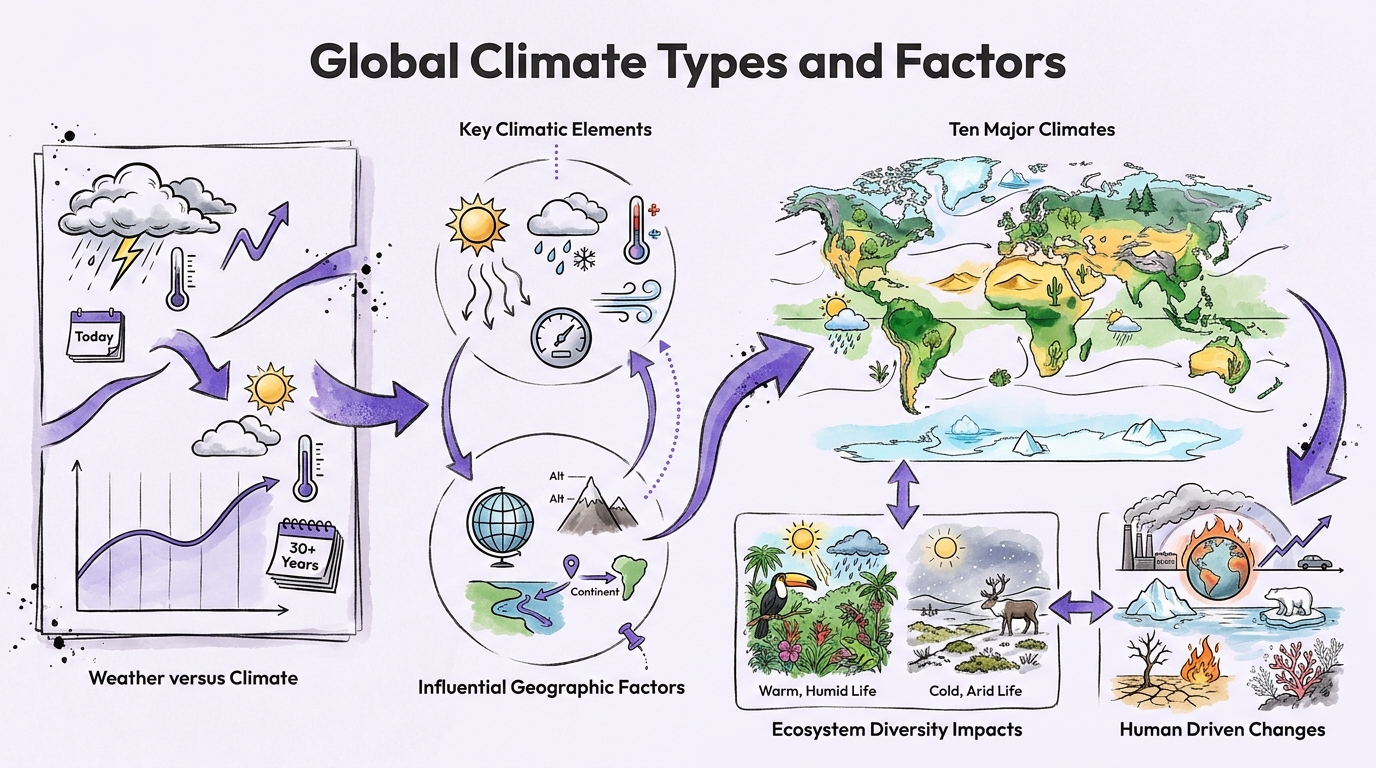
This educational lesson explains the core differences between weather and climate, outlining the key elements and geographic factors that shape atmospheric behavior worldwide. It details the ten main climate zones across the globe, from Equatorial to Polar, and concludes with a discussion on how climate affects terrestrial ecosystems and how global climate change threatens these balances.

Key takeaways
- 0:28Weather describes momentary atmospheric conditions, whereas climate reflects long-term trends observed over at least 30 years
- 1:48Climate is defined by measurable elements (e.g., temperature, pressure, radiation) interacting with geographic factors like latitude, altitude, and continentality.
- 8:30Earth is divided into ten distinct major climate zones, each determining the specific flora, fauna, and human conditions of its region
- 17:10Human-driven climate change disrupts long-standing climate patterns, driving severe ecological impacts such as glacial melt, rising sea levels, and desertification
Tap to enlarge
Most valuable section
For whom
Geography students and anyone interested in understanding basic climatology and global weather patterns.
The 10 Main Climate Types of the World8:30
It offers a concise, visual walkthrough of each major climate zone across the globe, detailing their geographic locations, temperature ranges, and distinct seasonal dynamics.
Detailed summary
1. Weather vs. Climate
0:00This section introduces the foundational distinction between weather and climate. Weather describes the short-term, momentary atmospheric conditions of a location, such as a temporary storm or sunny day. In contrast, climate gathers meteorological data and patterns observed over a prolonged period of at least 30 years.
Understanding this baseline difference allows researchers and students to distinguish daily meteorological variations from broader, long-term environmental trends. The video emphasizes that climate represents the persistent baseline of a region's environment.
2. Elements and Factors of Climate
1:48This segment breaks down how climates are characterized by measurable climatic elements and modified by geographical factors. Elements include temperature, atmospheric pressure, humidity, precipitation, wind speed, and solar radiation, all of which are measured using dedicated scientific instruments like thermometers, barometers, and rain gauges.
Geographic factors continuously influence these elements. Key factors include altitude (elevation above sea level), latitude (distance from the equator), continentality, ocean currents, land relief, vegetation cover, and human-induced factors such as urban sprawl.
3. The 10 Main Climate Types of the World
8:30The video outlines the ten major global climate categories. It begins with Equatorial and Tropical climates near the equator, characterized by high temperatures, distinct rainfall patterns, and sub-variations like monsoon and altitude types. Subtropical and Temperate climates feature four well-defined seasons, while Mediterranean regions experience short, mild winters alongside hot, extended summers.
Moving to drier and colder regions, the lesson covers Arid (Desert) and Semi-Arid climates with low humidity and extreme temperature shifts, followed by Subpolar, Alpine (Mountain), and Polar climates. Polar and high-altitude areas endure perpetual sub-zero temperatures, dense snowfall, and persistent ice coverage throughout the year.
4. Impact on Ecosystems and Climate Change
15:45The final chapter explains how climate directly dictates local biodiversity, vegetation types, and human living conditions. Warm, humid tropical climates support diverse ecosystems like the Amazon rainforest, while harsher temperate or polar climates require specialized adaptations for survival.
The lesson concludes with an explanation of global climate change caused by human activity and greenhouse warming. Small, persistent shifts in global mean temperatures trigger major ecological consequences, including melting polar glaciers, rising sea levels, and the expansion of desertification in semi-arid zones worldwide.
Questions this video answers
What is the main difference between weather and climate?
Weather refers to the temporary, momentary meteorological conditions of a specific location at a given time. Climate, on the other hand, represents the long-term trend and average of atmospheric conditions observed over a period of at least 30 years.
What are the main elements and factors that shape a climate?
Climatic elements include atmospheric characteristics that can be measured directly with instruments, such as temperature, pressure, humidity, precipitation, wind, and radiation. Climatic factors are geographic features that alter these elements, including altitude, latitude, continentality, ocean currents, relief, vegetation, and human urbanization.
How do climate patterns influence ecosystems and human life?
Specific climatic conditions dictate local vegetation types, animal species survival, air quality, and basic living environments for humans. Changes in these climatic baselines alter ecosystems dramatically, leading to habitat loss, shifting biomes, and threats to food and water security.
Ask a follow-up Premium
About this summary
SumTube AI wrote this recap from the video's words and chapters. Credit and the original belong to Toda Matéria.