
Free AI summary of this YouTube video by SumTube
“Preguntarle a mi hijo qué quiere comer es un PRIVILEGIO” | ENFRENTADOS por Lucho Mellera #2
TL;DR
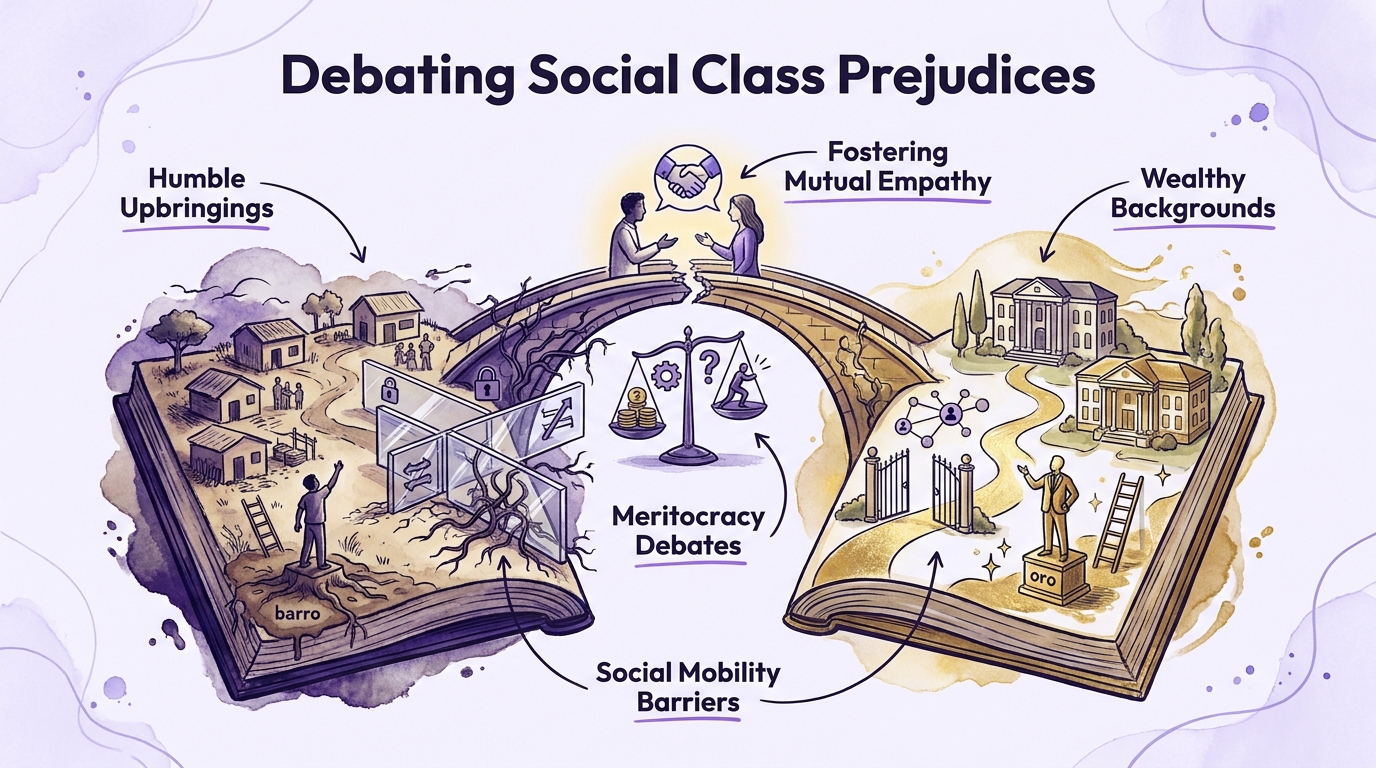
In this debate show, a host brings together six individuals from opposing socioeconomic backgrounds—three from humble upbringings ('Cuna de barro') and three from wealthy backgrounds ('Cuna de oro'). They engage in an open discussion about social class prejudices, meritocracy, systemic barriers, and personal life struggles. Ultimately, the conversation highlights the importance of empathy, perspective-taking, and building bridges across class divides.

Key takeaways
- 1:59Common social prejudices regarding rich and poor individuals often misinterpret structural issues like protests or access to opportunities
- 6:53Meritocracy is shaped by initial privileges; while hard work matters, social networks and inherited opportunities play a significant role
- 16:14Living in marginalized communities involves harsh, systemic realities—such as shorter life expectancies—that those with privilege rarely experience
- 18:39Dialogue between contrasting social classes fosters mutual empathy and dismantles preconceived stereotypes
Tap to enlarge
Most valuable section
For whom
Anyone interested in social dynamics, socioeconomic inequality, and candid conversations on class privileges.
Nepotism, Meritocracy, and Social Mobility6:53
This segment offers a nuanced reflection on how personal effort and inherited privileges combine to shape success, revealing honest admissions from both sides of the panel.
Detailed summary
1. Introduction and Panelist Profiles
0:00The host introduces the episode of 'Enfrentados,' setting the foundation for an unfiltered debate between individuals from contrasting social realities: 'Cuna de barro' (humble origins) versus 'Cuna de oro' (privileged origins). The six participants are formally presented, highlighting their backgrounds ranging from social activist and street artist to streamer and influencer.
The host frames the main question of the discussion: whether individuals are entirely self-made or if everyone is a product of visible and invisible inheritances. The stage is set to examine deep-rooted societal prejudices and social expectations.
2. Deconstructing Class Stereotypes and Prejudices
1:59The discussion begins with a game where participants address common societal stereotypes pulled from a box, such as 'rich people live in a bubble' and 'poor people cause trouble.' The group unpacks the truth behind these assumptions, explaining how public protests are often mischaracterized as simply creating disorder rather than expressing legitimate demands for basic services.
Participants reflect on personal experiences of prejudice, including being unfairly targeted by security personnel due to their appearance or being isolated at work based on the neighborhood they lived in. Both sides recognize that prejudices exist on all ends of the social spectrum.
3. Nepotism, Meritocracy, and Social Mobility
6:53The panel tackles the concepts of nepotism and meritocracy, discussing whether personal effort alone dictates success. Wealthier participants acknowledge that having access to professional networks and familial connections provided a major head start, though they emphasize that talent is still required to sustain those opportunities.
Conversely, participants from humble backgrounds share how initial disadvantages require far greater resilience. They discuss how structural barriers prevent equal access to education and employment, making true meritocracy an idealized concept rather than a reality for many.
4. Empathy, Systemic Barriers, and Lived Realities
12:45The conversation shifts toward emotional struggles and daily hardships across different social classes. While affluent participants reflect on dealing with high expectations and guilt, participants from popular neighborhoods detail severe environmental and safety issues, including infrastructure deficits that lead to shorter life expectancies.
Panelists emphasize the importance of creating direct connections between corporate leaders and marginalized communities. Establishing communication bridges allows for genuine empathy and actionable support rather than temporary, superficial solutions.
5. Blank Check Exercise and Final Reflections
19:42In the final activity, each participant is given a blank check to write down the amount or desire that would bring them fulfillment. The responses highlight distinct priorities: while some write monetary goals for travel or career ventures, others prioritize community art centers, basic housing security, health, and family well-being.
The host concludes the discussion by thanking the panelists for engaging in an honest, face-to-face dialogue that replaces hostility with mutual understanding and respect.
Questions this video answers
What is the main premise of the 'Enfrentados' debate?
The debate brings together people from two contrasting socioeconomic backgrounds—those born with high purchasing power ('Cuna de oro') and those born in marginalized conditions ('Cuna de barro'). Guided by the host, the participants discuss prejudices, opportunity gaps, and social privileges to foster mutual understanding.
How do participants view meritocracy and privilege?
Participants agree that while effort and talent are essential for sustained success, existing privileges and social connections offer an unequal starting point. Wealthier participants acknowledge that their social background provided significant assistance in securing opportunities.
What issues were highlighted regarding life in marginalized neighborhoods?
Participants from modest backgrounds shared severe challenges such as lack of basic infrastructure, heavy rain flooding homes, high rates of youth addiction, and systemic issues that result in an average lower life expectancy compared to wealthier areas.
Ask a follow-up Premium
About this summary
SumTube AI wrote this recap from the video's words and chapters. Credit and the original belong to OLGA.