
Free AI summary of this YouTube video by SumTube
Pilzzucht-Schrank bauen für's Wohnzimmer!
TL;DR
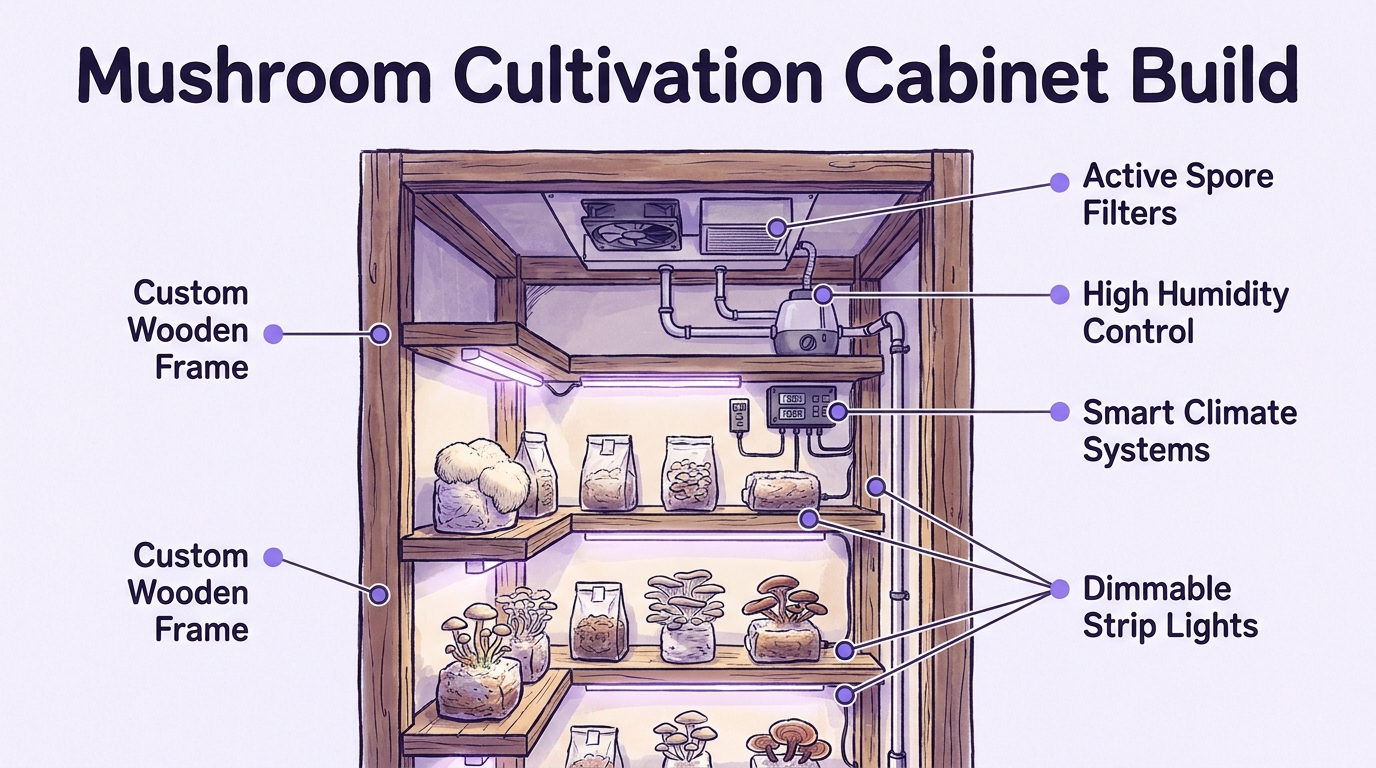
In this video, the creator builds a custom, indoor mushroom cultivation cabinet fitted with automated climate control to grow various edible and medicinal mushrooms year-round. Utilizing smart Dreo devices—a precision heater and a high-output humidifier—the unit maintains optimal temperature, air circulation, and moisture levels while sealing in spores and fitting aesthetically under a slanted roof. Within a week of placing several mushroom cultures inside, the station yields rapid, visible growth of varieties such as Chestnut and Pioppino mushrooms.

Key takeaways
- 8:10Indoor mushroom cultivation requires high humidity (up to 85–90%), stable warm temperatures, soft indirect light, and active spore filtration
- 19:19Custom 3D-printed twist locks with sloped surfaces provide an effective, airtight seal for acrylic display doors
- Integrating smart appliances into custom cabinetry allows automated, remote control of strict environmental parameters without disrupting the internal ecosystem
Tap to enlarge
Most valuable section
For whom
DIY enthusiasts, woodworkers, and indoor gardening hobbyists looking to build custom functional furniture.
Designing and Mounting Custom 3D-Printed Latches19:19
It shows a creative engineering solution where off-the-shelf hardware failed, using a 3D-printed rotary mechanism with a sloped ramp to pull the glass doors tight and airtight.
Detailed summary
1. Introduction & Project Vision
0:00The creator introduces his newfound interest in mushrooms, detailing both their health benefits and the downsides of wild foraging or ugly commercial grow tents. He outlines his plan to build a stylish, multi-tiered mushroom cabinet designed as a piece of living room furniture.
2. Planning the Cabinet Layout & Space
1:50Together with his roommate Leon, the builder discusses the environmental requirements for mushrooms, such as light, temperature, humidity, and airflow. They choose a living room corner under a slanted ceiling and plan a two-tier angled cabinet structure to maximize capacity.
3. Unboxing Mushroom Cultures & Initial Growth
3:58Six different mushroom cultures arrive in pre-colonized bags, including Lion's Mane, Shiitake, and Reishi. Because the Shiitake culture begins fruiting immediately, they harvest an initial fast batch in a temporary setup while preparing the main box build.
4. Cutting and Assembling the Main Wooden Frame
5:40Using pre-measured panels tailored to the slanted wall, the builder begins assembling the main wooden carcass. The assembly features three growing shelves, dedicated compartments for heating and humidification, and cutouts for air filters.
5. Air Spore Filters & Cable Pass-Through Seals
11:44To block spores from escaping into the room, custom air filters are integrated into the cabinet structure. The builder drills holes for power cables and seals them tightly using foam rubber inserts and screwed-on clamps.
6. Waterproofing and Installing Internal LED Lighting
14:02Self-adhesive edge banding is applied to raw wood edges, followed by silicone sealant along all internal seams to shield the wood from high humidity. Dimmable LED strip lights are installed around the perimeter to supply uniform illumination.
7. Installing Aluminum Shelves and Door Hardware
17:06The builder mounts water-resistant aluminum angle brackets to hold three levels of mushroom cultures. Acrylic glass doors are hinged onto the front frame to offer clear visibility into the interior.
8. 3D-Printed Custom Tight-Sealing Latches
19:19After standard door latches fail to seal properly, the host designs and CNC/3D-prints a custom rotary latch mechanism. The inclined ramp of the rotating arm draws the acrylic glass firmly against rubber gaskets to ensure an airtight closure.
9. Positioning the Cabinet and Preparing Cultures
21:48The heavy finished cabinet is moved into its final spot against the wall. The host prepares each mushroom block according to its species needs—slicing side slits for oysters and removing top plastic layers for top-fruiting varieties.
10. Smart Climate Automation Setup
25:48Using a mobile app, the system is configured for continuous operation, setting humidity target levels to 85% and maintaining internal temperatures around 24°C. The sealed setup quickly fills with fine mist while keeping room air clean.
11. One-Week Harvest Results
28:38After one week of continuous operation, the mushrooms experience rapid growth inside the automated station. Varieties such as Chestnut and Pioppino mushrooms flourish, confirming the success of the build.
Questions this video answers
What environmental conditions do mushrooms need to grow indoors?
Mushrooms require a controlled environment with specific temperature and humidity ranges. In this project, the cabinet is set to roughly 24°C (75°F) and 85% relative humidity, alongside gentle ambient LED lighting and oxygen circulation.
How are mushroom spores kept from leaking into living spaces?
To prevent microscopic mushroom spores from causing respiratory issues, the cabinet is equipped with built-in air filters. Additionally, all cable pass-throughs are sealed with foam rubber and clamps, and the doors use rubber gaskets and tight sealing latches.
Which mushroom varieties were grown in the cabinet?
The project involved several species including Pink Oyster (Rosenseitling), Reishi, Pioppino, Chestnut Oyster (Kastanienseitling), Yellow Oyster (Limonenpilz), Shiitake, and Lion's Mane (Igelstachelbart).
Ask a follow-up Premium
About this summary
SumTube AI wrote this recap from the video's words and chapters. Credit and the original belong to Tomary.