
Free AI summary of this YouTube video by SumTube
PÁRKINSON | Draw My Life
TL;DR
This educational whiteboard animation explains Parkinson's disease, including its underlying causes related to dopamine deficits in the brain, early non-motor symptoms, and the main cardinal motor symptoms. It also covers potential risk factors, current treatment options that help manage symptoms, and the importance of supportive social relationships for patients.

Key takeaways
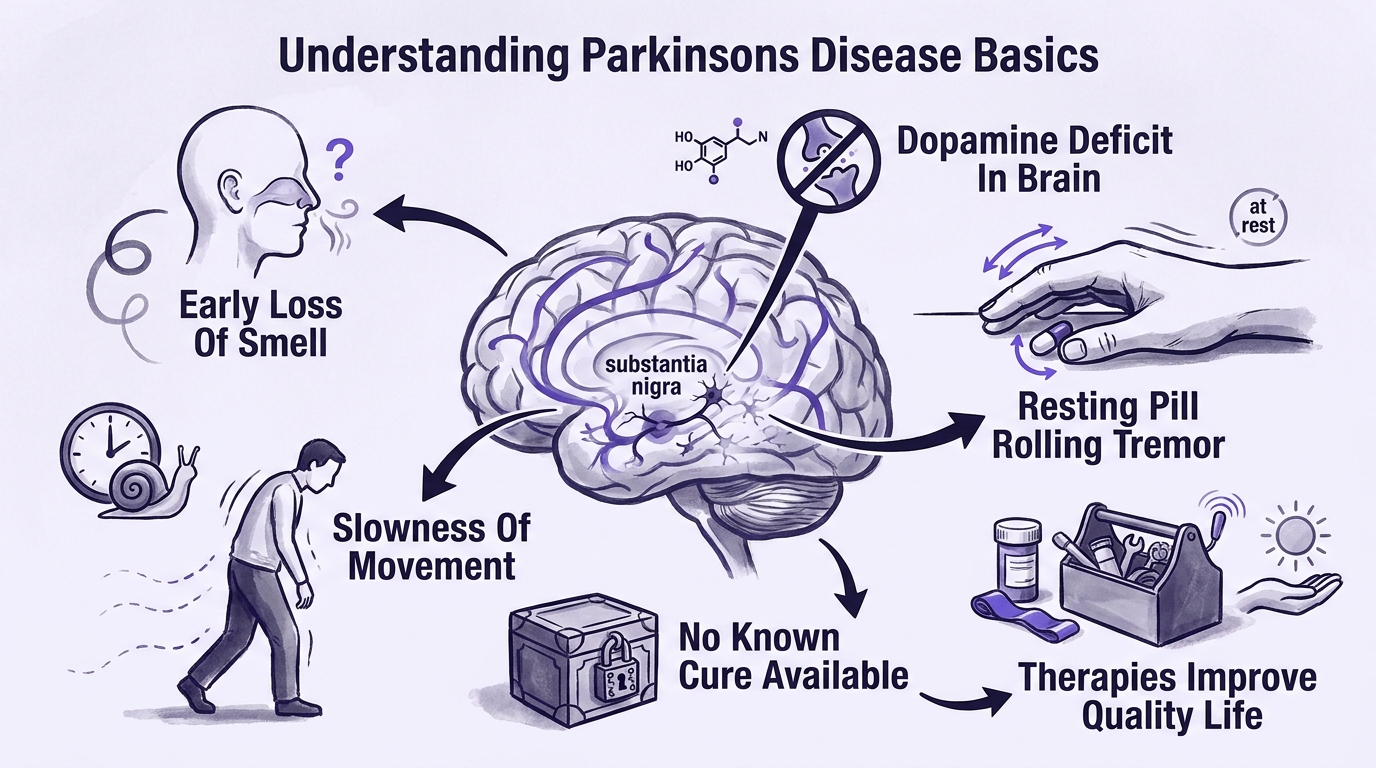
- 0:16Parkinson's disease is caused by a deficit in dopamine secretion within the brain's substantia nigra
- 0:28Early non-motor symptoms like smell loss, mood changes, and sleep issues often precede cardinal motor symptoms by years
- 3:15Parkinson's rest tremors typically decrease during intentional movements or sleep
- 5:10While the exact cause is unknown, Parkinson's is believed to stem from a mix of genetic, aging, and environmental factors like pesticide exposure
Tap to enlarge
Most valuable section
For whom
Individuals, caregivers, and students seeking a clear, visual overview of Parkinson's disease symptoms, causes, and management.
This segment clearly breaks down both early non-motor warning signs and the key cardinal motor symptoms through easy-to-follow illustrations.
Detailed summary
1. Introduction to Parkinson's Disease
0:00Parkinson's disease is highlighted in connection with World Parkinson's Day on April 11th. It is a chronic neurodegenerative disorder that impacts millions of people worldwide.
The disease stems from a deficiency in dopamine secretion, a essential chemical messenger produced by nerve terminals in the substantia nigra region of the brain.
2. Symptoms and Motor Signs
0:28Early non-motor symptoms often appear years before major movement issues develop. These include loss of smell, mood fluctuations like depression and irritability, constipation, and sleep disorders. Eventually, four main motor symptoms emerge: tremors, slow movement (bradykinesia), rigidity, and postural instability.
As the disease progresses, additional signs can appear such as reduced facial expression, reduced blinking, diminished arm swing while walking, drooling (sialorrhea), fine motor impairment, smaller handwriting (micrographia), loss of muscle tone (hypotonia), and freezing of gait. Symptoms typically start on one side of the body before eventually affecting both.
3. Tremors and Bradykinesia
2:35The characteristic tremor of Parkinson's occurs primarily when the body is at rest and tends to subside during active movements or sleep. A classic presentation is the 'pill-rolling' tremor, where the thumb and index finger involuntarily rub together.
Bradykinesia, or slowness of movement, makes simple daily tasks far more demanding. Actions requiring fine motor control like writing or buttoning clothes become difficult, and patients often adopt shorter, shuffling steps. Symptoms can worsen under stress, making rest and relaxation techniques helpful management strategies.
4. Treatments, Causes, and Risk Factors
4:10Although no cure exists today, therapies including medication, physical rehabilitation, and surgical options significantly improve patient quality of life and prolong functional independence. The exact origin of Parkinson's remains unknown, but evidence points to a combination of genetic factors, natural aging, oxidative stress, and environmental exposures such as pesticides or contaminated well water.
Parkinson's is the second most common neurodegenerative disorder globally after Alzheimer's disease. While most prevalent in older adults, maintaining a healthy lifestyle and strong social support systems plays a crucial role in supporting the physical and mental well-being of those living with the condition.
Questions this video answers
What is the biological cause of Parkinson's disease?
Parkinson's disease is a chronic neurodegenerative disorder caused by a deficit in dopamine production. This occurs due to damaged nerve endings in the region of the brain known as the substantia nigra.
What are the earliest signs of Parkinson's disease before movement is affected?
Years before major movement issues appear, early symptoms may include a impaired sense of smell, mood changes such as depression or irritability, constipation, and sleep disturbances.
Are there effective treatments for Parkinson's disease?
While there is currently no cure for Parkinson's disease, symptoms can be managed using pharmacological treatments, physical rehabilitation, and surgery. These interventions help patients maintain mobility and quality of life for as long as possible.
Ask a follow-up Premium
About this summary
SumTube AI wrote this recap from the video's words and chapters. Credit and the original belong to TikTak Draw.