
Free AI summary of this YouTube video by SumTube
Ngaji Fiqih Bareng Abi: Belajar Hukum Pidana Islam dari Dasar Sampai Paham!
TL;DR
This Islamic jurisprudence lesson introduces the foundational concepts of Fiqh Jinayat (criminal jurisprudence), Jarimah (offenses/crimes), and Hudud (prescribed penalties) for High School Grade 11 students. The instructor explains the overarching Maqasid al-Shari'ah (objectives of Islamic law) and details the linguistic and technical definitions of each term. The session establishes how Islamic penal law serves to protect life, property, and societal order through prescribed divine sanctions.

Key takeaways
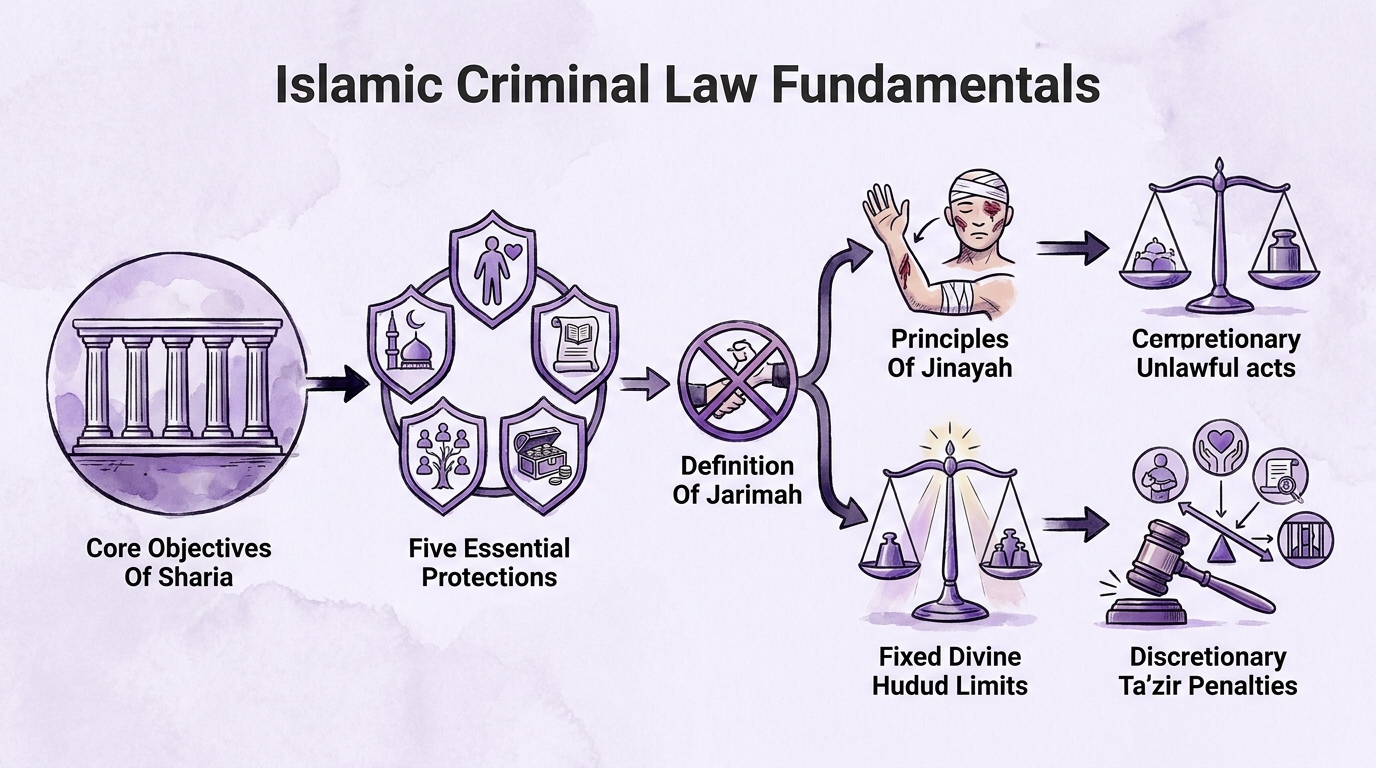
- 9:07Islamic law revolves around five core objectives (Maqasid al-Shari'ah): protecting religion, intellect, life, property, and lineage
- 32:08Jarimah encompasses all prohibition and criminal acts in Sharia, punishable either by fixed divine limits (Hudud) or discretionary corrective measures (Ta'zir)
- 36:07Jinayah specifically refers to criminal offenses involving physical harm or danger to human life and bodily integrity
- 42:57Hudud are fixed penalties ordained directly by God and mandatory upon the state to enforce without modification
Tap to enlarge
Most valuable section
For whom
Students of Islamic studies and jurisprudence seeking a foundational explanation of Islamic criminal law concepts.
Definitions and Principles of Jinayah, Jarimah, and Hudud25:00
This chapter breaks down the core technical and legal definitions of Islamic penal concepts, providing clear linguistic roots and textual definitions.
Detailed summary
1. Introduction & Opening Prayers
0:00The instructor opens the session with traditional Islamic greetings, praises to God, and blessings upon the Prophet Muhammad. He welcomes students from MAN 1 Jakarta and general viewers to the online learning session. Emphasizing the spiritual importance of seeking knowledge, he encourages students to maintain faith and well-being despite learning remotely during the ongoing pandemic.
He introduces the overall scope of the course, which focuses on Grade 11 Islamic Jurisprudence (Fiqh). The teacher reminds students that learning can occur through diverse media formats beyond standard textbooks, encouraging an open and attentive mindset throughout the video lesson.
2. Core Objectives of Sharia (Maqasid al-Shari'ah)
7:27This section explains the foundational framework of Islamic law known as Maqasid al-Shari'ah, which outlines the ultimate objectives of divine legislation. The teacher outlines the primary divisions of Fiqh—Ibadaat (worship), Mu'amalat (transactions), Munakahat (marriage), and Jinayat (criminal jurisprudence)—noting that all divisions serve these overarching goals.
The teacher details the five essential protections every Muslim must preserve: Hifz ad-Din (protection of faith), Hifz al-Aql (protection of intellect through education and avoiding harm), Hifz an-Nafs (protection of life and physical well-being), Hifz al-Mal (protection of wealth and property rights), and Hifz an-Nasl (protection of lineage through lawful marriage). He demonstrates how penal laws directly support these protections.
3. Definitions and Principles of Jinayah, Jarimah, and Hudud
25:00The instructor moves into the legal definitions of the lesson's main terms, distinguishing between linguistic roots (lughawi) and legal terminology (istilah). He introduces 'Jarimah' as any unlawful or criminal act forbidden by Sharia that carries a legal penalty, whether fixed by divine text or assigned via judicial discretion.
He then explains 'Jinayah' as a specific category of Jarimah concerning offenses against human life or physical body parts, such as murder, injury, or assault. Finally, 'Hudud' is defined as fixed, mandatory penalties explicitly decreed by divine authority that cannot be altered or pardoned by human courts.
4. Legal Classification: Hudud vs. Ta'zir
34:00This chapter explores the practical application and differences between divine fixed punishments (Hudud) and discretionary penalties (Ta'zir). The teacher details how offenses that lack explicit, unalterable textual sanctions fall under the jurisdiction of Ta'zir, allowing judges flexibility to implement reformative or deterrent sentences like imprisonment.
He reinforces the concept that all penal measures in Islam are designed to deter wrongdoing, protect community interest, and uphold justice. The teacher wraps up the lesson by encouraging students to submit questions through discussion groups or comments, concluding the session with customary closing supplications.
Questions this video answers
What is the difference between Jinayah and Jarimah in Islamic law?
Jarimah is an umbrella term for any illegal act, sin, or offense prohibited by Islamic law that incurs a legal penalty. Jinayah is a specific subcategory of Jarimah that focuses directly on crimes against human life, physical health, or body parts, such as assault or homicide.
What are Maqasid al-Shari'ah and why are they important?
Maqasid al-Shari'ah refers to the fundamental objectives of Islamic law, which are designed to safeguard human welfare. They consist of five essential protections: preservation of religion (Hifz ad-Din), intellect (Hifz al-Aql), life (Hifz an-Nafs), property (Hifz al-Mal), and lineage/family (Hifz an-Nasl).
What does Ta'zir mean in the context of Islamic punishments?
Ta'zir refers to discretionary judicial punishment for offenses that do not have fixed, mandatory penalties specified in the Quran or Sunnah. Unlike Hudud, Ta'zir punishments are educational or reformative measures (such as imprisonment or fines) determined at the judge's discretion based on societal context.
Ask a follow-up Premium
About this summary
SumTube AI wrote this recap from the video's words and chapters. Credit and the original belong to Ahmad Thoufur Abi (The Nyablak Teacher).