
Free AI summary of this YouTube video by SumTube
Kisah Teladan "Buah Cinta Berasas Takwa"
TL;DR
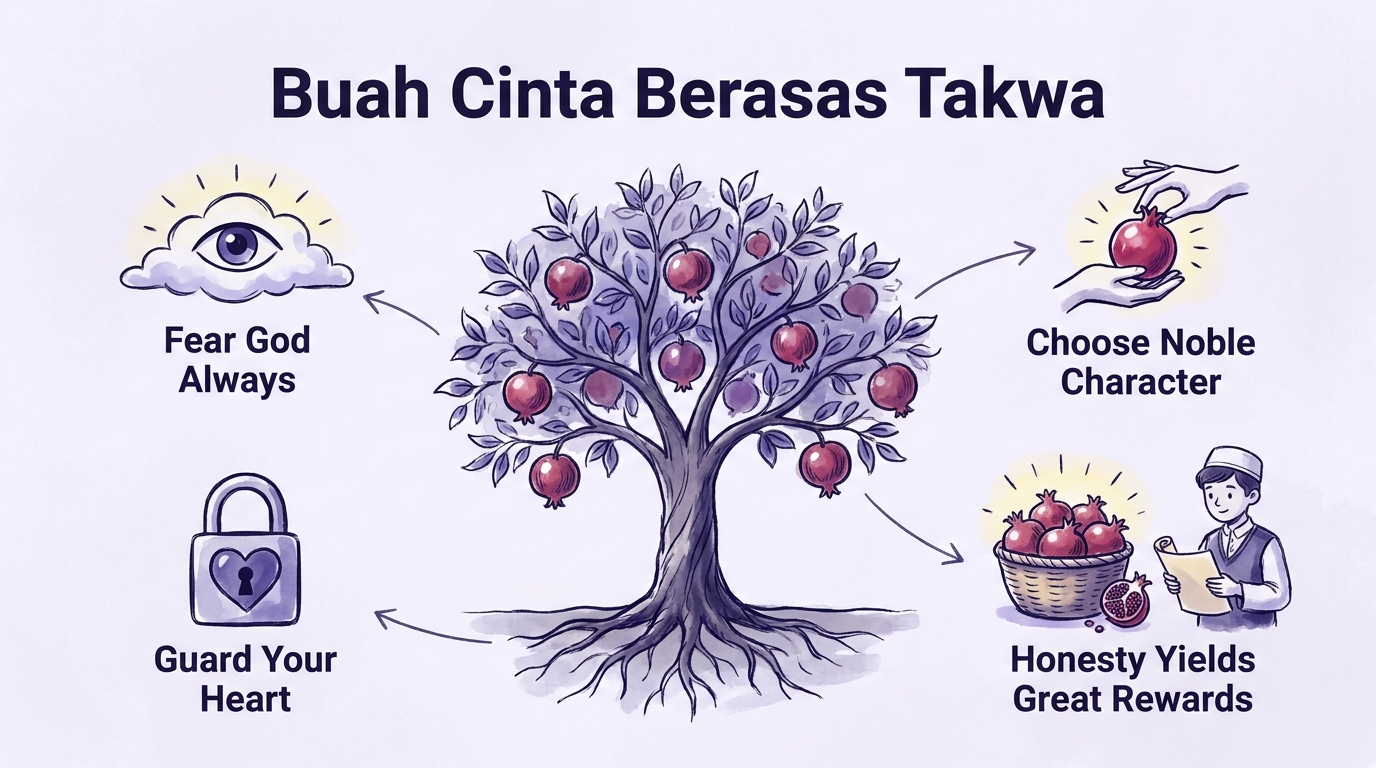
This Islamic story, titled "Buah Cinta Berasas Takwa," tells the inspiring tale of Mubarak, a former slave known for his honesty and piety while guarding a pomegranate garden. Because Mubarak refused to eat even a single pomegranate without permission, his garden's owner married him to his righteous daughter, leading to the birth of the renowned scholar Abdullah ibn al-Mubarak.

Key takeaways
- 3:46True piety means guarding one's stomach from doubtful or forbidden sustenance, even when surrounded by temptation
- 4:58Character and fear of God (Taqwa) are the highest criteria for choosing a marriage partner in Islam
- 5:48Honesty and integrity yield noble rewards, as seen in the lineage of the famed scholar Abdullah ibn al-Mubarak
Tap to enlarge
Most valuable section
For whom
Parents looking for engaging Islamic moral stories for children, or anyone seeking inspirational tales about piety and honesty.
Mubarak's Integrity and Marriage3:18
It shows the emotional turning point where Mubarak explains why he never ate the pomegranates, convincing the rich owner to choose him as his daughter's suitor based on Taqwa.
Detailed summary
1. Introduction to the Story
0:00The presenter introduces the story titled "Buah Cinta Berasas Takwa" (Fruit of Love Based on Piety), an Islamic tale highlighting the virtues of honesty and fear of God.
The story centers around Mubarak, a noble Tabi'i who was freed from slavery due to his impeccable character and moral uprightness.
2. Mubarak's Test in the Pomegranate Garden
0:36After gaining his freedom, Mubarak works as a guard for a wealthy man who owns a large pomegranate orchard. Mubarak is beloved by locals for his gentle speech and friendly demeanor.
One day, the garden owner requests sweet, ripe pomegranates. Mubarak picks several fruits, but when the master tastes them, every single one turns out to be sour and unripened.
3. The Master's Discovery of Mubarak's Honesty
2:14The master angrily confronts Mubarak, questioning how someone who guarded the orchard for years could not distinguish between sweet and sour fruit. Mubarak reveals that he has never tasted a single pomegranate because his contract was only to guard the garden, not eat from it.
Skeptical, the master verifies Mubarak's claim with neighbors and friends, who all confirm Mubarak's untarnished reputation for truthfulness and integrity.
4. Mubarak's Reward and Legacy
5:04Deeply touched by Mubarak's piety, the garden owner asks for advice on whom his pious, educated daughter should marry. Mubarak explains how different groups choose spouses based on wealth, beauty, or lineage, whereas Muslims choose based on faith and piety. Recognizing Mubarak's unmatched Taqwa, the master offers his daughter in marriage.
From their blessed marriage, a son named Abdullah is born, who grows up to be the famous scholar and ascetic Imam Abdullah ibn al-Mubarak. The narrator concludes by encouraging viewers to cultivate honesty and piety in their daily lives.
Questions this video answers
Why did Mubarak refuse to eat any pomegranates from the garden he guarded?
Mubarak was hired specifically to guard the garden, not to consume its produce. Because the owner had not explicitly granted permission, Mubarak avoided eating any fruit—even those fallen on the ground—to ensure he did not ingest anything forbidden or doubtful.
How did the garden owner react when he learned Mubarak had never tasted the fruit?
Initially, the owner was incredulous and angry, assuming Mubarak was lying. After confirming Mubarak's flawless honesty with local neighbors and hearing Mubarak's explanation about fearing unlawful sustenance, the owner was deeply moved to tears by his piety.
Who was born from the marriage of Mubarak and the owner's daughter?
Their union produced a son named Abdullah, who grew up to become the legendary Islamic scholar, traditionist, and ascetic Imam Abdullah ibn al-Mubarak.
Ask a follow-up Premium
About this summary
SumTube AI wrote this recap from the video's words and chapters. Credit and the original belong to CERDIS - Cerita Dongeng Islami.