
Free AI summary of this YouTube video by SumTube
شرح نظافة استشفائية hygiène hospitalière(درس 1 )💦سنة أولى شبه طبي والقبالة ‼️
TL;DR
This educational video introduces first-year paramedical and midwifery students to the fundamentals of hospital hygiene (Hygiène Hospitalière). It outlines definitions of general and hospital hygiene, the nature of infections, their clinical signs, causal agents, types, modes of transmission, and key prevention strategies. Special emphasis is placed on nosocomial infections and healthcare-associated infections (IAS) to prepare healthcare professionals for maintaining a safe hospital environment.

Key takeaways
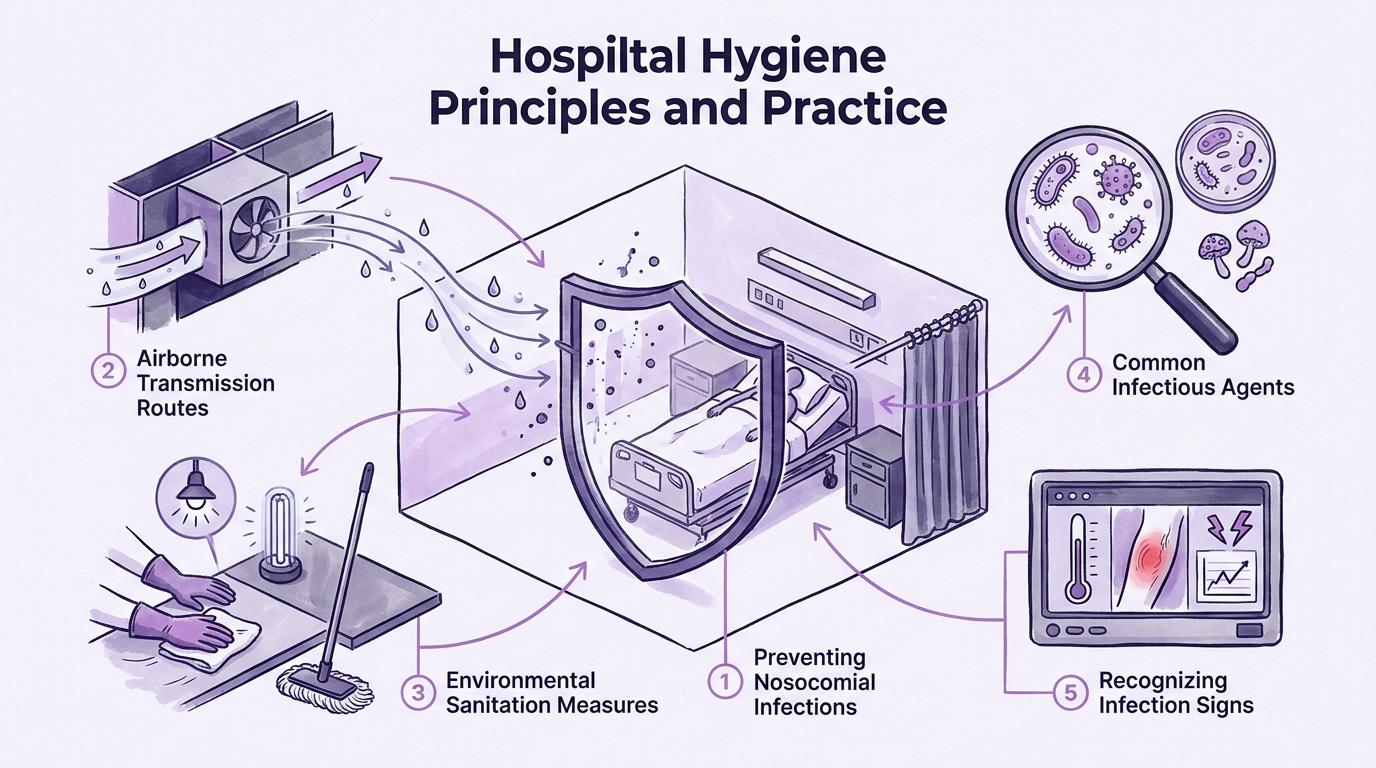
- 1:56Hospital hygiene focuses primarily on preventing nosocomial infections and controlling the spread of pathogenic microorganisms within healthcare settings
- 6:42Infections can transmit through multiple routes including airborne droplets, ingestion, skin contact, sexual contact, and blood products
- 9:14Preventing infection transmission relies on a combined approach of environmental sanitation, hand hygiene, food and water safety, and vaccination
Tap to enlarge
Most valuable section
For whom
First-year nursing, midwifery, and paramedical students preparing for hospital hygiene coursework.
Modes of Transmission and Prevention6:42
This section breaks down the five primary routes of infection transmission and details essential preventive practices like hand hygiene and sanitation.
Detailed summary
1. Introduction to Paramedical Education & Course Overview
0:00The instructor welcomes new paramedical students and introduces the target audience, which includes first-year paramedical and midwifery students. The course focuses on foundational topics in hospital hygiene.
2. Definition of General Hygiene
0:54This chapter defines basic hygiene as a set of principles and practices aimed at preserving human health, improving wellness, and preventing disease. It highlights hygiene as a fundamental pillar for general well-being.
3. Definition of Hospital Hygiene
1:56Hospital hygiene is defined as the discipline dedicated to implementing measures that prevent nosocomial infections and control bacterial dissemination within clinical settings. It emphasizes the crucial role healthcare workers play in protecting vulnerable patients.
4. Infections and Their Clinical Signs
3:26This section explains that an infection occurs when pathogenic germs invade and multiply within a host organism. Key clinical signs are covered, including fever, chills, pain, redness, edema, dehydration, and tachycardia.
5. Causes and Types of Infections
5:00The lesson categorizes common infectious agents, such as viruses, bacteria, parasites, fungi, and protozoa. It also highlights different types of infections based on affected body systems, such as urinary, pulmonary, genital, cutaneous, and hospital-acquired infections.
6. Modes of Infection Transmission
6:42Five primary routes of infection transmission are detailed: airborne (respiratory droplets), digestive (contaminated food and water), transcutaneous (skin breaks/bites), sexual, and blood-borne routes. Real-world examples like tuberculosis, typhoid fever, rabies, hepatitis B/C, and HIV are used to illustrate each pathway.
7. Infection Prevention & Nosocomial Infections Overview
9:14The final chapter details multi-step prevention strategies, including environmental sanitation, food/water safety, hand hygiene, and vaccination. It concludes with a formal definition of nosocomial infections and healthcare-associated infections (IAS), summarizing key concepts for upcoming examinations.
Questions this video answers
What is the primary objective of hospital hygiene?
Hospital hygiene is dedicated to implementing protocols and preventative measures that minimize healthcare-associated infections. Its main goal is to control the spread of bacteria, viruses, and other pathogens to protect both patients and healthcare workers within hospital environments.
What are the common clinical signs of an infection?
Common clinical signs of infection include fever, chills, localized pain, redness, swelling (edema), dehydration, and tachycardia. Recognizing these signs helps healthcare staff assess a patient's clinical state promptly.
How are nosocomial infections defined?
Nosocomial infections, also known as Healthcare-Associated Infections (IAS), are infections acquired by a patient during their stay in a healthcare facility that were not present or incubating upon admission.
Ask a follow-up Premium
About this summary
SumTube AI wrote this recap from the video's words and chapters. Credit and the original belong to Paramédical Girl.