
Free AI summary of this YouTube video by SumTube
How an anglerfish glows
TL;DR
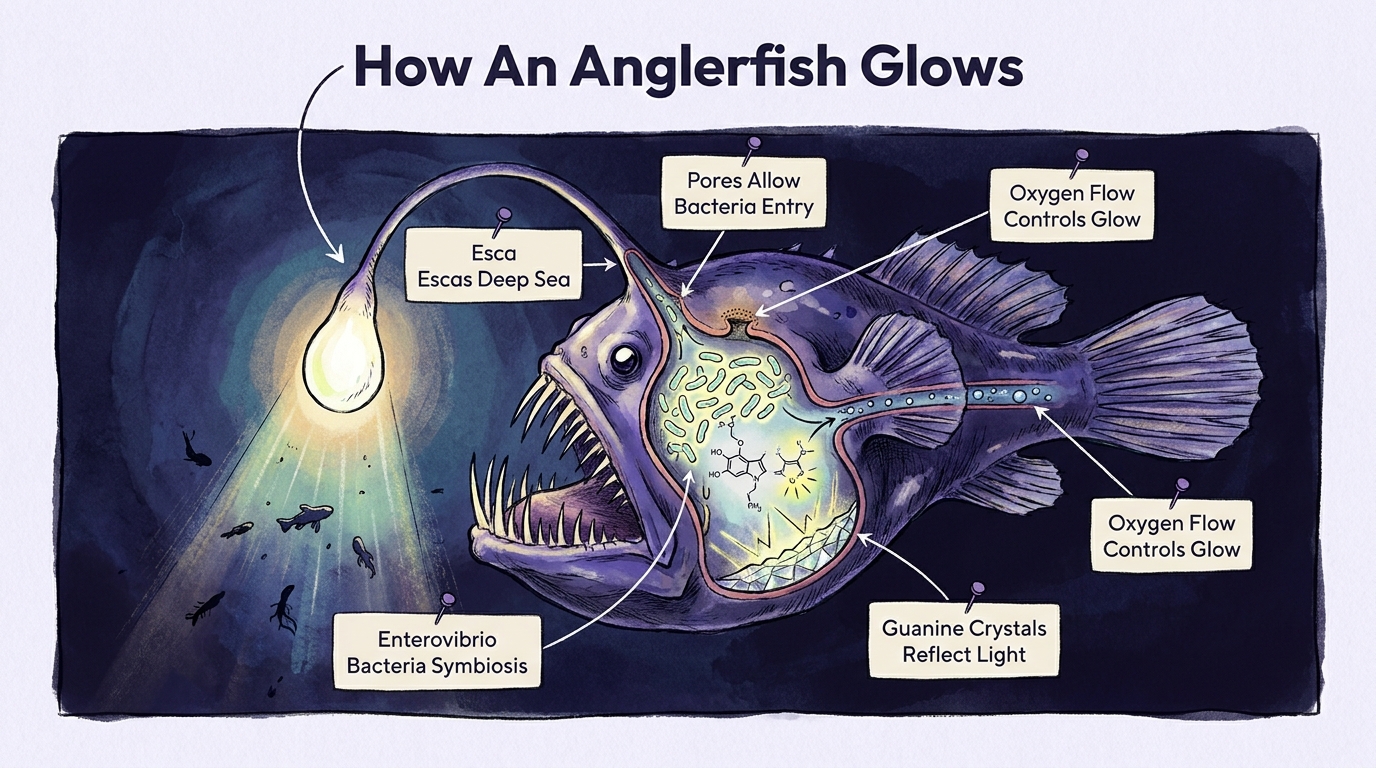
Deep-sea anglerfish use a specialized bioluminescent lure called an esca to attract prey in the pitch-black ocean depths. The glow is produced through a symbiotic relationship with bioluminescent bacteria housed inside the esca. The anglerfish controls and maximizes this illumination through specialized anatomical features, including oxygen regulation, light guides, and reflective tissues.

Key takeaways
- 0:11Anglerfish lures generate light through a symbiotic relationship with Enterovibrio bacteria that undergo a chemical reaction using luciferin, luciferase, and oxygen
- 0:41Bacteria enter the anglerfish's esca via specialized pores, where the fish provides nutrients and oxygen in exchange for bioluminescent light
- 2:14The anglerfish controls its lure's light indirectly by regulating oxygen supply and using fiber-optic-like light guides and guanine reflective crystals to direct the beam
Tap to enlarge
Most valuable section
For whom
Marine biology enthusiasts interested in ocean adaptation and deep-sea life
Light Control and Esca Anatomy2:03
It explains the complex anatomical mechanics—like biological fiber optics and reflective crystals—that allow the anglerfish to direct its light efficiently.
Detailed summary
1. Bioluminescence and Bacterial Symbiosis
0:00Deep-sea anglerfish possess a unique hunting adaptation known as an esca, or lure. The light produced by the esca is bioluminescent, resulting from a chemical reaction driven by specialized bacteria called Enterovibrio residing inside the lure.
Inside the bacteria, a light-emitting molecule called luciferin reacts with oxygen in the presence of the enzyme luciferase. This reaction releases a steady glow that anglerfish utilize to navigate and hunt in total darkness.
2. How Anglerfish Acquire and Host Bacteria
0:28The symbiosis begins when free-living bioluminescent bacteria in the water column detect chemical signals released by the anglerfish's esca. The bacteria navigate toward the lure and enter through small, specialized pores or ducts.
Once inside, the anglerfish provides a protected, nutrient-rich environment along with a constant supply of oxygen. In exchange, the bacteria generate light that the anglerfish uses as a fishing lure to attract unsuspecting prey.
3. Light Control and Esca Anatomy
1:44Because constant or uncontrolled illumination would reveal the anglerfish's sharp-toothed mouth, the fish must direct its light carefully. It influences light production by regulating the oxygen flow to the bacteria inside the esca.
Additionally, the esca features specialized structures such as light guides that function like biological fiber-optic cables, along with reflective tissues composed of guanine crystals. Together, these elements focus, channel, and scatter the light outward toward prospective prey.
Questions this video answers
How do deep-sea anglerfish produce light with their lures?
Anglerfish produce light by hosting bioluminescent bacteria inside their lure, known as an esca. The bacteria create light through a chemical reaction combining luciferin, luciferase, and oxygen inside the esca's structure.
How do bioluminescent bacteria get inside the anglerfish's lure?
Free-living bioluminescent bacteria in the ocean are attracted to chemical signals emitted by the anglerfish's esca. They enter through specialized pores or ducts into an internal environment provided by the fish that supplies nutrients and oxygen.
Can anglerfish turn their glowing lure on and off?
While anglerfish cannot directly turn the bacteria on or off, they can influence light output by controlling the oxygen supply to the esca. They also use anatomical features like light guides and reflective tissues to focus and direct the light away from their own mouth.
Ask a follow-up Premium
About this summary
SumTube AI wrote this recap from the video's words and chapters. Credit and the original belong to Real Science.