
Free AI summary of this YouTube video by SumTube
Hiroo Onoda Fought WWII For 30 Additional Years
TL;DR
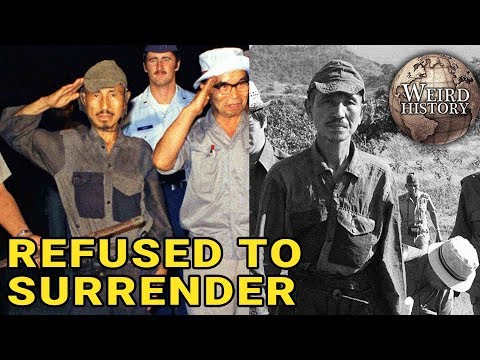
This video details the remarkable story of Hiroo Onoda, a Japanese soldier who continued fighting World War II in the Philippines for nearly three decades after it ended. Following strict orders never to surrender, Onoda survived in the jungle until his former commander officially relieved him of duty in 1974. Upon returning to Japan, he became a national hero, authored a memoir, lived in Brazil, and eventually founded a nature camp for youth.
Key takeaways
- 2:26When Japan surrendered in September 1945, news of the war's conclusion reached Lubang Island via leaflets and newspapers
- 6:40Although officially declared dead in 1959, rumors of Onoda's survival resurfaced in 1972
- 9:05Onoda returned to Japan as a celebrated national hero, praised for his loyalty and endurance
Tap to enlarge
Most valuable section
Refusal to Believe the War Had Ended2:26
Despite being left entirely alone by 1972, Onoda maintained his military discipline, living off the land, conducting raids on local farmers, and keeping his weapons in pristine condition.
Detailed summary
1. Onoda's Mission and the Invasion of Lubang
0:00In 1945, Japanese Second Lieutenant Hiroo Onoda and a small squad were stationed on Lubang Island in the Philippines to prevent an American invasion. Trained as an intelligence officer and commando, Onoda was ordered to sabotage key targets to block American forces. However, last-minute changes to his orders left those targets intact, enabling the U.S. military to launch a successful invasion.
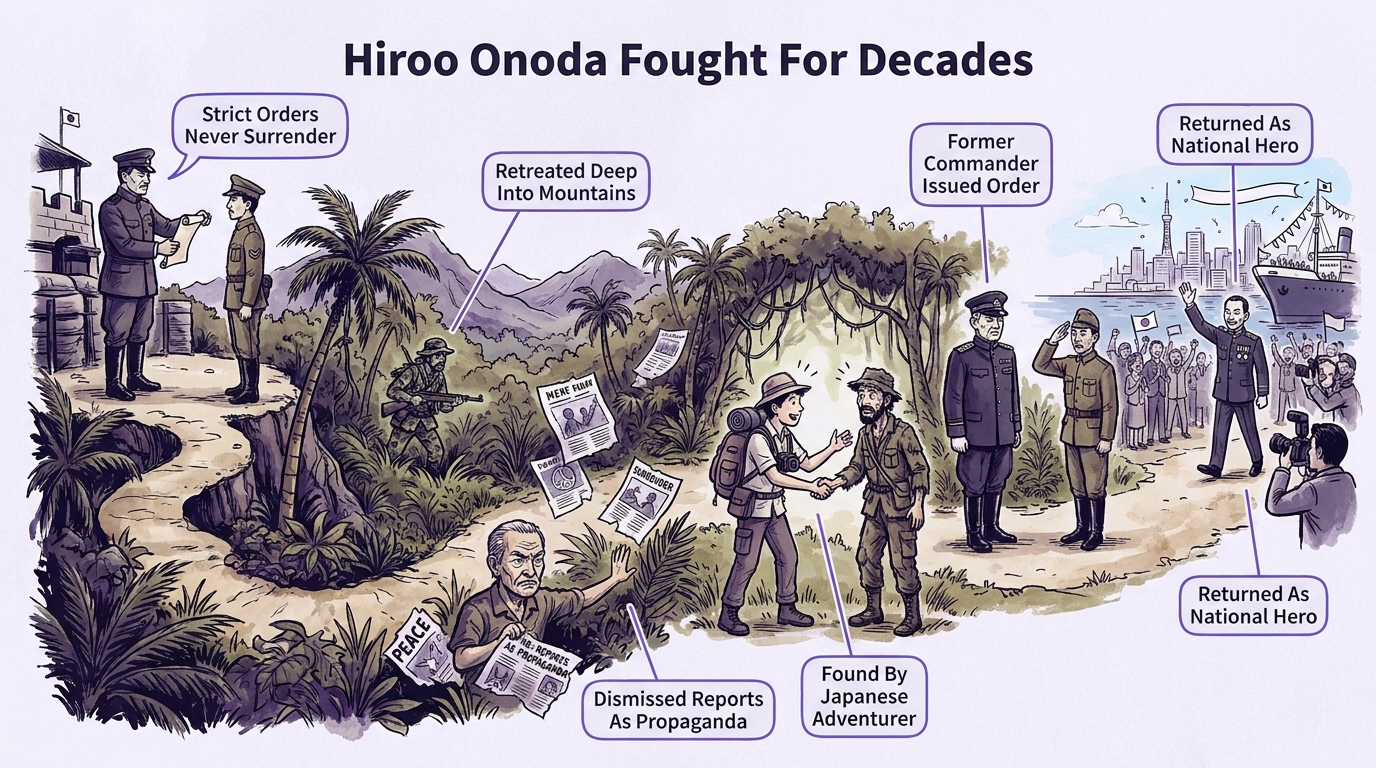
Following the defeat, Onoda and three surviving men retreated deep into the mountains under strict orders to never surrender or commit suicide. Believing the war was still active, they launched guerrilla attacks against Allied and local forces, determined to hold out at all costs.
2. Refusal to Believe the War Had Ended
2:26When Japan surrendered in September 1945, news of the war's conclusion reached Lubang Island via leaflets and newspapers. Onoda and his men dismissed these reports as Allied propaganda designed to lure them out of hiding. They remained convinced that the Imperial Army was still actively fighting across the Pacific.
Over the years, Onoda's small group gradually dwindled as his companions either surrendered or were killed in skirmishes. Despite being left entirely alone by 1972, Onoda maintained his military discipline, living off the land, conducting raids on local farmers, and keeping his weapons in pristine condition.
3. Discovery and Final Surrender
6:40Although officially declared dead in 1959, rumors of Onoda's survival resurfaced in 1972. In 1974, a Japanese adventurer named Norio Suzuki set out specifically to find Onoda. Suzuki successfully located him in the jungle, but Onoda refused to surrender without official orders from his direct superior officer.
Suzuki returned to Japan and located Major Yoshimi Taniguchi, Onoda's former commander. Taniguchi traveled to Lubang Island to personally issue the order to stand down. Onoda formally surrendered to the Philippine President, who pardoned him for his wartime actions and returned his samurai sword.
4. Return to Japan and Later Life
9:05Onoda returned to Japan as a celebrated national hero, praised for his loyalty and endurance. He published a bestselling memoir, "No Surrender: My Thirty-Year War," but struggled to adapt to modern Japanese society. Overwhelmed by the changes, he moved to Brazil to run a cattle ranch before eventually returning to Japan.
Concerned about the values of younger generations, Onoda established the Onoda Nature Camp to teach youth survival skills and self-reliance. He refused back pay and private donations, choosing instead to contribute to educational causes before passing away in 2014 at the age of 91.
Questions this video answers
What does this video say about Onoda's Mission and the Invasion of Lubang?
In 1945, Japanese Second Lieutenant Hiroo Onoda and a small squad were stationed on Lubang Island in the Philippines to prevent an American invasion. Trained as an intelligence officer and commando, Onoda was ordered to sabotage key targets to block American forces. However, last-minute changes to his orders left those targets intact, enabling the U.S. military to launch a successful invasion. Fol
What does this video say about Refusal to Believe the War Had Ended?
When Japan surrendered in September 1945, news of the war's conclusion reached Lubang Island via leaflets and newspapers. Onoda and his men dismissed these reports as Allied propaganda designed to lure them out of hiding. They remained convinced that the Imperial Army was still actively fighting across the Pacific. Over the years, Onoda's small group gradually dwindled as his companions either sur
What does this video say about Discovery and Final Surrender?
Although officially declared dead in 1959, rumors of Onoda's survival resurfaced in 1972. In 1974, a Japanese adventurer named Norio Suzuki set out specifically to find Onoda. Suzuki successfully located him in the jungle, but Onoda refused to surrender without official orders from his direct superior officer. Suzuki returned to Japan and located Major Yoshimi Taniguchi, Onoda's former commander.
What does this video say about Return to Japan and Later Life?
Onoda returned to Japan as a celebrated national hero, praised for his loyalty and endurance. He published a bestselling memoir, "No Surrender: My Thirty-Year War," but struggled to adapt to modern Japanese society. Overwhelmed by the changes, he moved to Brazil to run a cattle ranch before eventually returning to Japan. Concerned about the values of younger generations, Onoda established the Onod
Ask a follow-up Premium
About this summary
SumTube AI wrote this recap from the video's words and chapters. Credit and the original belong to Weird History.