
Free AI summary of this YouTube video by SumTube
Gonța Media, Alexandru Trohin, 08.X.2026
TL;DR
Gheorghe Gonța interviews Alexandru Trohin, a local and regional councillor in Strășeni, about the challenges facing local public administration and governance in Moldova. Trohin highlights issues regarding the allocation of public funds, the regional amalgamation reform, and the lack of transparency in local projects like the municipal sports complex. He emphasizes the importance of civic awareness, administrative competence, and active citizen participation in local governance.

Key takeaways
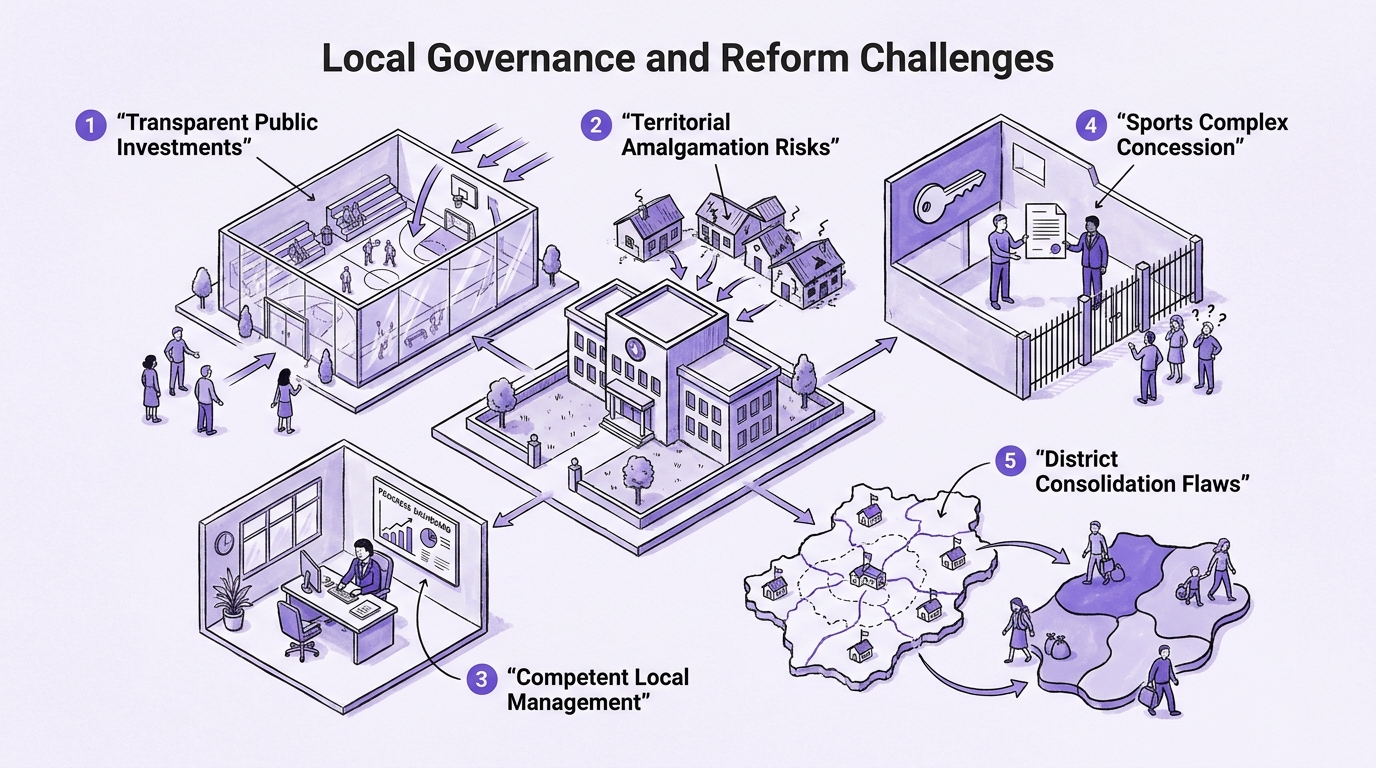
- 8:05Local public investments, such as the Strășeni sports complex, often lack long-term financial sustainability and transparency for residents
- 18:58The voluntary territorial amalgamation reform risks reducing direct political representation and local services for smaller villages
- 4:28Effective local administration requires prioritizing competent management and public accountability over partisan politics
Tap to enlarge
Most valuable section
For whom
Citizens interested in local Moldovan politics, public spending accountability, and administrative reform.
Controversy Surrounding the Strășeni Sports Complex8:05
This segment provides a detailed case study illustrating how local public funds and European grants can be mismanaged through non-transparent concession contracts, directly impacting local taxpayers.
Detailed summary
1. Introduction and Location Setup in Strășeni
0:00Host Gheorghe Gonța opens the episode in the city of Strășeni, explaining that Moldova's pressing political and social issues extend far beyond the capital city of Chișinău. He introduces guest Alexandru Trohin, an active local politician serving as a municipal and regional councillor in Strășeni.
Trohin welcomes the opportunity to discuss local public administration, highlighting that regional centers face distinct challenges that are frequently overlooked by central authorities in Chișinău.
2. Alexandru Trohin's Background and Return from Diaspora
3:00Alexandru Trohin shares his personal and professional journey, detailing how he spent seven years living and working in Italy as part of the Moldovan diaspora before deciding to return home. Upon his return, he chose to run for local office to contribute directly to his hometown's development.
Trohin discusses his family life and his motivations for entering public service, emphasizing that his diaspora experience gave him a clear perspective on transparent governance and community engagement.
3. Citizenship, Competence, and Accountability in Governance
4:28Trohin addresses the fundamental relationship between citizens and elected officials, arguing that citizens often underestimate their power in a democratic system. He stresses that public officials are administrators hired by the electorate to manage public resources efficiently.
He criticizes political incompetence, stating that being a 'good person' is insufficient for public management. Trohin emphasizes that when officials fail to deliver results, they should step aside rather than cling to power.
4. Controversy Surrounding the Strășeni Sports Complex
8:05Standing near the newly constructed local sports facility, Trohin uses the site as a specific example of public spending transparency issues. Tens of millions of lei from local tax revenue and European Union grants were invested into building the stadium.
However, the municipal council transferred the land and facility under a long-term concession to a public association founded by the vice-mayor. As a result, local residents and nearby school children are required to pay fees to use a sports complex funded by their own taxes.
5. Territorial Amalgamation Reform and Local Impact
18:58The discussion turns to the voluntary territorial amalgamation reform, which merges smaller neighboring villages into larger municipal hubs like Strășeni. Trohin explains that while three villages voluntarily joined Strășeni, the local population was largely uninformed about the long-term governance consequences.
He cautions that removing local mayor's offices leaves rural residents without direct local representation, forcing them to rely on delegated administrators who must seek approval from the central municipal council for basic local needs.
6. Flaws in District Consolidation and Regional Reorganization
26:21Trohin critiques central government plans to replace Moldova's 32 districts with three large administrative regions (North, Center, and South). He warns that such drastic downsizing will cause significant job losses among qualified civil servants in regional centers.
He notes that many dedicated public employees will be forced to migrate abroad or move to Chișinău, further depopulating provincial towns and straining public services.
7. Economic Strain, Gas Prices, and Public Discontent
37:48Gonța and Trohin examine the broader economic crisis affecting everyday Moldovans, including rising natural gas tariffs, electricity costs, and general inflation. Trohin describes how hardship forces elderly residents to consider extreme measures, such as cohabiting in winter to afford heating.
He notes that despite widespread economic anxiety, active public protests remain muted because citizens feel exhausted, disempowered, or intimidated by current political narratives.
8. European Integration vs. Practical Local Realities
41:20Trohin expresses support for European standards and integration but criticizes politicians who use 'European integration' as a catch-all slogan to justify rising costs and administrative failures. He asserts that EU integration should yield tangible improvements in living standards rather than financial hardship.
He advocates for pragmatic leadership focused on economic development, competent fiscal management, and genuine accountability to the public.
9. Concluding Messages and Call to Civic Action
49:06In his closing remarks, Alexandru Trohin urges citizens of Strășeni and Moldova to stay informed, critically evaluate political promises, and hold their elected leaders accountable at the ballot box.
Gheorghe Gonța thanks Trohin for the candid discussion, concluding the interview with a call for continued public scrutiny of local administration.
Questions this video answers
Who is Alexandru Trohin and what is his background?
Alexandru Trohin is a municipal and regional councillor in Strășeni, Moldova, and president of the Public Order and Rights Commission. After spending seven years living in Italy as part of the Moldovan diaspora, he returned to Moldova to actively engage in local governance and public service.
What concerns does Alexandru Trohin raise about the Strășeni sports complex?
Trohin points out that while millions of lei in public and European funds were invested in constructing the sports complex, the local council transferred the facility to a public association founded by the vice-mayor. Consequently, local residents and school children must pay fees to access a facility built with their tax money.
How does Trohin view the local government amalgamation reform in Moldova?
Trohin expresses skepticism about the rapid territorial amalgamation reform, arguing that merging smaller villages into larger administrative units like Strășeni deprives smaller communities of direct local councils and mayors. He warns that the promised financial incentives are temporary, leaving local populations underserved in the long run.
Ask a follow-up Premium
About this summary
SumTube AI wrote this recap from the video's words and chapters. Credit and the original belong to Gheorghe Gonța.