
Free AI summary of this YouTube video by SumTube
ESPN Sport Science: Reaction Time in the Cold
TL;DR
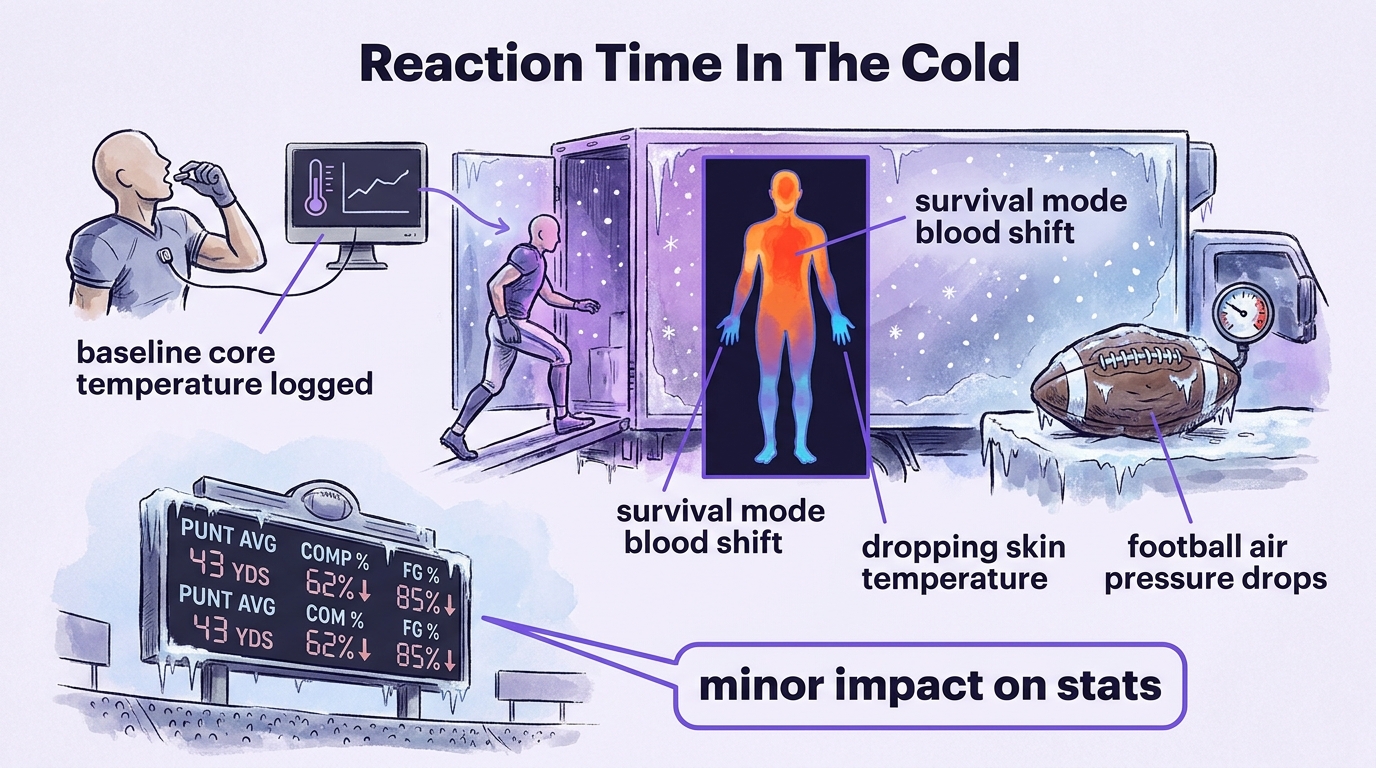
John Brenkus tests the physical effects of extreme cold weather on football players and equipment inside a refrigerated ice truck. The segment demonstrates how cold exposure slows athlete reaction times, reduces grip strength, and decreases football air pressure, yet statistical analysis shows cold weather has a surprisingly minimal impact on overall game performance.

Key takeaways
- 3:24Freezing temperatures decrease football air pressure by over 20%, making the ball less elastic and bouncy
- 3:50Despite significant physiological and equipment changes, real-game stats show punting, passing, and field goal accuracy barely drop in cold weather
Tap to enlarge
Most valuable section
For whom
Sports enthusiasts and science buffs interested in biomechanics and equipment physics
Impact of Cold Weather on Football Equipment2:26
It shows actual lab tests revealing how 10-degree cold shrinks a football's diameter and reduces its internal pressure by over 20%.
Detailed summary
1. Baseline Measurements for Cold Weather Testing
0:00Host John Brenkus introduces the Sports Science experiment designed to measure the physiological impact of extreme cold on athletic performance. Initial baseline metrics are established in room-temperature conditions, measuring reaction times, grip strength, skin temperature, and core body temperature.
To track internal heat retention throughout the experiment, Brenkus ingests a special CorTemp thermometer pill. His baseline core temperature is logged at 99 degrees Fahrenheit, establishing a reference point before cold exposure.
2. The Physiology of Extreme Cold Exposure
0:34Brenkus enters a refrigerated ice truck chilled to 10 degrees Fahrenheit to simulate playing in extreme winter conditions. Thermal imaging demonstrates how the body enters survival mode, shifting blood flow away from extremities toward the core to maintain internal heat.
He debunked the common myth that half of body heat is lost through the head, clarifying that only 10% escapes there. After 15 minutes of exposure, hand skin temperature drops to 35 degrees, causing grip strength to plummet by 50%. After 30 minutes, although core body temperature remains steady due to five-times-faster glucose burn, overall reaction speed drops by 45%.
3. Impact of Cold Weather on Football Equipment
2:26The test transitions from physiological effects to how freezing temperatures alter the football itself. A ball exposed to 10-degree temperatures for one hour experiences structural changes, shrinking in diameter by 0.05 inches.
Furthermore, the cold reduces the football's internal air pressure by more than 20%. This drop in pressure lowers the ball's coefficient of restitution, rendering it less bouncy and causing it to leave a kicker's foot noticeably slower.
4. Cold Weather Statistical Impact on Game Performance
3:41Despite significant biological and material detriments, historical game statistics reveal that extreme cold weather has a surprisingly minor effect on actual NFL gameplay. Athletes manage to adapt effectively despite the physiological strain.
Data shows that in freezing games, average punts travel only 3 yards shorter, pass completion rates decline by a minor 2%, and field goal accuracy drops by just 1.7%.
Questions this video answers
How much body heat is actually lost through the head?
Contrary to the popular myth that half of body heat escapes through the head, humans actually lose only about 10% of their body heat from the head. Consequently, wearing a football helmet provides minimal protection against overall cold-weather heat loss.
How does extreme cold affect human performance and reaction time?
To protect core body temperature, the cardiovascular system reduces blood flow to the extremities, dropping hand skin temperature and cutting grip strength in half. Additionally, the body consumes glucose five times faster to produce heat, leaving less energy for performance and slowing reaction times by up to 45%.
Does cold weather significantly impact NFL game statistics?
Despite the severe physical and physical material challenges, statistical analysis shows cold weather has little actual effect on game outcomes. In cold games, average punt distance drops by only 3 yards, completion percentage decreases by 2%, and field goal accuracy dips by just 1.7%.
Ask a follow-up Premium
About this summary
SumTube AI wrote this recap from the video's words and chapters. Credit and the original belong to Smartabase.