
Free AI summary of this YouTube video by SumTube
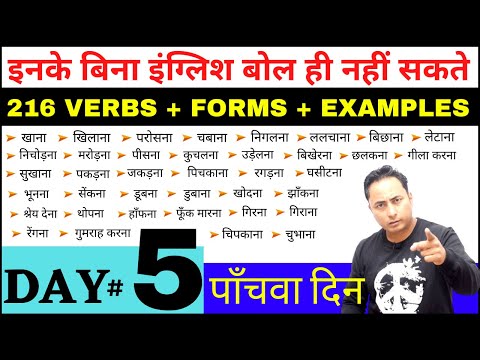
English Speaking Course का पाँचवा दिन (Day 5)। M.Imp. Verbs + Three Forms + Meaning + Examples
TL;DR
In Day 5 of the Spoken English Speaking Course, Aditya Rana introduces over 200 essential Hindi-to-English verbs to help learners expand their vocabulary and speak fluently. Each verb is presented with its three principal forms, Hindi meanings, pronunciation guides, and practical sentence examples. Additionally, the instructor offers a giveaway incentive for students who write down these verbs in a notebook and submit their work via WhatsApp.
Key takeaways
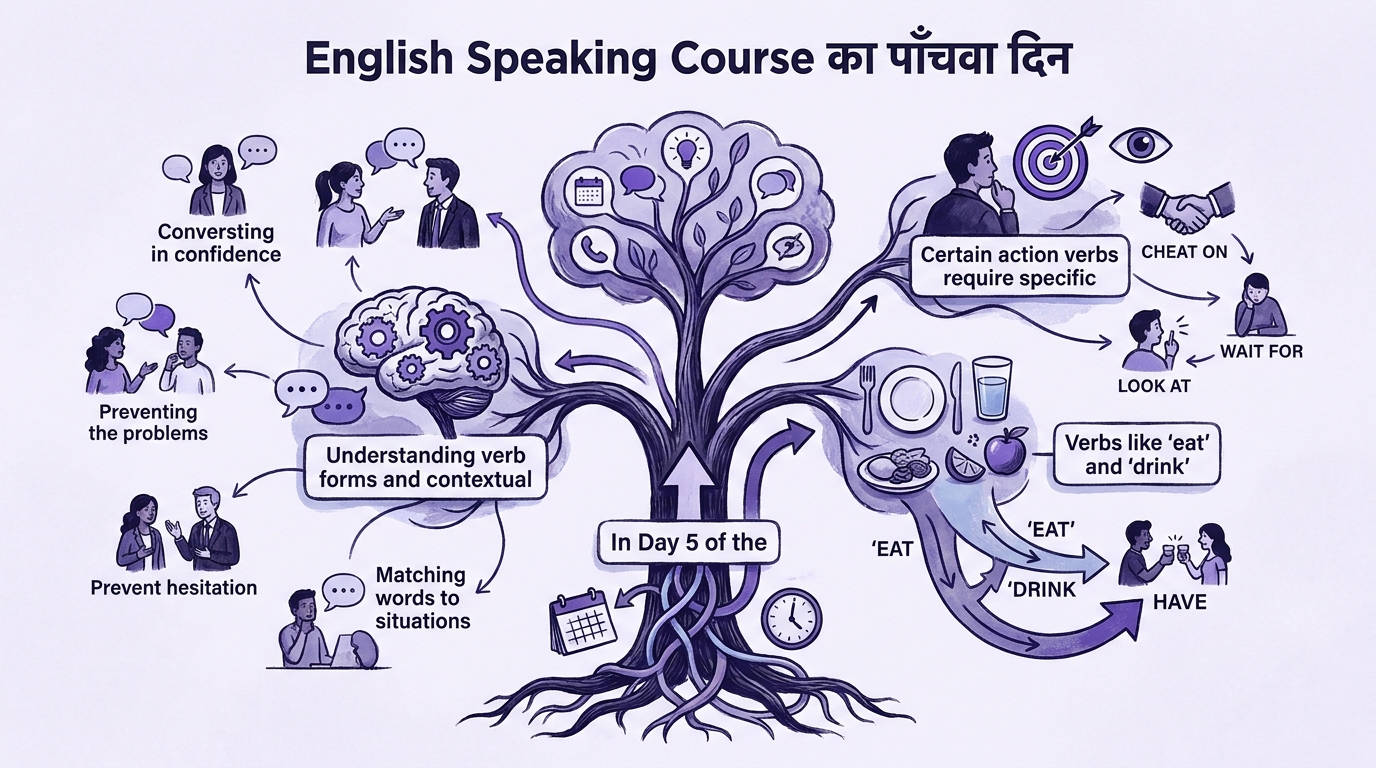
- Understanding verb forms and contextual vocabulary prevents hesitation during spoken English practice
- 8:05Verbs like 'eat' and 'drink' can frequently be substituted with 'have' for more natural-sounding English
- 21:55Certain action verbs require specific prepositions, such as 'cheat on' or 'look at', to be grammatically correct
Tap to enlarge
Most valuable section
For whom
Beginner to intermediate English learners looking to expand their daily verb vocabulary and master verb conjugations.
Mastering Action Verbs and Sample Sentences8:05
This section dives directly into essential everyday verbs, explaining their three forms and providing practical Hindi-English example sentences to build conversational confidence.
Detailed summary
1. Course Overview and Vocabulary Essentials
0:00Aditya Rana begins the lesson by discussing why many English learners struggle or pause during conversations. He explains that hesitation usually stems from a lack of precise vocabulary at the moment of speaking. To address this, he introduces a comprehensive breakdown of over 200 crucial verbs used in everyday English conversations.
He outlines the structured approach of the lesson, which includes presenting Hindi meanings, phonetic pronunciations, all three verb forms, and illustrative example sentences. Additionally, he announces a giveaway of his spoken English book kit for the first 500 students who complete and submit the full written assignment.
2. Verbs Related to Eating and Drinking
8:05This section covers fundamental verbs associated with food consumption and cooking activities. Verbs such as eat, drink, feed, serve, chew, and swallow are presented alongside their respective three forms. Example sentences demonstrate how to structure commands and descriptions around meals and nutrition.
The instructor highlights key nuances, such as using 'have' interchangeably with 'eat' or 'drink' in casual conversation. He also introduces culinary action verbs including fry, roast, bake, and cook, clarifying the precise context for each cooking technique.
3. Verbs for Physical Movement and Actions
11:57The lesson transitions into verbs describing physical actions, movements, and manual tasks. Words like allure, blow, stick, rub, drag, fall, and drop are detailed with clear grammatical forms. Example sentences show how these verbs describe common daily occurrences like dropping an object or dragging furniture.
Additional physical action verbs are introduced, including dip, dive, drown, dig, peep, creep, lend, borrow, and assess. The instructor explains the difference between similar-sounding actions, such as drowning versus diving, to ensure learners select the appropriate verb for each situation.
4. Communication and Daily Interaction Verbs
17:29Focusing on interpersonal communication, this chapter covers essential verbs like speak, talk, wake up, become, make, cut, chop, bite, and swell. The instructor provides practical guidance on preposition usage, such as using 'with' after 'speak' and 'to' after 'talk'.
He also details nuances between actions that seem similar, such as cutting with a tool versus biting with teeth. Sentence examples help contextualize how these actions fit into daily conversations, from waking someone up to describing physical injuries like swelling.
5. Verbs for Bending, Looking, and Perceiving
21:00This segment covers verbs associated with physical posture and visual perception, such as bend, bow, cheat, mislead, come, go, take, give, walk, run, say, and tell. The instructor emphasizes correct prepositional pairings, such as using 'on' when saying 'cheat on someone'.
He also explains the distinct meanings behind visual verbs, contrasting 'see' (general perception), 'look' (directional viewing), and 'watch' (observing an activity over time). Detailed sentence examples illustrate how these verbs express intentions, movements, and observations in everyday speech.
6. Verbs for Learning, Teaching, and Emotion
25:05In this chapter, the lesson focuses on mental processes, learning activities, and emotional expressions. Key verbs include ask, bring, buy, purchase, sell, do, work, call, know, think, sit, stand, laugh, smile, learn, teach, torture, beat, and scold.
The instructor points out subtle pronunciation differences, such as reading the past forms of 'read' as 'red'. He also highlights the distinction between 'learn' (acquiring knowledge) and 'teach' (imparting knowledge), providing example sentences to help students apply these verbs in personal or academic settings.
7. Verbs for Victory, Loss, Memory, and Apology
33:52This section introduces verbs related to outcomes, memory, social obligations, and conflict. Words such as win, lose, open, close, pain, hurt, search, ascribe, blame, allege, remember, remind, apologize, forgive, succeed, break, marry, threaten, and suggest are covered in detail.
The instructor clarifies the differences between memory-related verbs like 'remember' (retaining information) and 'remind' (causing someone else to remember). He also demonstrates how to express feelings of regret, apologize politely, or attribute success using 'ascribe' in complete sentences.
8. Verbs for Weather, Involuntary Actions, and Math
40:56The final chapter covers a wide range of specialized verbs, including environmental conditions, involuntary physical reactions, mathematical operations, and general daily actions. Verbs like shiver, impose, rip off, rob, bring up, lisp, stammer, whisper, mumble, gasp, worship, rain, hail, snow, squeeze, wring, overrun, grind, crush, sneeze, avenge, appreciate, tear, weep, cry, scream, wear, thank, touch, hold, clinch, hang, comb, bother, sing, dance, seem, show, want, meet, try, complain, hide, spit, abuse, tie, weave, bathe, drench, dry, dream, discriminate, repair, decorate, regret, handle, amaze, express, describe, happen, throw, mix, melt, ice, destroy, enjoy, agree, exaggerate, wash, clean, spread, scatter, pour, spill, trickle, splash, begin, start, end, live, stay, consider, appear, disappear, whistle, wink, gesture, itch, pinch, include, like, love, hope, motivate, ensure, vomit, grow, invest, waste, save, fill, pay, use, follow, stop, allow, add, subtract, deduct, divide, multiply, choose, wait, die, send, reach, arrive, remain, pass, fail, need, decide, fight, argue, complete, accept, and swim are explained.
The instructor emphasizes using 'it' as a dummy subject for weather verbs like 'rain', 'hail', and 'snow'. He concludes the video by encouraging students to review the lesson repeatedly and submit their written homework to master these essential English verbs.
Questions this video answers
Why do English learners often hesitate or get stuck while speaking?
Learners often pause or struggle because they lack the exact verb or vocabulary word in their mind when forming sentences. Learning common action verbs along with their three principal forms helps bridge this gap between thought and expression.
Can 'have' be used instead of 'eat' or 'drink'?
Yes, in modern conversational English, 'have' is commonly used as a natural alternative to both 'eat' and 'drink'. For example, 'Don't have junk food' or 'We can't have saline water' are widely accepted expressions.
How can students participate in the book kit giveaway mentioned in the video?
Students need to write all 216 verbs along with their meanings, forms, and sample sentences in a notebook. They must then take clear photos of the completed pages and send them via WhatsApp in order to be considered for one of the 500 free book kits.
Ask a follow-up Premium
About this summary
SumTube AI wrote this recap from the video's words and chapters. Credit and the original belong to Spoken English Guru.