
Free AI summary of this YouTube video by SumTube
Demonizing Putin Left Europe Unable to Negotiate /Prof Dr. Hans Neuhoff
TL;DR
Lt. Col. Daniel Davis interviews Prof. Dr. Hans Neuhoff, a Member of the European Parliament from Germany's AfD party, about European security policy and the war in Ukraine. Neuhoff argues that EU leaders have trapped themselves in an ideological, anti-Russian narrative that prevents diplomatic negotiations and damages European economic and security interests. He discusses the internal pressures within the European Parliament, the public perception of the war in Germany, and the political establishment's hostility toward alternative diplomatic perspectives.

Key takeaways
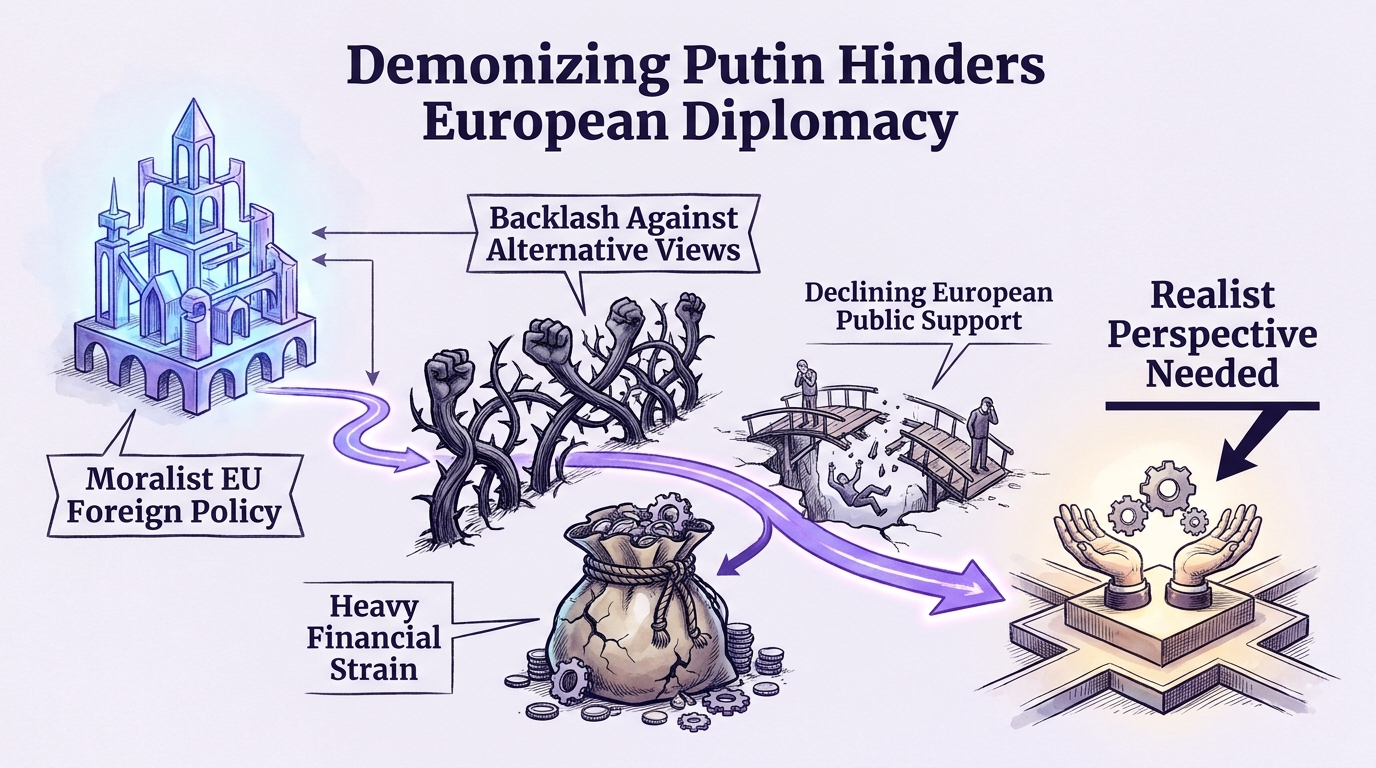
- 18:35EU political institutions incentivize conformity to a moralistic anti-Russian narrative, punishing dissenters with political ostracization
- 23:41EU member states bear the financial burden of prolonging the conflict while remaining strategically dependent on US security policies
- 29:48Public support in Europe for continued military aid to Ukraine is declining due to economic strain and lack of diplomatic progress
Tap to enlarge
Most valuable section
For whom
Geopolitical analysts and observers interested in European foreign policy and dissenting perspectives within the European Parliament.
Internal Pressures in the European Parliament10:39
Neuhoff reveals how private conversations among European MEPs contrast with their public stances, offering rare insight into the political dynamics of EU security policy.
Detailed summary
1. EU's Stance on Russia Negotiations
0:00Daniel Davis introduces Professor Dr. Hans Neuhoff, an AfD Member of the European Parliament, to discuss Europe's role in the Ukraine conflict. Davis notes that despite claims of wanting peace, EU leadership refuses to participate in direct dialogue with Russia, contrasting with three-way talks involving the US, Russia, and Ukraine in Abu Dhabi.
Neuhoff explains that European leaders have demonized President Putin to the point where negotiating is treated as unacceptable. He argues that European politicians have become victims of their own propaganda, restricting their diplomatic flexibility and preventing realistic peace negotiations.
2. Internal Pressures in the European Parliament
10:39Davis questions why European leaders refuse to engage in diplomacy with Russia, even though historical precedent shows regular communication during the Cold War. Neuhoff responds that EU politicians face immense systemic pressure to conform to the prevailing establishment narrative to protect their positions and careers.
Neuhoff shares an anecdote from a private conversation with an EPP colleague who admitted that mainstream narratives are maintained for public relations, even while privately acknowledging realistic assessments of the military situation. He notes that dissenting figures are quickly labeled as pro-Russian to suppress critical debate.
3. Realism vs. Moralism in EU Policy
20:29Neuhoff outlines the philosophical divide between realism and moralism in European international relations. He states that mainstream parties like the Greens and Social Democrats follow a moralist worldview that attempts to enforce universal ethical standards on foreign powers, leading to diplomatic deadlocks.
In contrast, parties like the AfD approach foreign policy from a realist perspective, recognizing power dynamics and the strategic interests of sovereign nations. Neuhoff argues that ignoring realist principles has severely damaged European economic stability and security autonomy.
4. US Influence and Financial Burdens
23:29Davis plays a clip of defense analyst Michael Clarke discussing US-brokered talks and Russia's demand for a security reset in Europe. Neuhoff contends that the conflict was largely driven by American strategic interests, while European states were dragged into funding and sustaining it without maintaining independent agency.
He highlights the financial strain on European taxpayers, particularly Germans, as member states absorb the costs of military equipment and financial aid for Ukraine. Neuhoff criticizes European leaders for accepting US strategic direction while suffering the primary economic fallout.
5. Backlash Against Dissenting Voices
32:49Davis asks about the political hostilty faced by those who propose alternative paths to peace, referencing the backlash when former Ukrainian press secretary Iuliia Mendel was invited to speak in Germany. Neuhoff explains that establishment parties attack dissenters not for their arguments, but simply for offering a platform to non-standard views.
Neuhoff notes that critics avoid debating the actual content of alternative proposals because they cannot counter the reality on the ground. Instead, political opponents rely on personal attacks and media smear campaigns to maintain narrative control.
6. Public Perception and Future Outlook
44:51Davis and Neuhoff discuss shifting public attitudes in Germany and across Europe. Neuhoff observes that while political elites remain committed to escalating aid, public support is steadily dropping as citizens experience domestic economic hardship.
Neuhoff concludes that a lasting resolution requires a return to realistic diplomacy and the establishment of a collective European security structure that includes all regional powers. Davis thanks Neuhoff for sharing his perspective and closes the segment.
Questions this video answers
Why are European leaders reluctant to negotiate directly with Russia?
European leaders have demonized Russian President Vladimir Putin to the extent that engaging in negotiations is framed as compromising with an adversary. According to Hans Neuhoff, political figures fear being excluded from key decision-making circles if they challenge the dominant narrative, leading to a self-imposed lock-in on confrontation.
What is the AfD's position on the conflict in Ukraine?
The AfD advocates for a realist approach to international relations, emphasizing diplomatic negotiation and economic partnership over military escalation. They argue that European security cannot be achieved without engaging Russia and that continuing the war inflicts unnecessary economic and human costs on both Europe and Ukraine.
How does the public in Germany view the continued funding for Ukraine?
Public support for ongoing financial and military aid to Ukraine is declining in Germany as economic challenges persist at home. While political leaders maintain a consensus on funding, polls indicate that less than half of the general population supports sustaining aid at current levels.
Ask a follow-up Premium
About this summary
SumTube AI wrote this recap from the video's words and chapters. Credit and the original belong to Daniel Davis / Deep Dive.