
Free AI summary of this YouTube video by SumTube
Belajar Unsur Intrinsik Karya Sastra
TL;DR
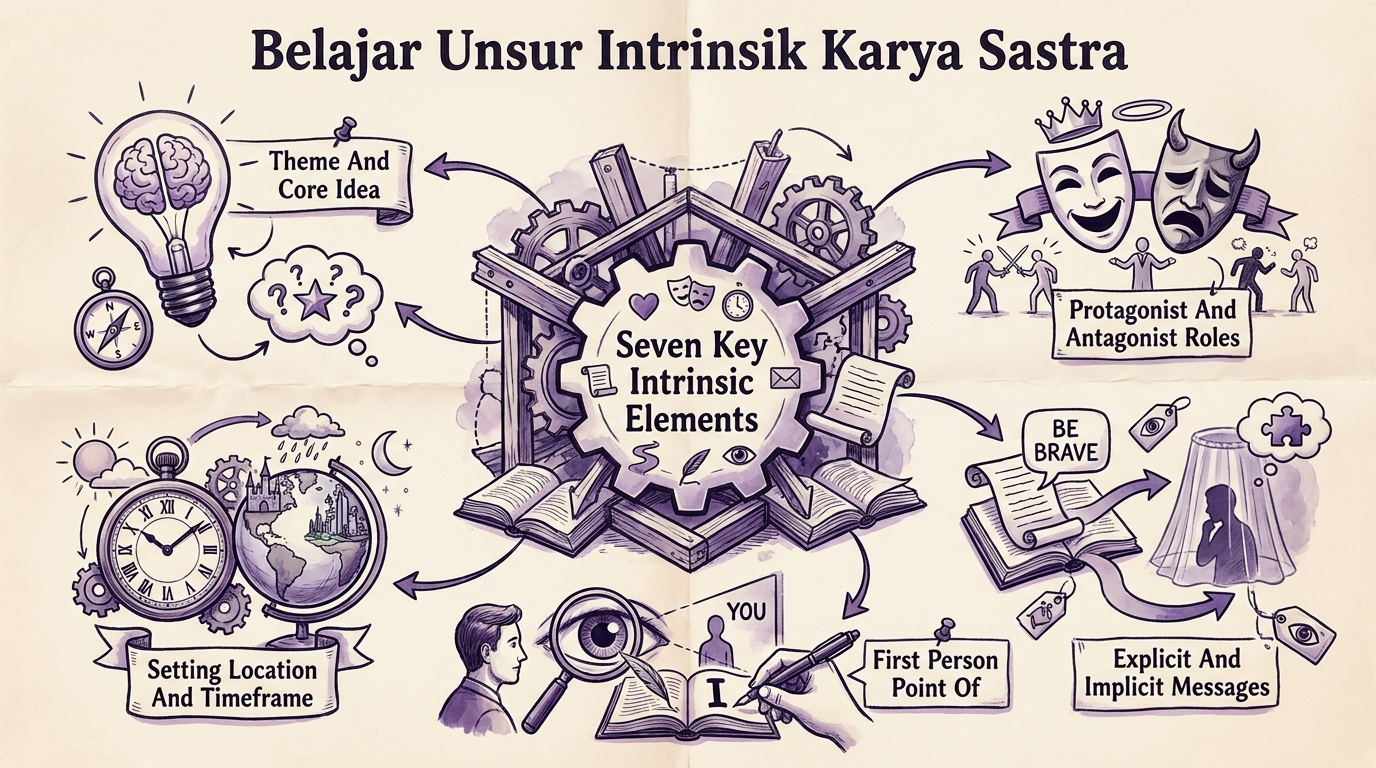
In this video, Mr King introduces the definition of literature and explains the intrinsic elements required to construct short stories or novels. He breaks down the seven intrinsic elements: theme, characterization, setting, moral message, plot, point of view, and figurative language. Through clear definitions and practical examples, the lesson provides aspiring writers with the foundational knowledge needed to create compelling narratives.

Key takeaways
- 0:47Literature originates from Sanskrit roots meaning an instrument of guidance, emphasizing originality and artistic expression
- 5:00Character roles in a story are divided into protagonists, antagonists, and neutral tritagonists who support the main characters
- 6:40Moral messages (amanat) can be explicit (written directly in the text) or implicit (inferred by analyzing characters and conflict)
- 8:46Point of view determines the narrator's stance relative to the story, utilizing specific pronouns ranging from first-person to second-person perspectives
Tap to enlarge
Most valuable section
For whom
Aspiring fiction writers and students seeking a clear, structured breakdown of story elements.
Point of view and figurative language breakdown8:43
It offers comprehensive comparative examples for narrator perspectives and common stylistic devices like metaphors and hyperbole.
Detailed summary
1. Introduction and Definition of Literature
0:00Mr King introduces the concept of literary works, highlighting how stories evoke emotions such as sadness, laughter, or excitement. Just like building a house requires a solid foundation, writing a short story or novel requires an understanding of essential core elements to keep the narrative from falling apart.
He explains the etymology of literature, which comes from the Sanskrit terms 'sas' (to direct) and 'tra' (tool). Literature encompasses high-quality written works such as fairy tales, short stories, and poetry that exhibit original ideas and aesthetic expression rather than everyday conversation.
2. Overview of Intrinsic and Extrinsic Elements
1:57Literary works consist of intrinsic and extrinsic factors. Extrinsic elements include external factors such as author background and social context, whereas intrinsic elements form the inner foundation that brings the story to life.
The lesson outlines the seven key intrinsic elements: theme, characterization, setting, moral message, plot, point of view, and figurative language. Understanding each component helps writers construct cohesive stories.
3. Theme, Characterization, and Setting
3:44The theme represents the core idea of a story. Writers determine the theme by identifying main characters, analyzing the core conflict, and summarizing the central narrative point.
Characterization categorizes characters into protagonists (good), antagonists (evil), and tritagonists (neutral mediators). Setting establishes the physical location, timeframe, and emotional atmosphere that guide narrative progression.
4. Moral Message (Amanat) and Narrative Plot
5:52The moral message consists of invitations, commands, or prohibitions embedded in the text. Messages can be explicit (directly written in the narrative) or implicit (deduced by observing character behavior and overall story conflict).
Plot defines the timeline progression of events. Stories can utilize a forward plot (chronological progression), a backward plot (starting at the end via retrospection), or a mixed plot incorporating flashbacks.
5. Point of View (Sudut Pandang)
8:43Point of view depends on narrative positioning and main pronoun usage. Third-person uses terms like 'he' or 'they' with an external narrator, while first-person uses 'I' or 'we' with an internal narrator.
Mixed perspectives blend first and third-person pronouns. Second-person perspective directly addresses the reader as 'you', treating the audience as an active participant in the story.
6. Figurative Language and Conclusion
11:47Figurative language enhances storytelling aesthetics through figures of speech. The lesson covers metaphor (direct comparison), simile (comparison using explicit connecting words), personification (giving human traits to non-human objects), and hyperbola (exaggeration).
Mr King concludes by reviewing all seven intrinsic elements. He encourages the audience to view their own life experiences as potential stories that can inspire others.
Questions this video answers
What is the origin and definition of literature presented in the lesson?
The word literature derives from Sanskrit, where 'sas' means to direct and 'tra' means a tool. It refers to specialized, high-quality written works characterized by originality and beauty of expression rather than everyday casual language.
What are the seven intrinsic elements of a literary work?
The seven intrinsic elements are theme (central idea), characterization (character traits), setting (time, place, and mood), moral message (amanat), plot (narrative sequence), point of view (narrative perspective), and figurative language (gaya bahasa).
How do explicit and implicit moral messages differ in a narrative?
An explicit message (tersurat) is directly stated in the text of the story for the reader to see. An implicit message (tersirat) must be deduced by analyzing character behaviors, actions, and overall conflict resolution.
Ask a follow-up Premium
About this summary
SumTube AI wrote this recap from the video's words and chapters. Credit and the original belong to eduzuara.