
Free AI summary of this YouTube video by SumTube
당일전략 (1105 목)
TL;DR
In this market commentary filmed during a morning commute, the speaker analyzes recent global stock market movements, including US index gains and shifting trends away from AI and semiconductor stocks. He explores political influences, particularly comparing Trump and Democratic policies on tech, regulation, and foreign relations, while discussing how these dynamics impact global tech investments. The host then provides practical trading advice for Korean investors, advocating flexible cash management, strategic buying during dips, and cautious profit-taking amidst broader market volatility.

Key takeaways
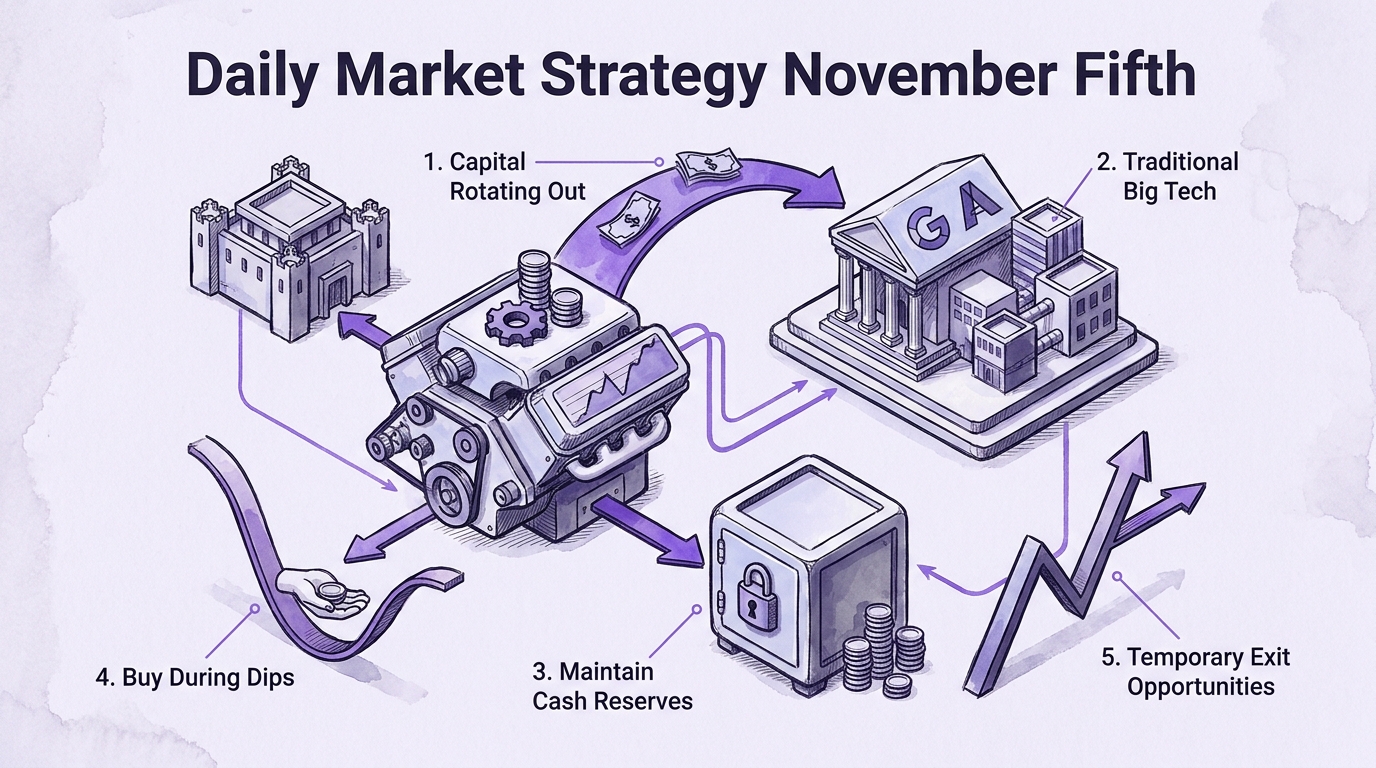
- Capital is shifting from previously hot AI and semiconductor stocks toward traditional big tech and consumer sectors
- Trump's aggressive, unconventional policy style injected unique volatility compared to broader Democratic tech strategies
- Maintaining cash reserves and buying during market dips offers better risk protection than trying to predict long-term AI cycles
- Sudden rebounds in underperforming sectors should be treated as temporary exit opportunities rather than long-term buy signals
Tap to enlarge
Most valuable section
For whom
Retail stock investors looking for practical market analysis and risk management advice during tech sector volatility
Market Volatility & Foreign Investor Actions13:59
It breaks down how foreign capital shifts affect local indices and outlines actionable buying and cash allocation steps for the week.
Detailed summary
1. Introduction & Daily Drive Overview
0:00The host opens the video on November 5th during a morning drive through Seoul, reflecting on the changing autumn weather and foliage. He sets the tone for a casual yet deep discussion on economic trends, political influences, and stock market sentiment.
2. US Stock Market Rebound & Capital Shift
0:50The discussion turns to recent US market performance where major indices like the Dow, S&P 500, and Nasdaq rose while oil prices dropped. However, behind the general gain was a notable capital rotation away from AI and semiconductor stocks toward big tech and consumer-focused companies.
The speaker highlights how money seems to be exiting previously overhyped AI hardware sectors to fund positions in broader technology and retail leaders like Google and Amazon, signaling a shift in investor sentiment.
3. Analyzing Political Impact: Trump vs. Democrats
2:05The host examines the political forces influencing tech and economic growth, focusing on Donald Trump's leadership style versus Democratic governance. He argues that Trump accelerated aggressive, non-standard policies that dislocated standard market growth, creating temporary market hype that is now normalizing.
He discusses how deep-state dynamics and political shifts affect key sectors, noting that policy changes between political parties fundamentally alter how government funding, data center projects, and international relations impact the tech industry.
4. Evaluating AI Expectations vs. Market Reality
8:08The speaker challenges over-optimistic multi-year AI forecasts, cautioning investors against relying on unproven 2030 tech projections. He compares current hype cycles to historical tech trends such as 3D printing and the metaverse, emphasizing that hype frequently outpaces actual financial returns.
He stresses that stock prices reflect collective daily belief rather than guaranteed future outcomes. Investors are encouraged to remain grounded, acknowledging that long-term tech promises often face unexpected roadblocks.
5. Market Volatility & Foreign Investor Actions
13:59The conversation shifts to local market conditions and foreign investor capital flows in Korean equities. Foreign selling in key semiconductor stocks continues to create downward pressure on major domestic market indices, making short-term forecasting difficult.
Despite foreign net selling, the speaker advises against panic-selling core semiconductor assets. Instead, he highlights the importance of staying disciplined and recognizing broader global macroeconomic shifts.
6. Tactical Investment Advice & Cash Strategy
17:03In the concluding segment, the host outlines concrete trading guidelines, recommending that investors maintain around 20% to 25% of their portfolio in cash. He advises dividing cash to buy incrementally on steep market dips rather than buying during brief upward bounces.
He concludes with a reminder to stay cautious regarding sudden spikes in underperforming stocks, viewing temporary rallies as rebalancing opportunities rather than strong buy signals as he finishes his drive.
Questions this video answers
Why did AI and semiconductor stocks decline despite overall market gains?
While major US stock indices rose, capital shifted away from heavily hyped AI and semiconductor stocks toward traditional big-tech companies and consumer-facing businesses. Investors reallocated funds out of overbought tech sectors into value and general big-tech shares.
How does political leadership affect tech market expectations?
The speaker suggests that Democratic policies tend to align more smoothly with established tech and federal frameworks, whereas Trump's unpredictable, aggressive interventions created unique market dislocations. As political uncertainties shift, markets re-evaluate the sustainability of forced tech expansions.
What investment strategy is recommended for retail investors during market uncertainty?
Investors are advised to avoid emotional selling on core semiconductor holdings while maintaining 20-25% in cash reserves. The speaker recommends gradual buying during sharp market drops and using brief rebounds in weak sectors to rebalance positions.
Ask a follow-up Premium
About this summary
SumTube AI wrote this recap from the video's words and chapters. Credit and the original belong to 알상무.